
濒危物种保护

Search documents
C视频|春节“营业”啦 都江堰的小熊猫集体卖萌
Xin Lang Cai Jing· 2026-02-19 09:41
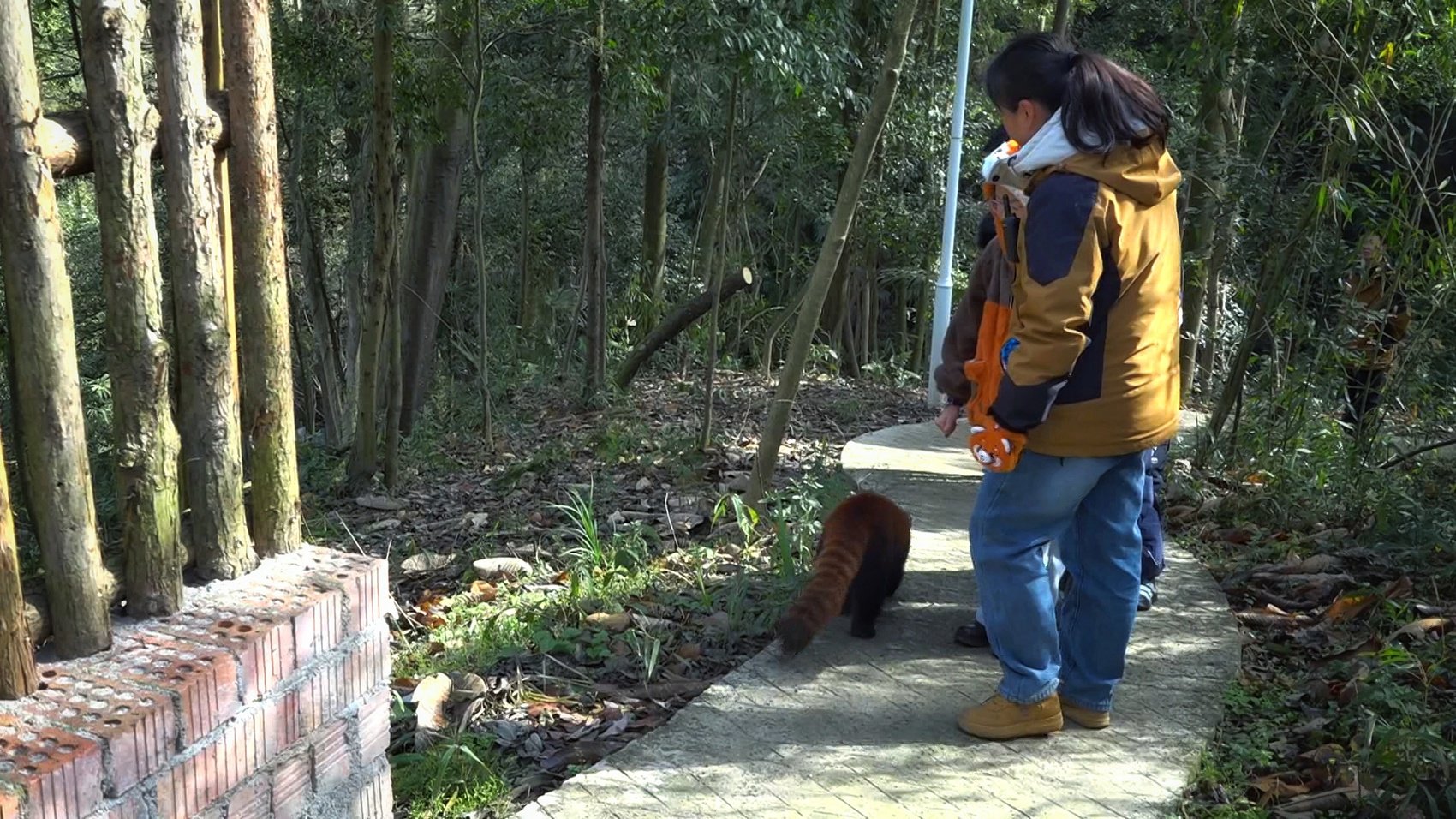
Core Viewpoint - The Dujiangyan Red Panda Forest Park has seen a surge in popularity during the Spring Festival, attracting numerous visitors to experience the charm of rural nature and interact with raccoons and red pandas [1][5]. Group 1: Visitor Experience - Visitors are engaging with red pandas, which are the main attraction, as they interact playfully in the forest [3][11]. - The park features raccoons that are actively engaging with guests, drawing attention and encouraging photo opportunities [5][19]. - Children and international tourists express excitement and admiration for the red pandas, highlighting their appeal as adorable animals [15][17]. Group 2: Conservation Efforts - The park spans over 70 acres and focuses on the protection and breeding of red pandas, which are classified as an endangered species with a global population of fewer than 5,000 [19]. - The facility is designed to create a natural habitat for the animals, equipped with professional dietary and health management to ensure their well-being [19].

北京海关查获濒危物种制品:6件豹牙入境被查扣
Yang Shi Wang· 2026-02-09 11:32
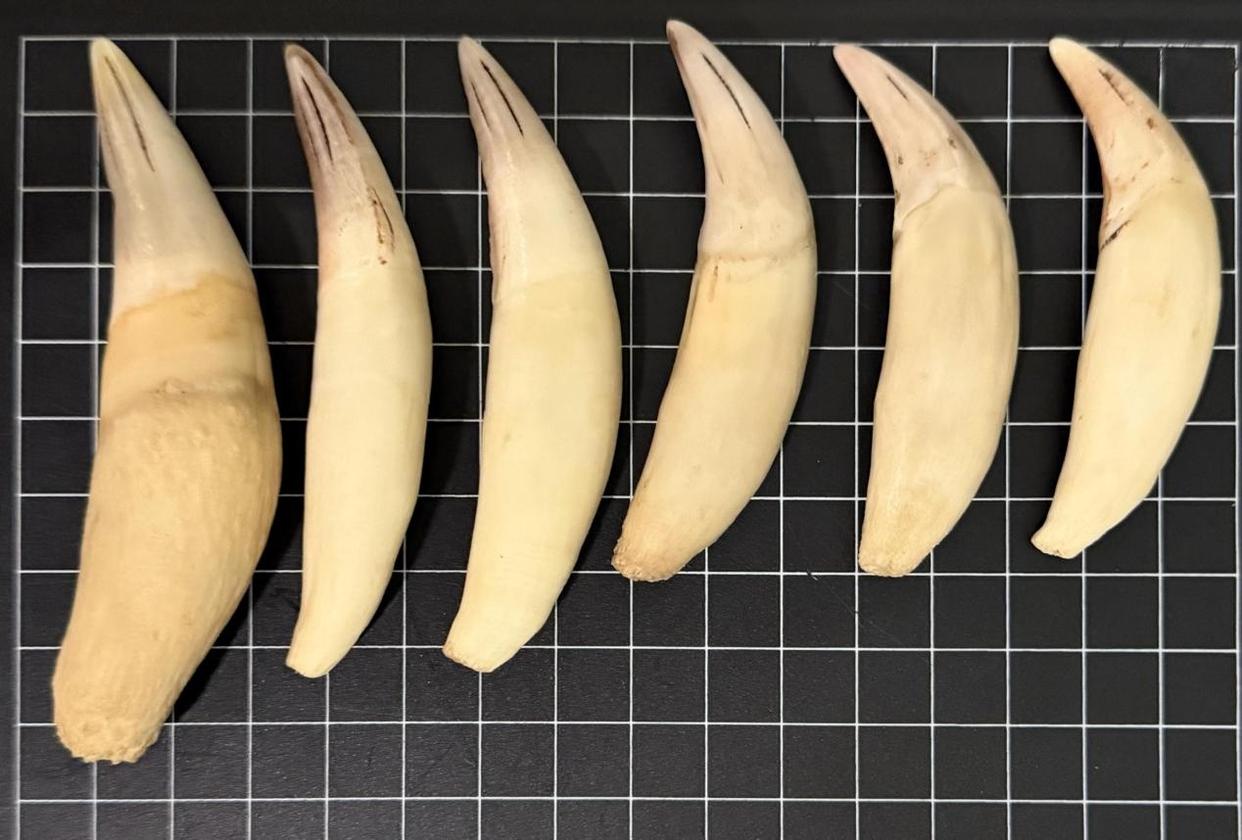
Group 1 - A recent case of illegal importation of endangered animal products was reported by Beijing Customs, where six pieces of leopard teeth were seized during passenger inspections at Daxing Airport [1] - The seized leopard teeth weighed a total of 95 grams and were discovered in a passenger's checked luggage after an anomaly was detected in the baggage screening process [1] - The case has been handed over to the customs anti-smuggling department for further investigation and processing [1] Group 2 - Leopards are listed as a protected species under Appendix I of the Convention on International Trade in Endangered Species of Wild Fauna and Flora (CITES), and any trade or transport of such species without proper permits is illegal [3] - The relevant Chinese laws, including the Wildlife Protection Law and regulations on the management of endangered species imports and exports, impose severe penalties for violations, including potential criminal charges for serious offenses [3] - Customs authorities advise travelers to familiarize themselves with and adhere to the laws and regulations regarding the transport of endangered species and their products before traveling [3]
新春走基层丨旷野逐风:守护普氏野马的日与夜
Xin Hua Wang· 2026-02-09 10:57
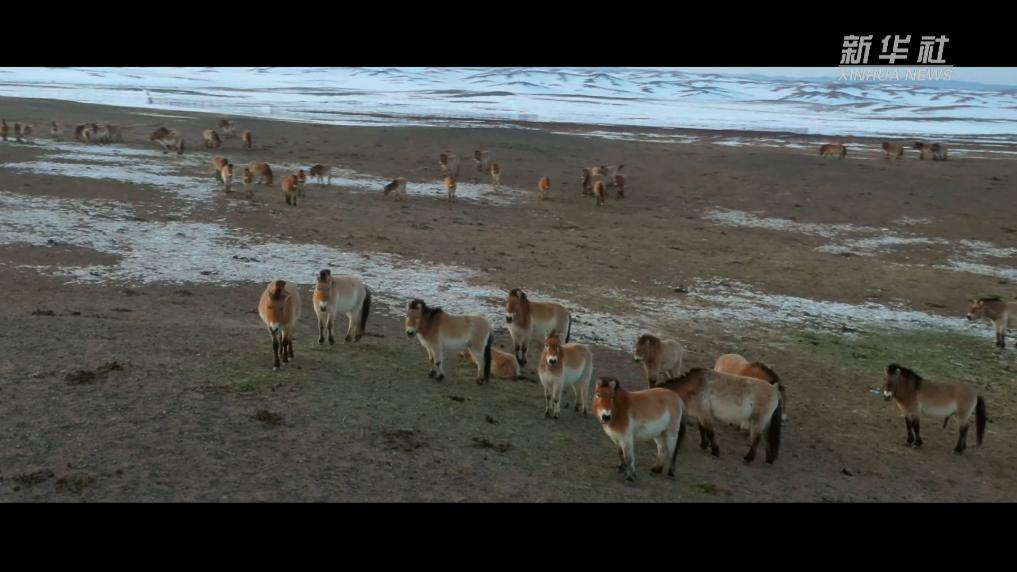
Core Viewpoint - The article highlights the successful conservation efforts for the Przewalski's horse in China, showcasing the dedication of caretakers and the significant increase in the horse population, which has now surpassed 900 individuals, representing nearly one-third of the global total [11]. Group 1: Conservation Efforts - Caretakers begin their day before sunrise to monitor the largest wild population of Przewalski's horses in the Dzungarian Basin [1][3]. - The monitoring process involves meticulous observation and recording of the horses' tracks, droppings, and overall health, reflecting a deep respect for wildlife [5][6]. - The data collected includes population numbers, feeding status, and migration patterns, which have shown a steady increase over the years [8]. Group 2: Population Recovery - Over 150 horses are currently wintering in the area, with caretakers expressing mixed feelings about their return to the wild, hoping for fewer horses to rely on human feeding [10]. - The population of Przewalski's horses in China has transitioned from "extinct in the wild" to "critically endangered," and now to "endangered," marking a significant milestone in conservation history [11]. - The horses have successfully returned to their natural habitats, thriving in various regions such as the Kalamaili Mountain, Dunhuang Wetlands, and Helan Mountains [11]. Group 3: Human-Nature Relationship - The story of the Przewalski's horse symbolizes the harmonious coexistence between humans and nature, with caretakers and researchers committed to ensuring the horses' return to the wild [13]. - The dedication of generations of caretakers is evident in their continuous efforts to protect and nurture the species, contributing to its revival [10][13].
从远古生命看见未来 Seeing the Future Through Ancient Life | 林泽昇 Lim Tze Tshen | TEDxPetalingStreet
TEDx Talks· 2026-02-06 15:59
“如果我们不去认识这些千古的灭绝过程,我们就无法去抗衡未来更多的物种灭绝事件。” 动物化石,不只是冰冷的遗骸,更是解开生命谜题的钥匙。 二十多年来,林泽昇追寻跨越八千万年的痕迹,从婆罗洲亚洲象的牙齿残片,到黑风洞红毛猩猩的化石,每一次发现,都让我们更接近真相:谁在这里生活过?他们为何又消失?埋藏在化石里的答案,揭示了远古人类与环境如何一步步塑造出今日的生态面貌。 认识过去,才能守护现在。那些看似 “灭绝的故事”,其实正提醒我们:保护濒危物种,不只是科学的课题,更是你我共同的责任。 “If we fail to understand these mass extinction events from the past, we won't be able to prevent those in the future.” More than cold and lifeless remains, fossils are the keys to unlocking the mysteries of life. For over twenty years Lim Tze Tshen has searched for tr ...
莲塘海关查获进境客车携带濒危动物砗磲制品4443粒
Xin Lang Cai Jing· 2026-02-03 03:17
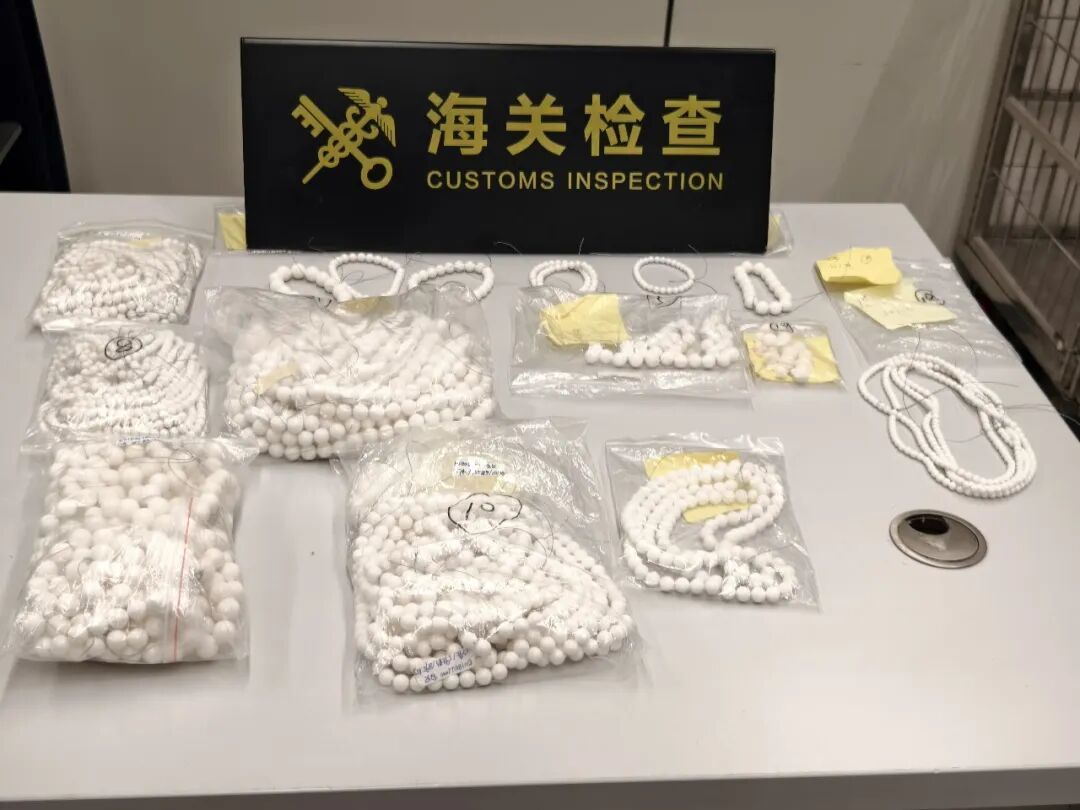
Core Points - The Lian Tang Customs recently seized 4,443 pieces of endangered species products made from Tridacna gigas (giant clam) from an incoming passenger vehicle [1] - The customs officers detected anomalies in the luggage inspection images of a black private car, leading to the discovery of a large quantity of round beads suspected to be made from Tridacna gigas [1] - The seized items were confirmed by the Guangdong Penghai Judicial Appraisal Institute to be products from the endangered species listed in Appendix II of the Convention on International Trade in Endangered Species of Wild Fauna and Flora (CITES) [1] Regulatory Context - Customs authorities remind that, according to CITES and the Regulations on the Administration of Import and Export of Endangered Wild Animals and Plants of the People's Republic of China, it is prohibited to trade, carry, or mail endangered species and their products across borders without a valid import/export certificate [3] - Serious violations may lead to criminal liability under the law [3]
深圳莲塘海关查获进境客车携带濒危动物砗磲制品4443粒
Xin Lang Cai Jing· 2026-02-03 01:15
Core Viewpoint - Shenzhen Lian Tang Customs recently seized 4,443 pieces of endangered species products made from Tridacna, highlighting ongoing issues related to wildlife trafficking and the enforcement of international trade regulations [1] Group 1: Customs Enforcement - Customs officials detected an anomaly during the inspection of a black private car, leading to the discovery of a large quantity of spherical hand strings in the luggage [1] - The inspection revealed numerous white spheres packaged in transparent plastic bags, suspected to be Tridacna products, which were later confirmed by a judicial appraisal [1] Group 2: Legal Implications - Tridacna is listed as a protected species under the Convention on International Trade in Endangered Species of Wild Fauna and Flora (CITES) Appendix II [1] - The customs authorities emphasized that, without a legal certificate for the import and export of wildlife, the trade, transport, or mailing of endangered species and their products across borders is prohibited, with severe penalties for serious violations [1]
首都机场海关查获美洲黑熊熊皮制品1件
Huan Qiu Wang· 2026-01-28 09:17
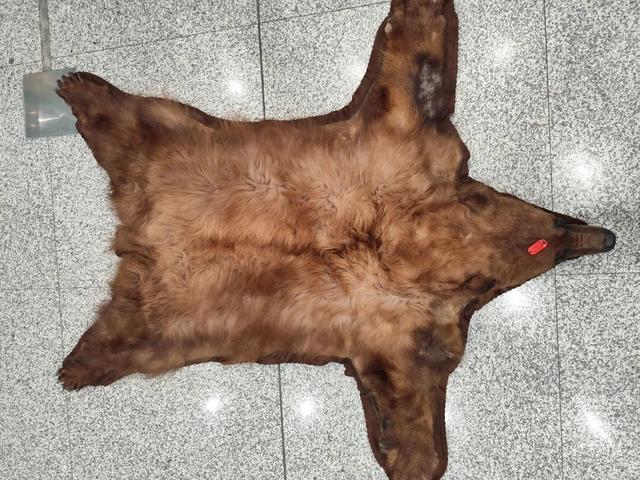
Group 1 - The Beijing Customs at Capital Airport recently seized a piece of American black bear skin product from a traveler entering the country [1][3] - The item was discovered during baggage inspection when an anomaly was detected in the X-ray image of the traveler's luggage [3] - The American black bear is listed as a protected species under the Convention on International Trade in Endangered Species of Wild Fauna and Flora (CITES) [3][6] Group 2 - The case has been handed over to the smuggling department for further action [3] - Customs authorities remind that trade, carrying, or mailing of endangered species and their products is prohibited unless legal permits are obtained and customs procedures are followed [6] - Serious violations may lead to criminal liability under relevant laws and regulations [6]
广东清远长隆森林王国展出缨冠灰叶猴幼崽
Xin Lang Cai Jing· 2026-01-25 13:03
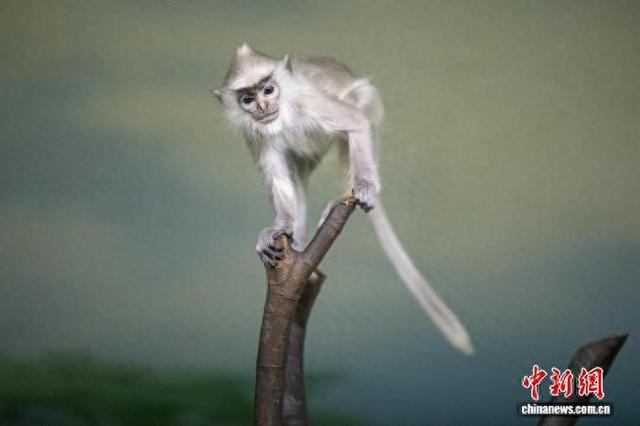
Core Viewpoint - The Guangdong Qingyuan Chimelong Forest Kingdom celebrates its first anniversary of trial operation by showcasing a female infant of the endangered Francois' langur, named "Sen Sen," highlighting the park's commitment to wildlife conservation and biodiversity protection [1][3]. Group 1: Wildlife Conservation - The Francois' langur is listed as an endangered species by the International Union for Conservation of Nature and is included in Appendix I of the Convention on International Trade in Endangered Species of Wild Fauna and Flora [3]. - The successful breeding and healthy growth of "Sen Sen" represent a significant achievement in the park's efforts in primate conservation [3]. - The Qingyuan Chimelong National Rare Wildlife Species Source Base has made notable contributions to biodiversity protection, housing various endangered species such as African elephants, black rhinos, white rhinos, golden takins, and giraffes, with some populations achieving three to four generations [3]. Group 2: Visitor Experience and Future Plans - The park adopts a planning philosophy of "nature, ecology, large populations, and cultural tourism," featuring immersive exhibit designs that recreate diverse ecological habitats from South American rainforests to African savannas [4]. - As of January 2026, the park has received nearly 2 million visitors and plans to introduce new projects and facilities, including a self-driving experience, Bird Star Tower, mine cars, and sightseeing cable cars to enhance visitor experience [4].
北京海关查获豹牙6件
Xin Lang Cai Jing· 2026-01-18 08:10
Core Viewpoint - Beijing Customs has intercepted six pieces of suspected leopard teeth from a traveler at Daxing Airport, highlighting ongoing issues related to wildlife trafficking and the enforcement of international wildlife protection laws [1] Group 1: Incident Details - The customs officers detected anomalies in the baggage of a traveler who chose the "green channel" for customs clearance [1] - Upon inspection, six pieces of leopard teeth weighing a total of 95 grams were found in the traveler's checked luggage [1] - The case has been handed over to the smuggling department for further action [1] Group 2: Legal Context - Leopards are listed under Appendix I of the Convention on International Trade in Endangered Species of Wild Fauna and Flora (CITES), which prohibits trade and transport of endangered species without proper permits [1] - According to CITES and the Wildlife Protection Law of the People's Republic of China, it is illegal to trade, carry, or mail endangered species and their products without the necessary documentation [1] - Serious violations may lead to criminal prosecution under Chinese law [1]
旅客违规携带濒危紫檀木18件 被济南机场海关查获
Zhong Guo Xin Wen Wang· 2026-01-05 03:43
Core Viewpoint - Recently, Jinan Airport Customs seized 18 pieces of endangered rosewood, weighing 4.94 kilograms, from a traveler attempting to bring them into the country illegally [1] Group 1: Incident Details - The customs officers detected an anomaly in the X-ray image of a traveler's luggage during inspection of an incoming flight [1] - Upon examination, it was found that the traveler was carrying 18 pieces of accessories for a shamisen, including the instrument's neck, weighing a total of 4.94 kilograms [1] - The wood was identified as Dalbergia, specifically rosewood, which is listed under Appendix II of the Convention on International Trade in Endangered Species of Wild Fauna and Flora (CITES) [1] Group 2: Legal Implications - According to CITES and the Regulations on the Administration of Import and Export of Endangered Wild Animals and Plants in the People's Republic of China, it is prohibited to trade, carry, or mail endangered species and their products without a valid import/export certificate [1] - Serious violations may lead to criminal prosecution [1] - The case has been transferred to the smuggling department for further handling [1]