火星生命探寻

Search documents
一次“CT扫描”有了意外发现 “祝融号”找到藏在火星地下的“秘密日记”
Yang Shi Wang· 2026-01-14 06:52
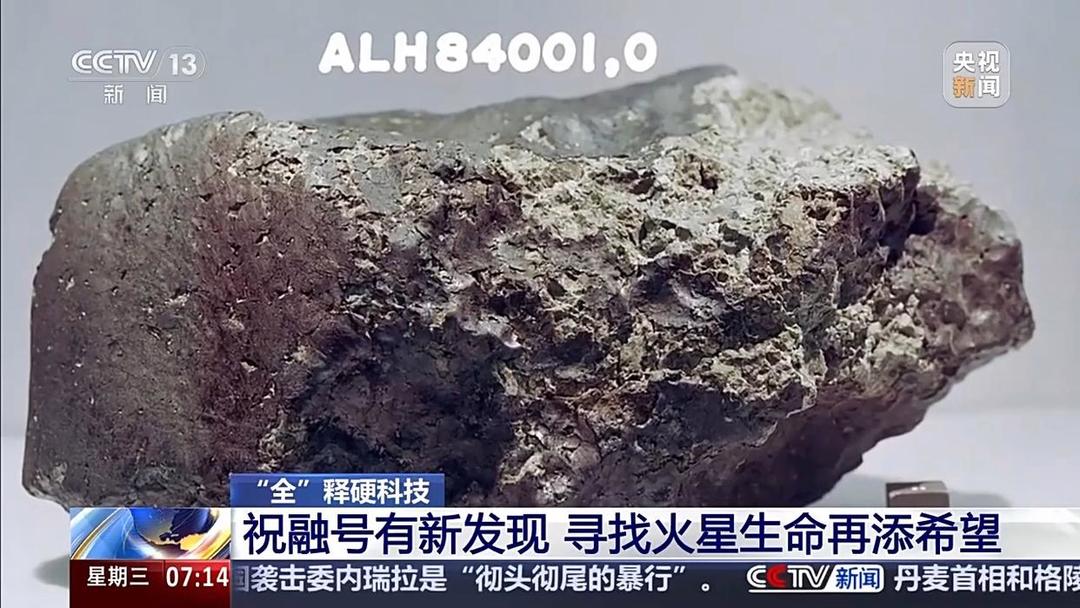
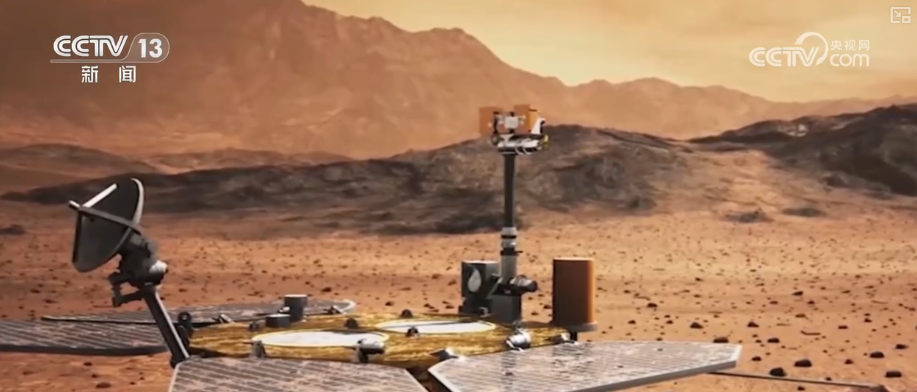
Core Viewpoint - The recent discoveries made by China's Zhurong rover on Mars have reignited discussions about the potential for life on the planet, particularly due to findings that suggest a history of significant water activity on Mars [1][6]. Group 1: Discoveries and Findings - The Zhurong rover conducted a "CT scan" of the southern Utopia Planitia, revealing well-structured sedimentary layers resembling those found in Earth's shallow seas and large lakes [3]. - These sedimentary layers are estimated to have formed around 750 million years ago, extending the timeline for water activity on Mars by several hundred million years, thus prolonging the planet's "youth" [6]. Group 2: Implications for Life on Mars - The findings raise the question of whether the search for life on Mars has become more promising, as evidence suggests that Mars may have once had conditions suitable for life [8]. - Historical attempts to find life on Mars date back to 1877, with significant discoveries such as potential organic materials found in Martian meteorites in 1996, although these findings were controversial [10]. - Recent discoveries by NASA's Perseverance rover in ancient riverbeds indicate potential signs of life, with organic carbon and iron oxides possibly providing energy sources for ancient microorganisms [13]. Group 3: Environmental Conditions and Life Potential - Many Earth microorganisms can survive in conditions similar to those on Mars, supporting the hypothesis that life could have adapted to Martian conditions [14]. - Scientists speculate that if life ever existed on Mars, it likely remained in a primitive state, similar to early Earth bacteria, and may have retreated underground or become extinct due to environmental changes [16][18]. - Future missions, such as China's Tianwen-3, aim to further investigate the mysteries of life on Mars [18].

祝融号有新发现,寻找火星生命再添希望
Yang Shi Xin Wen· 2026-01-14 02:20
Core Insights - The recent discovery by the Zhurong rover on Mars has sparked renewed interest in the possibility of life on the planet, revealing sedimentary layers that resemble those formed in water environments on Earth [3][5][7] Group 1: Geological Findings - The Zhurong rover conducted a "CT scan" of the southern Utopia Planitia, uncovering sedimentary layers that are structured like a "secret diary" hidden underground, indicating significant water activity on Mars approximately 750 million years ago [3][7] - This discovery extends the timeline of Mars' habitable conditions, suggesting that the planet may have had a longer "youth" than previously thought [3][7] Group 2: Historical Context of Mars Exploration - The search for Martian life has a long history, dating back to 1877 when astronomers mistakenly believed they saw "canals" on Mars, igniting romantic notions of Martian civilization [5] - In 1996, NASA found potential organic materials in a Martian meteorite, hinting at ancient microbial life, although this finding remains controversial [5] Group 3: Evidence of Water Activity - Since the 21st century, various countries have confirmed evidence of past water activity on Mars, including the presence of water ice and ancient riverbeds, bolstering the idea that Mars may have once been a blue planet capable of supporting life [7][9] - Recent findings from NASA's Perseverance rover have identified potential biosignatures in ancient riverbeds, suggesting that organic carbon and iron oxides could have provided energy for ancient microbial life [9] Group 4: Theoretical Implications of Martian Life - If life ever existed on Mars, it likely remained at a primitive stage, similar to early Earth bacteria, due to the planet's loss of its magnetic field and subsequent atmospheric erosion [11] - The ongoing exploration of Mars, including China's upcoming Tianwen-3 mission, aims to further investigate the mysteries surrounding potential Martian life [11]