炼金术

Search documents
我国科学家新发现:常见矿石也能“炼出黄金”
Sou Hu Cai Jing· 2026-01-21 11:39
Core Insights - Recent breakthroughs by Chinese scientists reveal that common minerals like pyrite can be used to "extract" gold, challenging traditional perceptions of gold sourcing [4][6] - The Earth's gold reserves are estimated to be around 4.8 billion tons, suggesting a potential for significant gold availability if evenly distributed [1] - The majority of gold, approximately 99%, is trapped deep within the Earth's core, over 2000 kilometers underground, making it rare in practical terms [1] Group 1 - Chinese scientists have discovered a process where surface water or underground hydrothermal fluids can oxidize and dissolve gold from ancient geological formations, creating soluble gold complexes [4] - A unique "nano workshop" forms at the interface of pyrite when this special fluid flows over it, which has a strong adsorption capability to capture and aggregate gold atoms into nanoparticles [6] - This discovery opens new avenues for developing more precise and environmentally friendly technologies to extract gold from traditional waste minerals and could guide global searches for new gold deposits [6]


黄金能“长”出来?我国科学家新发现
Sou Hu Cai Jing· 2026-01-21 11:27
Group 1 - The article discusses a breakthrough by Chinese scientists in capturing the process of gold growth from common minerals, specifically pyrite, through a natural mechanism that resembles alchemy [1][4]. - It is estimated that the Earth's gold reserves are approximately 4.8 billion tons, which, if evenly distributed, would allow each person to receive about 600 kilograms of gold. However, 99% of this gold is trapped in the Earth's core, over 2000 kilometers underground [2]. - The process involves surface water or underground hydrothermal fluids flowing through rock fissures, which can oxidize and dissolve ancient geological gold deposits, forming soluble gold complexes that enter the fluid [4][6]. Group 2 - A unique "nano workshop" is formed at the interface when this special fluid flows over the surface of pyrite, which has a strong adsorption capacity, allowing it to capture and aggregate gold atoms from the dilute fluid, leading to the growth of nanoscale gold particles [6]. - This discovery opens new possibilities for developing more precise and environmentally friendly technologies to extract gold from traditional waste minerals and may guide future global searches for new gold deposits [6].

跨越千年的“寻宝”之旅
Xin Lang Cai Jing· 2026-01-09 16:41
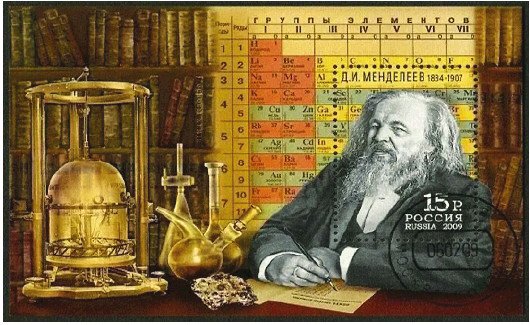
Core Idea - The article discusses the historical development of chemistry, focusing on the creation of the periodic table by Dmitri Mendeleev and the evolution of elemental understanding from ancient philosophy to modern science [4][5][12]. Group 1: Historical Context - The quest for understanding elements began 2500 years ago with ancient Greek philosophers like Thales, who proposed that water was the fundamental substance of the world [5]. - Empedocles introduced the theory of four elements: earth, air, fire, and water, which influenced thought for two millennia [6]. - Alchemy, prevalent in the Middle Ages, combined Greek philosophy with Egyptian mysticism, leading to significant discoveries despite its mystical roots [7][8]. Group 2: Scientific Advancements - The transition from alchemy to chemistry involved systematic approaches to identifying elements, with Robert Boyle defining elements as substances that cannot be broken down further [9]. - Key figures like Hennig Brand discovered phosphorus through urine distillation, while Antoine Lavoisier revolutionized chemistry by debunking the phlogiston theory and establishing the role of oxygen in combustion [10][11]. - The search for a unifying theory for elements led to various attempts, such as the triad law proposed by Johann Wolfgang Döbereiner, which highlighted relationships between groups of elements [11]. Group 3: Mendeleev's Contribution - Dmitri Mendeleev's creation of the periodic table in 1869 was a pivotal moment in chemistry, organizing elements by atomic weight and properties, and predicting undiscovered elements [12][13]. - Mendeleev's table not only arranged known elements but also left spaces for future discoveries, which were later confirmed by the discovery of gallium and germanium [13][14]. - The periodic table has undergone adjustments but retains Mendeleev's foundational structure, reflecting the cumulative knowledge of chemistry over centuries [14].
为了提炼黄金,他煮沸了5000升尿液,意外获得了造福人类的新元素
Sou Hu Cai Jing· 2026-01-03 08:18
Group 1 - Gold has been a highly valued metal throughout history, serving as currency and now being crafted into various jewelry items [1] - The desire for gold has remained unchanged, with historical attempts to create gold, such as the 17th-century German merchant Brand's experiment [2] - The concept of the "Philosopher's Stone" has been a significant part of alchemical lore, believed to grant immortality and wealth [4][9] Group 2 - Alchemy in ancient China was primarily focused on creating elixirs for immortality, often requiring state resources for large-scale operations [4][6] - Historical figures like Qin Shi Huang pursued immortality, leading to quests for elixirs that ultimately proved futile [6][8] - The knowledge of alchemy spread to the West via the Silk Road, where it evolved into a craft aimed at wealth accumulation [9][10] Group 3 - Brand's fascination with alchemy led him to experiment with urine, believing it might contain gold, resulting in the discovery of phosphorus [12][15] - Phosphorus was initially used in match production and later in fertilizers, highlighting its significance in chemical science [17] - The historical pursuit of alchemy, despite its failures, inspired future scientific discoveries and emphasized the natural processes behind material formation [19]