
化学

Search documents
看了一脑子物理
小熊跑的快· 2026-02-14 23:51
Group 1 - The article discusses the author's background in physics, mathematics, and chemistry, highlighting a strong academic performance in these subjects [1] - It mentions the author's current engagement with foundational papers related to frequency and functions, indicating a continued interest in scientific research [1] - The article also touches on personal experiences, such as hair loss, suggesting the pressures associated with high academic achievement [1]

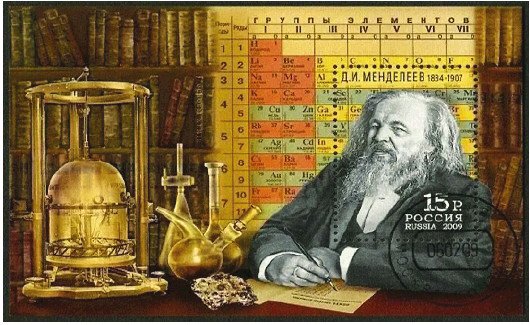
跨越千年的“寻宝”之旅
Xin Lang Cai Jing· 2026-01-09 16:41
Core Idea - The article discusses the historical development of chemistry, focusing on the creation of the periodic table by Dmitri Mendeleev and the evolution of elemental understanding from ancient philosophy to modern science [4][5][12]. Group 1: Historical Context - The quest for understanding elements began 2500 years ago with ancient Greek philosophers like Thales, who proposed that water was the fundamental substance of the world [5]. - Empedocles introduced the theory of four elements: earth, air, fire, and water, which influenced thought for two millennia [6]. - Alchemy, prevalent in the Middle Ages, combined Greek philosophy with Egyptian mysticism, leading to significant discoveries despite its mystical roots [7][8]. Group 2: Scientific Advancements - The transition from alchemy to chemistry involved systematic approaches to identifying elements, with Robert Boyle defining elements as substances that cannot be broken down further [9]. - Key figures like Hennig Brand discovered phosphorus through urine distillation, while Antoine Lavoisier revolutionized chemistry by debunking the phlogiston theory and establishing the role of oxygen in combustion [10][11]. - The search for a unifying theory for elements led to various attempts, such as the triad law proposed by Johann Wolfgang Döbereiner, which highlighted relationships between groups of elements [11]. Group 3: Mendeleev's Contribution - Dmitri Mendeleev's creation of the periodic table in 1869 was a pivotal moment in chemistry, organizing elements by atomic weight and properties, and predicting undiscovered elements [12][13]. - Mendeleev's table not only arranged known elements but also left spaces for future discoveries, which were later confirmed by the discovery of gallium and germanium [13][14]. - The periodic table has undergone adjustments but retains Mendeleev's foundational structure, reflecting the cumulative knowledge of chemistry over centuries [14].
京报读书·智汇丨《庞加莱猜想》《令人着迷的化学》《海尔质量管理之道》
Bei Jing Ri Bao Ke Hu Duan· 2025-09-29 01:07
Group 1 - The article discusses the significance of the Poincaré Conjecture, a century-old mathematical problem that has captivated many brilliant minds, culminating in the work of Russian mathematician Grigori Perelman, who solved it but chose to reject the Fields Medal and a $1 million prize, leading to speculation about his disappearance from public life [3][4][10] - The book "Poincaré Conjecture: Pursuing the Shape of the Universe" presents a documentary-style narrative that chronicles the century-long journey to solve this conjecture, highlighting the allure of mathematics and the unique lives of mathematicians [3][4] - The Poincaré Conjecture is linked to fundamental questions about the universe's shape and boundaries, making it a pivotal topic in both mathematics and cosmology [3][4] Group 2 - The book "The Fascinating Chemistry: Molecules in Life" by Nobel laureate Ben Feringa takes readers on a journey through the molecular world, using everyday phenomena to unveil the mysteries of chemistry [6][7] - It covers various well-known molecules and their historical significance, from ancient Egyptian perfume recipes to modern drug breakthroughs, making complex chemical knowledge accessible and engaging [6][7] - The narrative intertwines scientific principles, historical anecdotes, and practical applications, illustrating the role of chemistry in critical moments throughout history [6][7] Group 3 - The book "Haier's Quality Management Path: From Zero Distance to Zero Boundaries" documents Haier's 40-year evolution in quality management, marking significant anniversaries related to its quality management practices [9] - It showcases Haier's innovative quality management strategies in the era of artificial intelligence and highlights achievements in three core business areas [9] - The text provides a comprehensive overview of Haier's quality management philosophy, practical explorations, and classic events that have shaped its approach [9]

2025年重庆市科技活动周将于本月24日正式启动
Huan Qiu Wang Zi Xun· 2025-05-19 11:48
Core Points - The 2025 Chongqing Science and Technology Week will officially start on May 24, with the theme "Determined to Innovate and Build a Strong Science and Technology Nation" [1] - The main event will feature over 20 key demonstration science popularization activities and more than 600 diverse science activities across various districts and departments [1][2] - The main exhibition area will cover over 5,000 square meters, divided into eight thematic exhibition zones showcasing advanced technologies such as AI, robotics, and automotive technology [1] Summary by Sections Main Event Details - The main event will run from May 24 to May 26, organized by multiple local government departments [1] - The exhibition will include zones for AI and robotics, automotive technology, low-altitude economy, and more, with several exhibits making their debut [1] Educational Activities - The event will feature 22 science public classes covering physics, chemistry, geology, and intangible cultural heritage, conducted by professional science educators from local institutions [2] - This year marks the first time that science program performances will be included, with 18 engaging science shows planned [2] Community Engagement - The event will continue until May 31, promoting a strong atmosphere for science education and engagement through various activities such as science experiments, public science quality competitions, and expert campus visits [2] - Local research institutions and science bases will open their doors to the public, encouraging community participation in science activities [2]