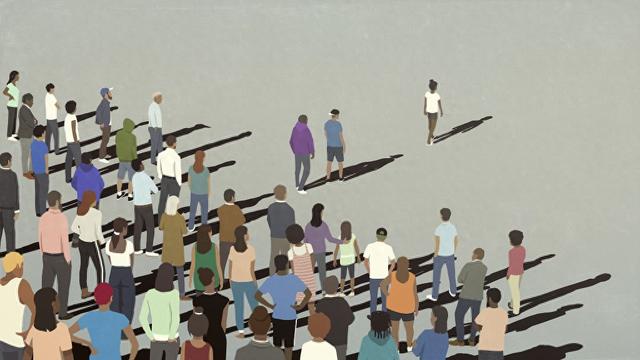
焦虑社会

Search documents
在焦虑社会和AI时代,特别能共情的人将成为稀缺人才
第一财经· 2026-02-06 06:45
Core Viewpoint - The article discusses the pervasive issue of anxiety in modern society, highlighting its impact on individuals and organizations, and suggests that emotional capital will become more significant than human capital in the digital age [5][13]. Group 1: Anxiety in Society - Anxiety is described as a modern ailment, exacerbated by rapid technological advancements and societal pressures, leading to feelings of being overwhelmed and out of control [5][9]. - A survey conducted in 2019 revealed that 25% of youth experience anxiety related to academic or career expectations, while 16.8% struggle with personal relationships, and 15.8% face economic pressures [8]. - Factors contributing to anxiety include peer comparison (32.8%), parental pressure (31.7%), and the overall anxious atmosphere in society (25.2%) [8]. Group 2: Professional Impact - The article highlights the case of doctors, who face significant work-related stress, averaging 7.8 hours of patient consultations daily, with additional time spent on research, leading to burnout and career dissatisfaction [11]. - Many doctors are leaving high-pressure environments for less demanding roles, indicating a shift in career priorities towards work-life balance [11]. Group 3: Solutions and Social Connections - The concept of "healing economy" is introduced, predicting a market size of $7 trillion by 2025, emphasizing the importance of emotional well-being and social connections in alleviating anxiety [13]. - The author proposes seven "social prescriptions" to combat anxiety, including expanding social connections and fostering empathetic relationships [14]. - In education, the role of teachers is expected to evolve, focusing more on emotional support rather than just knowledge transfer, as AI changes the landscape of learning [14].


在焦虑社会和AI时代,特别能共情的人将成为稀缺人才
Di Yi Cai Jing· 2026-02-06 01:44
Group 1 - The core argument of the article highlights the increasing anxiety in modern society due to rapid advancements in information technology and artificial intelligence, leading to a sense of acceleration that many find difficult to adapt to [2][3][4] - The concept of "anxiety society" is introduced, where individual anxieties can extend to organizations and communities, resulting in collective behavioral strategies that may influence social institutions [3][4] - A survey conducted in 2019 revealed that 25% of respondents experienced anxiety related to academic or career expectations, 16.8% due to difficulties in establishing intimate relationships, and 15.8% from economic pressures, indicating the significant impact of performance-oriented and accelerated societal pressures [4][5] Group 2 - The article discusses the concept of "healing economy," which emerged as a significant consumer phenomenon in China in 2019, with predictions that its market size will reach $7 trillion by 2025, reflecting a growing demand for emotional and psychological support [8][9] - The author proposes seven "social prescriptions" to cope with anxiety, emphasizing the importance of expanding social connections and fostering empathetic relationships across various sectors, including education [9] - The article suggests that the roles of educators may evolve, with a focus on emotional value rather than mere knowledge transfer, indicating a potential shift in the job market towards positions that require empathy and emotional intelligence [9]

炫耀性“松弛感”:焦虑时代的胜利符号与赢家标识
Xin Lang Cai Jing· 2026-02-04 00:47
Core Insights - The article discusses the concept of "displaying a relaxed demeanor" as a symbol of success in a competitive and anxiety-ridden society, particularly among students [1][6][7] - It highlights the pressure faced by high school students, where academic performance is crucial for future opportunities, leading to a culture of competition and anxiety [3][4] Group 1: Student Anxiety and Competition - High school students experience significant anxiety due to the high stakes of college entrance exams, which can determine their future paths [3] - The pressure to perform well creates a competitive environment where students strive to exhibit a winner's mindset, often characterized by a facade of relaxation despite internal stress [3][4] Group 2: Social Dynamics Among Students - A hierarchy among students is established based on academic performance, where high achievers gain social status and resources, reinforcing a competitive atmosphere [4][6] - The pursuit of a relaxed demeanor becomes a new form of status, as students aim to appear untroubled while managing heavy academic workloads [4][6] Group 3: Cultural Reflections - The concept of "leisure" as discussed by economist Thorstein Veblen is mirrored in the student context, where the elite display their status through non-participation in the stress of academic competition [5][7] - The article draws parallels between the student experience and broader societal structures, suggesting that the relaxed demeanor sought by students reflects a deeper societal aspiration for mental well-being amidst anxiety [7]