燃油走私

Search documents
美伊谈判前夕,双方动作不断!特朗普再对伊朗发出“动武”威胁,伊朗展示先进弹道导弹,扣押两艘油轮,以色列总理:已做好打击伊朗准备
Mei Ri Jing Ji Xin Wen· 2026-02-06 02:20
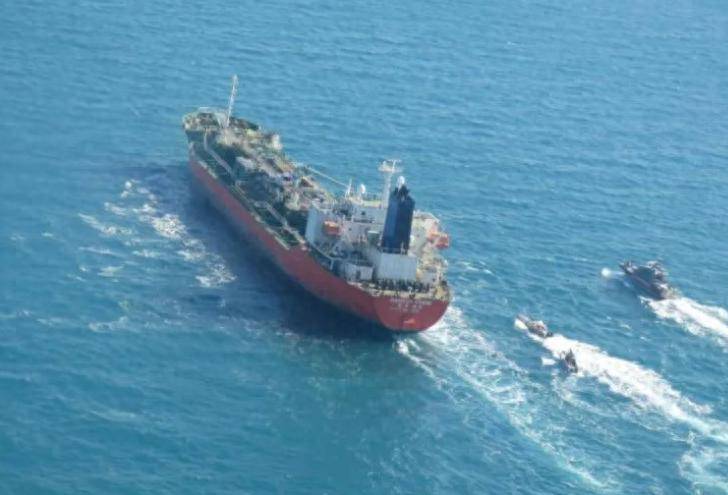
Group 1 - Israeli Prime Minister Netanyahu announced that Israel is prepared for a "very severe strike" against Iran, with current readiness exceeding the level of the June 2022 operation [1] - The Israeli security cabinet held an emergency meeting, focusing on the Israeli-Palestinian issue despite speculation about potential military actions against Iran [1] - The U.S. has requested Israel to refrain from unilateral military actions during the upcoming U.S.-Iran talks [2] Group 2 - Israeli officials believe that fundamental differences exist between the U.S. and Iran, making a successful agreement "highly unlikely" [3] - The U.S. and Iran are set to hold nuclear negotiations in Muscat, Oman, on February 6, following a series of indirect talks mediated by Oman since 2025 [3] - U.S. President Trump threatened military action if Iran attempts to restart its nuclear program, claiming that Iran is considering establishing new nuclear facilities [5] Group 3 - Iran's Islamic Revolutionary Guard Corps showcased a new underground missile facility, revealing the "Khoramshahr-4" ballistic missile, which has a range of 2,000 kilometers and a warhead weight of 1,500 kilograms [6] - The "Khoramshahr-4" missile is a key component of Iran's deterrent strategy, with enhanced precision, speed, and penetration capabilities [6] - Iran has claimed to have achieved comprehensive control over the Strait of Hormuz, monitoring all maritime activities in real-time [7] Group 4 - The "Stena Imperative" oil tanker, under U.S. Navy protection, was reportedly approached by Iranian patrol boats in the Strait of Hormuz [6][7] - Iran seized two smuggling vessels near Farsi Island, confiscating over 1 million liters of smuggled fuel and detaining 15 foreign crew members [7] - The Strait of Hormuz is a critical maritime route for global oil trade, with approximately one-third of the world's oil shipments passing through it [7]


伊朗扣押两艘走私船 查获100万升燃油
Xin Hua She· 2026-02-05 12:56
Core Viewpoint - Iran has seized two smuggling vessels in the Persian Gulf near Farsi Island, confiscating over 1 million liters of smuggled fuel, with 15 foreign crew members handed over to judicial authorities [1] Group 1 - The Iranian Islamic Revolutionary Guard Corps Navy identified and intercepted the two smuggling vessels based on intelligence [1] - The vessels were involved in organized fuel smuggling activities in the waters surrounding Farsi Island [1]
伊朗扣押油轮!背后隐藏内幕
Sou Hu Cai Jing· 2025-07-18 18:57
Core Insights - Iran's recent seizure of a foreign oil tanker suspected of smuggling 2 million liters of fuel highlights the risks of volatility in the international oil and gas market and reveals a cross-border smuggling network [1][3] - The Iranian government is determined to protect its economic interests amid international sanctions, which have created a significant disparity in fuel prices, making Iran a "fuel paradise" for smugglers [3][4] - Smuggling activities are not merely economic crimes but also pose potential threats to national security and international relations, as they may be manipulated by external forces for political and economic gains [6][9] Group 1: Smuggling Activities - The smuggling of cheap fuel from Iran to neighboring countries has formed a large underground economy, despite the government's efforts to combat these illegal activities [3][4] - The recent seizure of the tanker indicates a strong response from the Iranian government, suggesting that smuggling has become a pressing issue that requires immediate attention [3][6] - Smuggling activities are intertwined with complex geopolitical dynamics, as they may involve collusion with foreign entities aiming to exploit Iran's resources [4][6] Group 2: Economic and Political Implications - The illegal smuggling market has emerged as a "gray" alternative for countries and businesses seeking low-cost oil, complicating the geopolitical landscape [4][6] - Iran's fuel prices have become a significant temptation in the international market, and the government views the smuggling of fuel as a direct threat to its economic stability [6][9] - The ongoing smuggling activities reflect Iran's broader economic struggles and the need for a robust response to safeguard its national interests [9] Group 3: Future Challenges - Iran faces significant challenges in addressing smuggling due to external pressures, regional political instability, and domestic economic weaknesses [9] - The government's strong stance against smuggling is a signal of its commitment to countering external influences and protecting its economic sovereignty [6][9] - The complexity of the smuggling networks suggests that merely enforcing laws may not suffice; a comprehensive strategy to resolve economic difficulties and establish stable energy trading systems is essential [9]