爱心驿站

Search documents
快递小哥的友好场景 | 2026新春走基层
Ren Min Ri Bao· 2026-02-17 06:20
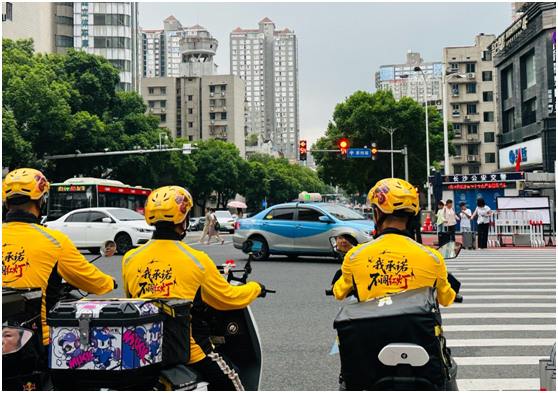
Group 1 - The article highlights the positive changes in the working environment for delivery workers in Changsha, with the establishment of "love stations" that provide amenities such as charging points and microwaves for food [1][2] - Since June of last year, Changsha has developed 1,606 love stations and 272 "red homes," with 165 of these stations operating 24 hours a day, enhancing convenience for delivery personnel [1] - The city has initiated friendly scene pilot projects to improve access and relations for delivery workers, covering nearly 1,000 residential properties [1] Group 2 - Delivery worker Huang Bo actively participates in community improvement by reporting issues like damaged pavement and water accumulation through the "Warm New Changsha" app, reflecting a sense of responsibility towards the community [2] - The Changsha Municipal Social Work Department aims to expand the coverage of friendly scenes to ensure outdoor workers have accessible and pleasant working conditions [2]
快递小哥的友好场景(新春走基层)
Ren Min Ri Bao· 2026-02-14 00:51
Core Insights - The article highlights the improvements in the working conditions for delivery personnel in Changsha, particularly through the establishment of "love stations" and friendly community initiatives [1][2]. Group 1: Love Stations and Community Support - Since June of last year, Changsha has launched "love stations" in collaboration with relevant departments and chain pharmacies, with 1,606 love stations and 272 "red homes" established, of which 165 operate 24 hours [1]. - Delivery personnel are utilizing these love stations for essential services such as charging their phones and warming up meals, enhancing their work experience [1]. Group 2: Friendly Community Initiatives - The "warm new Changsha" initiative allows delivery personnel to register and access designated parking spaces in friendly communities, making their work more efficient [1]. - The city has implemented friendly scene pilot projects that focus on improving access and relationships within nearly 1,000 residential properties [1]. Group 3: Community Engagement - Delivery personnel like Huang Bo actively participate in community improvement by reporting issues such as damaged pavement, demonstrating a sense of responsibility towards their working environment [2]. - The Changsha Municipal Social Work Department aims to expand the coverage of friendly scenes to ensure outdoor workers have accessible and pleasant working conditions [2].
湖南省委书记省长调研的这件事,与骑手、快递员等有关
Xin Lang Cai Jing· 2026-01-11 07:55
Core Insights - The construction of "Love Stations" for new employment groups is emphasized as a vital social initiative to enhance the welfare of workers such as delivery riders and couriers [1][9] - New employment groups are recognized as essential to urban operations and social stability, with significant government support for their rights and welfare [2][9] Group 1: New Employment Groups - New employment groups, including delivery riders and couriers, have become indispensable to urban life and social services [2][9] - As of December 2025, Hunan Province is projected to have approximately 127,800 delivery workers, with around 64,000 in food delivery [2] - The demographic of these workers is predominantly young, reflecting diverse career aspirations and a desire for social respect and belonging [4] Group 2: Challenges Faced - Delivery workers face long hours, high intensity, lack of rest areas, and insufficient rights protection, highlighting the need for basic support services [4] - There is a demand for essential services such as drinking water, charging stations, and emergency medical assistance [4] Group 3: "Love Stations" Initiative - The "Love Stations" initiative aims to provide essential services to new employment groups, including rest areas, drinking water, and health services [6][10] - The first batch of 249 "Love Stations" was established in Changsha, offering six core services to support workers and citizens in need [6] - Various types of stations have been built, including union stations and community-based support centers, with a total of approximately 6,000 stations across the province [4] Group 4: Government Support and Implementation - Government officials emphasize the importance of building "Love Stations" as a means to protect the rights of new employment groups and improve their living conditions [9][11] - The construction of these stations is guided by principles of practicality, local adaptation, and a focus on human needs, avoiding superficial measures [9] - Continuous efforts are being made to enhance the coverage and effectiveness of these services, aiming to improve the overall well-being of new employment groups [11]