牛熊指标(Bull & Bear Indicator)

Search documents
美银:应对地缘需“交易石油、持有黄金”,美股摆脱低迷需“两大外部冲击”
Hua Er Jie Jian Wen· 2026-02-23 03:09
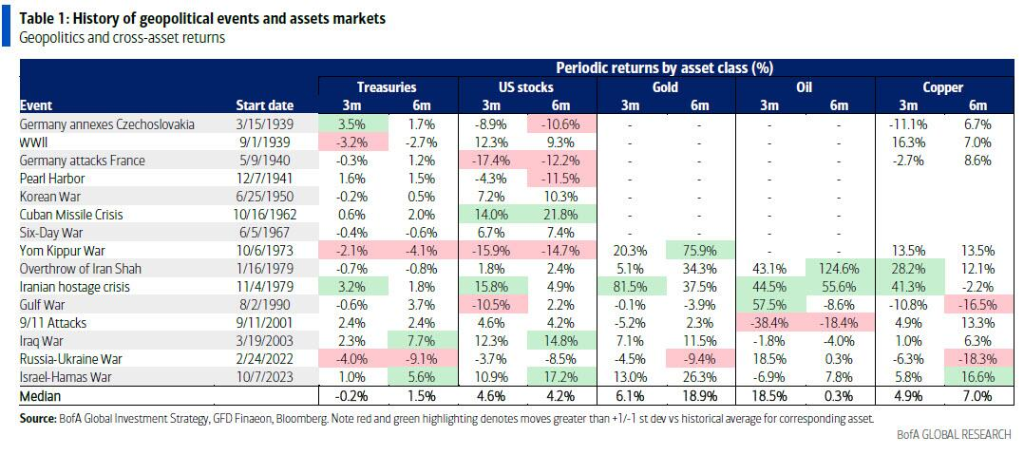
Core Viewpoint - The market logic for 2026 has fundamentally shifted, with significant differentiation within the AI concept and capital flows moving from the US to Japan and South Korea [1][2]. Group 1: Market Style Changes - The market is moving away from capital-intensive "spenders" like the tech giants (Mag7) and is embracing "builders" in infrastructure, such as semiconductors and raw materials [2]. - There is a notable shift in capital from "disruptors" (software stocks) to "applicators" of AI technology (banking stocks) [2]. - The current market is experiencing a high level of volatility, with technology, telecom, and financial sectors comprising 56% of the S&P 500 index, raising concerns about potential market collapse if the leading stocks decline faster than the rising ones [2]. Group 2: Geopolitical Trading Rules - Oil is expected to be the best-performing asset in 2026 due to geopolitical tensions, particularly between the US and Iran [3]. - Historical data indicates that oil typically sees an average increase of 18% in the first three months following geopolitical shocks, outperforming gold (+6%) and US stocks (+4%) [3]. - Over a six-month period, gold tends to outperform oil, with an average increase of 19%, while oil may give back its gains [3]. Group 3: External Shocks Needed for Market Breakthrough - The US stock market requires two external shocks to break its current high-level stagnation: a collapse in Middle Eastern oil prices and a potential easing of US-China trade tensions [5][6]. - A change in Middle Eastern regimes could ensure a stable oil supply, alleviating inflationary pressures [6]. - A potential trade agreement in April could help reduce tariffs, addressing inflation concerns and improving the approval ratings of the current administration [9]. Group 4: Capital Flow Trends - The "American exceptionalism" narrative appears to be waning, with only 26% of global stock fund inflows expected to go to US stocks in 2026, the lowest share since 2020 [10]. - Recent data shows record net inflows into international stock funds, particularly towards South Korea (storage chip concept) and Japan (reflation narrative), with South Korea experiencing the largest six-week net inflow of $17.7 billion [13]. Group 5: Bull & Bear Indicator Insights - The Bull & Bear Indicator currently stands at 9.4, indicating an "extreme bull market," just below the historical peak of 9.5 [16]. - Historical analysis shows that when this indicator exceeds 9.5, significant market corrections typically follow within three months, with the Nasdaq index averaging an 8.6% decline [19][20].