物流服务分层

Search documents
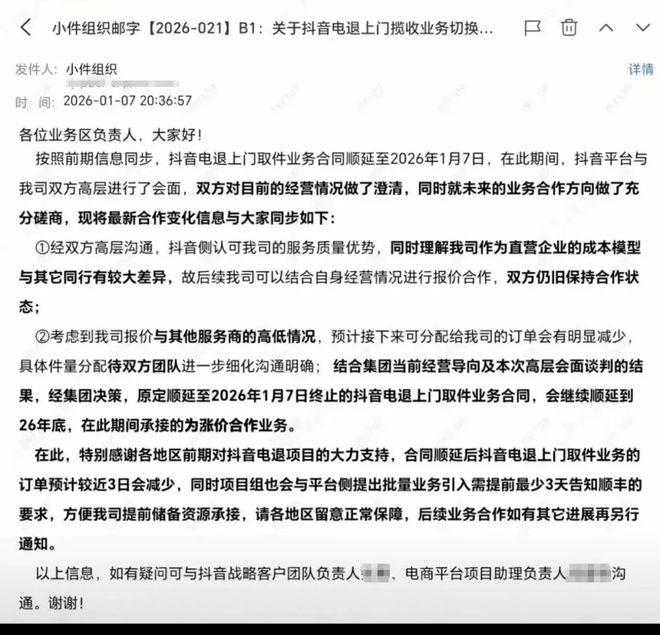
独家|切出二十天,抖音退货重回顺丰
Tai Mei Ti A P P· 2026-01-11 04:00
Core Viewpoint - The logistics industry is experiencing a significant shift as SF Express has successfully renegotiated its partnership with Douyin, extending their contract until the end of 2026 with a price increase, highlighting the importance of service quality over cost in logistics [1][2][9] Group 1: Background of the Partnership - SF Express was initially sidelined by Douyin in mid-December when Douyin switched its return logistics to other companies like JD Logistics and others due to cost concerns [4] - The split was not solely a unilateral decision by Douyin but rather a mutual disagreement over pricing and service expectations [4][9] Group 2: Service Quality Issues - The alternative logistics providers struggled to meet Douyin's service requirements, which included rapid response times and efficient pickup processes, leading to customer dissatisfaction [5][6][8] - JD Logistics faced operational challenges during peak periods, prioritizing its own deliveries over Douyin's return logistics, which further complicated the situation [6][8] Group 3: Market Dynamics and Pricing - The logistics market is evolving into a two-tier system where SF Express focuses on high-value, high-service clients while other providers cater to low-cost, high-volume segments [11][13] - SF Express's return to Douyin with a price increase signifies its established pricing power in the high-end market, reinforcing the idea that premium service comes at a premium price [12][14] Group 4: Industry Implications - The incident illustrates the limitations of trying to achieve low cost, high efficiency, and good service simultaneously in logistics, reinforcing the "impossible triangle" concept [11][12] - The logistics sector is entering a phase of "class solidification," where service quality will dictate market positioning, separating providers into distinct categories based on their service offerings [11][13][15]