牺牲精神

Search documents
音乐剧《四十天》在京首演 舞台重现“宜昌大撤退”壮举
Xin Lang Cai Jing· 2025-12-26 13:54
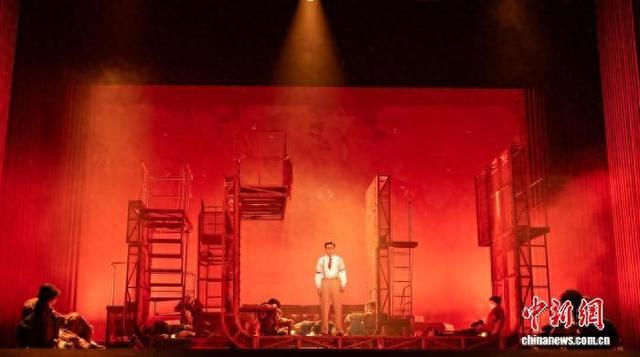
Core Viewpoint - The musical "Forty Days" premiered on December 25, 2025, at the Poly Theatre in Beijing, showcasing a historical narrative based on the evacuation during the Second Sino-Japanese War, emphasizing the theme of national salvation through industrial efforts [1][3]. Group 1: Historical Context and Narrative - The musical is based on the "Yichang Evacuation" in 1938, where patriotic entrepreneur Lu Zuofu led a fleet to transport over 1.5 million people and a million tons of strategic materials within 40 days, providing economic support for China's prolonged resistance against Japan [3][5]. - The performance aims to recreate the urgency and heroism of the time, intertwining the sounds of the Yangtze River, labor songs, and the roar of enemy aircraft to honor the spirit of national self-rescue [3][5]. Group 2: Artistic Presentation - The musical seeks to unify historical authenticity with poetic stage artistry, using powerful musical elements like the "Chuanjiang Haizi" as a symbol of indomitable national spirit, with music closely aligned to the narrative's emotional peaks [5]. - The visual design incorporates industrial elements such as gears, metal bridges, and ship structures, symbolizing the weight and value of China's industrial lifeline during the war [5]. Group 3: Audience Engagement and Impact - The production offers an immersive historical experience, transforming Lu Zuofu from a distant historical figure into a relatable character, and the 40 days into a vivid representation of struggle and hope [5]. - Themes of patriotism, sacrifice, and collective strength resonate deeply with audiences across generations, aiming to strike a balance between historical depth and artistic expression [5][7]. Group 4: Production and Support - "Forty Days" is co-produced by the China Oriental Performing Arts Group, Beijing Ziyunxing Cultural Technology Co., and several government entities, with support from the Lu Zuofu Foundation and the Beijing Cultural Arts Fund [7]. - The production is part of the National Arts Fund's 2026 stage art creation initiative and the Beijing Cultural Arts Fund's 2025 support program, indicating significant institutional backing [7].

全景式描摹建军伟大历程
Ren Min Ri Bao Hai Wai Ban· 2025-07-25 22:02
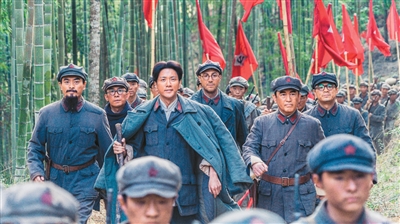
Core Viewpoint - The major revolutionary historical drama "Blood and Glory" is currently airing on CCTV and various online platforms, commemorating significant anniversaries in Chinese history and showcasing the early exploration of the Chinese Communist Party in leading the people's army [1] Group 1: Historical Representation - "Blood and Glory" narrates the historical journey from the Nanchang Uprising to the Zunyi Conference, highlighting the establishment of the revolutionary army and the independent leadership of armed struggle by the Chinese Communist Party [1] - The series features over a hundred real historical figures, including prominent leaders like Mao Zedong, Zhu De, and lesser-known revolutionaries, providing a comprehensive and rich portrayal of this historical period [2] Group 2: Themes of Sacrifice - The drama emphasizes the sacrifices made by various individuals, including military leaders and ordinary citizens, showcasing their unwavering ideals and spirit in the face of adversity [3] - It illustrates the personal sacrifices of family members of revolutionary leaders, as well as the commitment of intellectuals and common people to the revolutionary cause [3] Group 3: Emotional Depth - The emotional expressions in "Blood and Glory" are profound, depicting the bond between the Communist Party and the masses, as well as the camaraderie among revolutionary leaders and soldiers [4] - The series highlights personal relationships, such as the love story between Mao Zedong and Yang Kaihui, adding a layer of emotional resonance to the narrative [6] Group 4: Artistic Innovation - The show employs various narrative techniques, including flashbacks and letter narrations, to present complex storylines clearly and concisely [6] - The integration of poetry and folk songs enhances the storytelling, creating a rhythmic and engaging viewing experience [6] Group 5: Production and Impact - The success of "Blood and Glory" is attributed to the director Chen Li and the creative team's extensive experience in producing revolutionary historical dramas, as well as their deep respect for revolutionary figures [7] - The series serves as a vivid representation of the combination of Marxist principles and the specific practices of the Chinese revolution, continuing to inspire faith and glory across nearly a century [7]