
珍稀濒危植物保护

Search documents
既当生态“修补匠”又当经济“惠民树” 科技赋能让生态护林“如虎添翼”
Yang Shi Wang· 2026-01-31 06:56
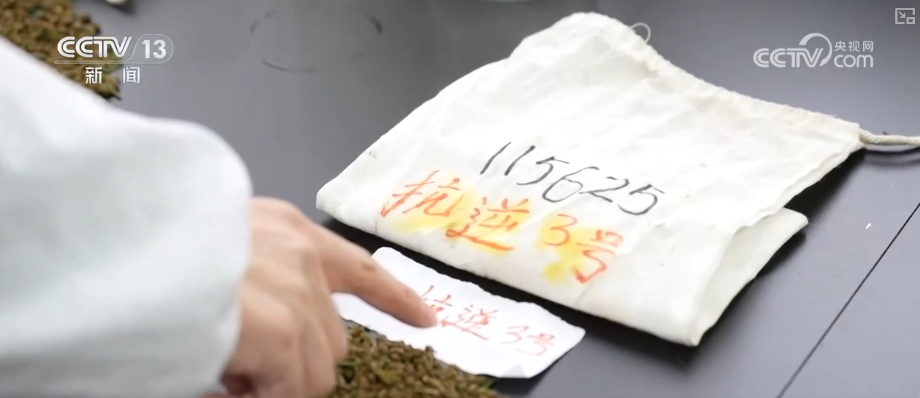
Core Viewpoint - The article emphasizes the importance of biodiversity protection, particularly focusing on the conservation and artificial breeding of the endangered plant species, Chamaecyparis obtusa (崖柏), in the Chongqing Xuebao Mountain National Nature Reserve, highlighting successful efforts in both ecological restoration and economic development through sustainable practices [1][21]. Group 1: Conservation Efforts - The Chongqing Xuebao Mountain National Nature Reserve is a key area for the conservation of Chamaecyparis obtusa, with over 3 million seedlings bred and more than 750,000 returned to the wild [1][19]. - The management team and forestry experts have collaborated to artificially breed and expand the cultivation of Chamaecyparis obtusa, which was once declared extinct in 1998 [8][11]. - The reserve has implemented advanced monitoring technologies to enhance the protection of wild Chamaecyparis obtusa populations, transitioning from manual monitoring to tech-enabled solutions [21][23]. Group 2: Breeding and Research - The success rate of cutting propagation for Chamaecyparis obtusa has increased from 20% to 96%, significantly accelerating the expansion of its population [15]. - The reserve has developed a comprehensive monitoring system to track the growth and reproductive cycles of Chamaecyparis obtusa, utilizing solar-powered technology for data collection [24][26]. - Research efforts are ongoing to identify superior genetic traits among Chamaecyparis obtusa specimens, with the aim of cultivating resilient varieties for ecological restoration [35][45]. Group 3: Economic Development - The Chongqing Xuebao Mountain National Nature Reserve has established itself as the largest breeding base for Chamaecyparis obtusa in China, supplying seedlings for ecological restoration across the country [33][45]. - Chamaecyparis obtusa is being utilized in various regions for its resilience against harsh environmental conditions, with successful trials reported in areas like Tibet and Shandong [37][39]. - The reserve has developed over 10 products, including essential oils from Chamaecyparis obtusa, and registered more than 60 related trademarks, contributing to local economic growth [45].

山东普查确认137种珍稀濒危植物,含多种国家重点保护物种
Qi Lu Wan Bao· 2025-10-16 03:26
Core Viewpoint - The Shandong Provincial Government announced the results of a survey on rare and endangered plant resources, identifying a total of 137 species across 73 families and 119 genera, highlighting the importance of conservation efforts for these plants [1][3]. Group 1: Survey Findings - The survey recorded 137 species of rare and endangered plants in Shandong Province, categorized into 73 families and 119 genera [3]. - Among these, there are 14 species of nationally protected wild plants and 92 species of provincially protected wild plants [1][3]. Group 2: Specific Plant Highlights - The survey identified four species of rare and endangered plants in China, including wild soybean, rose, Qingtan, and glandular-leaved blueberry [3]. - Notably, wild soybean is recognized for its high research value due to its natural evolution and strong resistance to environmental stressors, making it a critical genetic resource for breeding resilient soybean varieties [4]. - Wild rose, distinct from cultivated roses, plays a significant ecological role by stabilizing coastal sand dunes and providing food for birds, while also serving as a genetic reservoir for breeding disease-resistant and salt-tolerant rose varieties [5].

南京中山植物园获2024年植物园“科普之最”奖项
Nan Jing Ri Bao· 2025-08-08 02:46
Group 1 - The core point of the article is that Nanjing Zhongshan Botanical Garden won the "Best Science Popularization Event of the Year" award for its significant contributions to biodiversity conservation, particularly through the event "Focusing on Biodiversity Protection, Academicians Planting the Chenchui Tree" [1][2] - The award aims to recognize activities and achievements that have a broad impact on science popularization and plant protection, promoting innovation and development in botanical garden science outreach [1] - The Chenchui tree holds historical significance in Chinese botany, marking the beginning of Chinese scholars' independent research on new plant groups, with its type specimen collected in 1927 and officially named in 1928 [1] Group 2 - The Nanjing Zhongshan Botanical Garden emphasizes that the protection of rare and endangered plants requires attention and participation from all sectors of society, showcasing its commitment to public engagement and biodiversity conservation [2] - Since the 1950s, the garden has been involved in the introduction and cultivation of the Chenchui tree, accumulating extensive research data and experience [2] - The garden aims to establish an integrated protection model for rare and endangered plants, focusing on dynamic monitoring, ex-situ conservation, breeding, and population restoration, with plans to expand wild populations through introduction and return protection strategies [2]