生命周期

Search documents
东西问|洛伦斯:生命周期倡议中,中国为何不可或缺?
Zhong Guo Xin Wen Wang· 2025-12-22 12:17
Core Insights - The lifecycle initiative, proposed by the United Nations Environment Programme (UNEP) over 20 years ago, emphasizes the importance of considering the entire lifecycle of products for sustainable decision-making [4][5] - China plays a crucial role in the lifecycle initiative, with significant advancements in carbon footprint management and a commitment to building a comprehensive database system [10][11] Group 1: Lifecycle Initiative Overview - The lifecycle concept encompasses the entire process of a product from raw material extraction to disposal, promoting a comprehensive understanding of resource consumption and environmental impact [4] - The initiative aims to avoid "shifting environmental burdens" by encouraging holistic decision-making across all stages of product development and management [5] Group 2: Achievements and Challenges - The lifecycle concept has become a consensus in international environmental governance, with numerous global cases applying lifecycle assessment principles [7] - Despite progress, challenges remain in data exchange and interoperability, necessitating transparent and sufficient data for effective environmental impact assessments [7][8] Group 3: China's Role and Innovations - China's rapid progress in carbon footprint policy and management systems is noteworthy, with the establishment of a public carbon footprint service platform expected by 2025 [10] - The alignment of China's "Two Mountains" philosophy with lifecycle principles highlights a shared commitment to sustainable development and long-term ecological value [11] Group 4: Technological Integration - The integration of artificial intelligence in lifecycle projects is being explored, although it presents new challenges [8][12] - China's advancements in clean and green technologies are recognized as effective in environmental governance, with potential for sharing these innovations globally [12]


赵露思为何要换身份恰饭?
Hu Xiu· 2025-08-26 12:29
Core Viewpoint - The article discusses the fundamental differences between celebrities and internet influencers, focusing on aspects such as digital autonomy, procedural justice, monetization paths, and lifecycle, using Zhao Lusi as a case study [1][4][36]. Group 1: Digital Autonomy - Internet influencers possess unlimited digital autonomy, allowing them to engage in controversial behaviors for quick audience engagement, unlike celebrities who must maintain a positive public image [7][8]. - Zhao Lusi's decision to cancel her Weibo account, despite having over 31.22 million followers, illustrates her pursuit of digital autonomy as an influencer [8][9]. - Celebrities prioritize platforms like Weibo for maintaining fan connections and managing public relations, which is crucial for their career sustainability [10][11]. Group 2: Procedural Justice - The article raises questions about the importance of results versus procedural justice in charitable actions, suggesting that the process should be transparent and accountable [12][15]. - Fans of influencers often focus on the outcomes rather than the processes involved, contrasting with the expectations placed on celebrities to ensure transparency in their charitable efforts [13][16]. Group 3: Monetization Paths - The monetization paths for celebrities and influencers differ significantly; celebrities rely on artistic works and endorsements, while influencers capitalize on direct content monetization through social media [20][21]. - Zhao Lusi's shift towards influencer activities can be seen as a strategic decision to shorten her monetization path, allowing for quicker financial returns [26][28]. - Influencers can achieve immediate sales conversions through live streaming and social media, contrasting with the longer, more complex paths of traditional celebrities [28][29]. Group 4: Lifecycle - The influencer model, while offering quick financial gains, is characterized by a short lifecycle due to the fleeting nature of public attention [33]. - In contrast, the careers of actors can be more enduring, as evidenced by long-lasting careers of established actors who have built their reputations over decades [34]. - Zhao Lusi's choice to transition from a celebrity to an influencer raises questions about the long-term implications of such a decision in the entertainment industry [36].
打工30年,他用相机拍下“中国制造”背后的故事
Di Yi Cai Jing· 2025-07-28 05:13
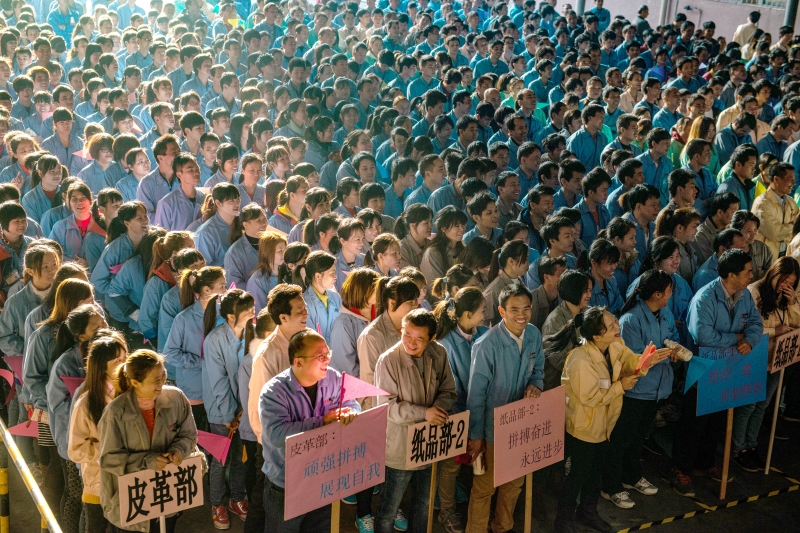
Core Insights - The article highlights the journey of a photographer, Zhan Youbing, who has dedicated 23 years to documenting the lives of migrant workers in China's manufacturing sector, capturing over 2 million photographs and creating numerous publications [1][20]. Group 1: Background and Early Life - Zhan Youbing, originally from Hubei, moved to Guangdong in 1995 after learning about job opportunities in Shenzhen, which was bustling with factories [3][4]. - He faced challenges in finding work initially, as many factories preferred experienced workers or female employees, leading him to take on a job as a hotel security guard [4][5]. Group 2: Photography Career Development - Zhan's interest in photography began in 2002 when he purchased his first second-hand camera, which marked the start of his journey in capturing the lives of workers [7][10]. - His early photography focused on more conventional subjects, but he gradually shifted to documenting the daily lives of migrant workers after receiving encouragement from online communities [8][10]. Group 3: Collection and Documentation - Over the years, Zhan has collected approximately 6 tons of artifacts related to migrant workers, including work documents, uniforms, and photographs, which he believes could contribute to a future museum dedicated to their history [16][20]. - His work includes a project titled "Labor Chronicles," which aims to compile his extensive documentation of migrant workers' lives into a comprehensive narrative [18][20]. Group 4: Personal Growth and Achievements - Zhan transitioned from factory work to becoming a recognized photographer and media center reporter in Dongguan, showcasing his growth and adaptation to changing circumstances [20]. - His publications, including "So Working for 30 Years," reflect on the evolution of the migrant worker experience over three decades, highlighting both challenges and changes in their lives [22].