
生态可持续

Search documents
迈向数字文明的资本有序扩张生态阈值模型
Jing Ji Guan Cha Wang· 2026-02-02 02:55
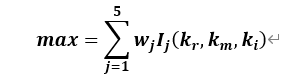
Core Viewpoint - The article introduces a novel theoretical framework called the Capital Ordered Expansion Ecological Threshold Model, aimed at balancing the dynamic interaction between digital capital vitality and sustainable civilization development in the context of the global digital economy [1]. Group 1: Theoretical Foundation - The model is rooted in the "Threefold Five-Dimensional" integration framework, emphasizing the need for a healthy "ecological interval" to prevent systemic risks arising from the interrelated nature of capital relationships, movement characteristics, and benefit essence in the digital age [2]. - The model identifies three bottom-line constraints: social equity (α), ecological sustainability (β), and data sovereignty security (γ), which must be maintained to avoid systemic collapse [2]. - The model aims to maximize five dimensions of interests through a coordinated framework, ensuring that no single dimension expands unchecked [2]. Group 2: Model Core - The core of the model is a target function designed to achieve the maximization of five-dimensional interests, expressed mathematically [3]. - The model incorporates governance philosophies and technical logic, such as clarifying data property rights and ensuring algorithm transparency and accountability [4]. Group 3: Decision Variables - The model defines three key decision variables: Kr (relationship variables), Km (movement variables), and Ki (benefit variables), which represent policy levers aimed at optimizing production relationships, capital movement forms, and benefit distribution patterns, respectively [5][8]. - Specific examples include the introduction of employee stock ownership in companies like China Unicom and Eastern Airlines to adjust internal capital and labor relations [8]. Group 4: Five-Dimensional Interest Function - The model specifies five measurable dimensions of interests, including subjective interests (Is), objective interests (Io), process interests (Ip), time interests (It), and spatial interests (Isp), each with its own key indicators [6][9]. - For instance, the implementation of data rights in Shenzhen has led to increased income for delivery workers, reflecting an enhancement of subjective interests [9]. Group 5: Constraints and Governance - The optimization of the target function is bounded by four rigid constraints, which form the model's lifeline: social equity (α), ecological sustainability (β), data sovereignty security (γ), and a coordination degree constraint (δ) [10][11]. - The model emphasizes the importance of maintaining a dynamic harmony index (δ) of at least 0.7 to ensure effective policy coordination across the three dimensions [13]. Group 6: Global Significance of China's Approach - The Capital Ordered Expansion Ecological Threshold Model represents a theoretical innovation and a "Chinese solution" for global digital governance, transcending both technological utopianism and market fundamentalism [11]. - The model provides a practical governance toolbox that translates abstract concepts of fairness, sustainability, and security into quantifiable indicators, facilitating precise management [11]. - It embodies the concept of a "community with a shared future for mankind," reflecting a commitment to global development and long-term sustainability [12].

《人与社会全面发展》报告发布:应利用大数据精准识别易返贫群体
Xin Jing Bao· 2025-10-17 12:55
Core Insights - The "People and Society Comprehensive Development" concept aims to integrate fairness, effective governance, ecological sustainability, and cultural prosperity into development goals, promoting systematic and coordinated development across economic, political, social, cultural, and ecological dimensions [1][2]. Group 1: Key Areas of Focus - The report outlines specific action paths and policy recommendations in eight areas: poverty alleviation and rural revitalization, food security and agricultural modernization, industrial development and economic diversification, digital economy and artificial intelligence construction, green transformation and climate change response, global public health and health cooperation, education cooperation and human resource development, and financial support and development financing [1][2]. Group 2: Specific Recommendations - In poverty alleviation and rural revitalization, countries should establish dynamic poverty identification and monitoring mechanisms using big data and grassroots governance networks to accurately identify vulnerable groups and provide differentiated support [2]. - For digital economy and AI development, the report encourages the growth of local digital platforms and applications, supporting small and medium enterprises and startups in entering the AI sector, and fostering a self-controlled digital and intelligent industry ecosystem to avoid "digital colonialism" [2]. - In global public health cooperation, there is a call to strengthen vaccine and drug research and production capabilities, promote equitable distribution, and avoid "health gaps" [2]. - The report emphasizes the need for developing vocational education and lifelong learning systems to adapt to industrial transformation and technological changes, thereby enhancing employability [2]. Group 3: Forum Structure - The Tongzhou Global Development Forum, founded by Renmin University in 2023, serves as a high-level dialogue platform for global leaders from politics, academia, and business to discuss global development strategies [2]. - This year's forum features a structure of "1 main forum + 15 sub-forums + 1 roundtable dialogue," focusing on topics such as the Belt and Road Initiative, digital finance, energy security, global governance, human health, cross-cultural communication, and youth responsibility [2].