生物相容性

Search documents
小小家蚕,原来有这么多神奇应用(院士讲科普)
Ren Min Wang· 2026-01-24 01:22
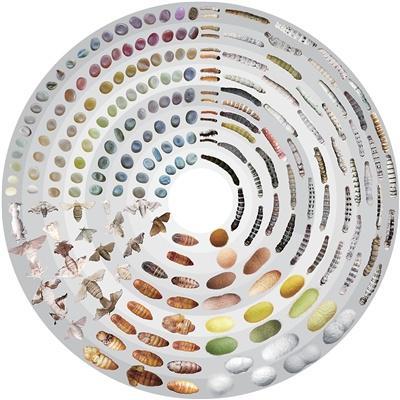
Core Viewpoint - The article highlights the diverse applications of silk, particularly in biomedical fields, showcasing its potential in wound healing and artificial cornea production, driven by the unique properties of silk proteins [10][12][13]. Group 1: Applications of Silk - Silk proteins can be used to create gentle dressings that accelerate healing without causing allergies [13] - An artificial cornea made from silk proteins can be rapidly transplanted to restore vision for patients with severe corneal damage [10][13] - The biocompatibility and biodegradability of silk make it a promising material for regenerative medicine, including cartilage, skin, and corneal tissue repair [12][13] Group 2: Genetic Research and Development - The establishment of a "silkworm gene bank" has preserved over 1,200 genetic resources, covering more than 90% of known genetic variations in silkworms [16][17] - The completion of the "thousand silkworm genome" project has created a comprehensive genetic dictionary, allowing for precise identification of genes that control silk properties [17] - Genetic editing techniques are being utilized to produce silkworms that can yield silk with specific desired traits, significantly reducing the time required for breeding [17] Group 3: Longevity and Regeneration Insights - Research has identified a key gene, OSER1, in silkworms that is associated with longevity, which may provide insights into human aging and disease [19][20] - The regenerative mechanisms observed in silkworms could offer new approaches for treating degenerative diseases and injury repair [20]

浙江大学最新Cell子刊:贺永/吴梦婕/尹俊合作开发生物水凝胶电池,用于组织再生和心脏起搏
生物世界· 2026-01-21 04:28
Core Viewpoint - The article discusses the development of a biodegradable biohydrogel battery that addresses the limitations of traditional batteries in biomedical applications, particularly their poor biocompatibility and non-degradability [3][6]. Group 1: Research Development - A research team from Zhejiang University has developed a flexible, biodegradable battery using light polymerization 3D printing technology, which maintains a stable current of 0.001 - 6 mA at a voltage of 1.5 V [3][7]. - The biohydrogel battery exhibits high printing precision of 50 micrometers, with tensile strain and compression rates of 200% and 95%, respectively, matching the mechanical properties of biological tissues [7]. Group 2: Applications and Functionality - The biohydrogel battery can operate in dual current modes, providing microcurrents (0.001 - 1 mA) to promote tissue regeneration and higher currents (1 - 6 mA) for effective cardiac pacing, offering new avenues for tissue stimulation and biomedical applications [3][7]. - The battery utilizes a conductive ion-type chondroitin sulfate methacrylate-gelatin methacrylate hydrogel and InGa3-Cu nanoparticles as electrolyte and electrode materials, respectively, showcasing excellent mechanical properties and biocompatibility [6][7].