
电动汽车销量增长

Search documents
机构:2025年全球纯电和插电式混动汽车销量增长20%
Xin Lang Cai Jing· 2026-01-14 06:17
Core Insights - The global electric vehicle (EV) registrations are projected to grow by 20% in 2025, reaching 20.7 million units, although growth may slow in 2026 [1][3] - In December, global EV registrations increased by 6% year-on-year, totaling nearly 2.1 million units, marking the slowest growth since February 2024 [4] - The U.S. EV tax credit program is expected to impact North American EV registrations negatively, leading to a 39% year-on-year decline in December [4][5] Regional Summaries - **China**: EV sales are expected to grow by 17% in 2025, reaching 12.9 million units, with December sales showing a minimal increase of 2% [4][5] - **North America**: December registrations fell by 39% to just over 100,000 units, with an annual decline of 4%. Overall, the U.S. market is projected to see a 29% drop in sales, contributing to a 23% decline in the North American region [5][2] - **Europe**: December registrations rose by 34% to over 450,000 units, with an annual growth of 33%. The growth rate is expected to slow to 15% in the coming year [5][2] - **Other Regions**: Sales in other parts of the world increased by 41% in December, exceeding 160,000 units, with a projected annual growth of 48% for 2025 [5][2]
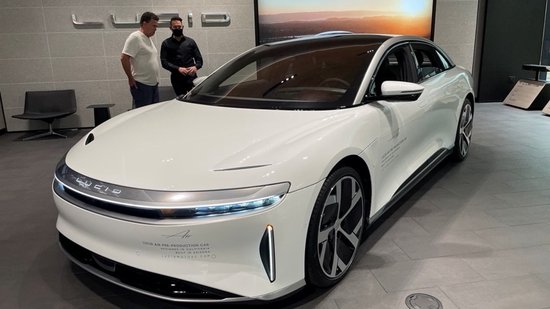
Lucid集团2025年电动汽车交付量增长55% 达成下调后业绩指引
Xin Lang Cai Jing· 2026-01-05 16:46
Group 1 - Lucid Group significantly increased production and sales last year, continuing to expand the capacity of its new Gravity SUV model [3][5][8] - The company announced that deliveries will rise to 15,841 units in 2025, representing a 55% year-over-year increase compared to 2024, with fourth-quarter deliveries expected to grow over 70% [3][5][8] - Lucid has adjusted its 2025 production target to approximately 18,000 units, down from an initial forecast of 20,000 units, with actual production expected to be 18,378 units, including 8,412 units in the fourth quarter [3][8] Group 2 - The increase in production is largely attributed to the extended ramp-up period for the Gravity SUV, which has faced challenges primarily due to supply chain shortages [3][8] - The electric vehicle industry is encountering broader challenges, including rising costs due to tariffs, slowing sales expectations, and negative impacts from regulatory policy changes, including the termination of federal consumer purchase subsidies [3][8]


11月俄新电动汽车销量同比增长57%
Xin Hua Cai Jing· 2025-12-08 23:29
Core Insights - The report from Russian automotive analysis agency Autostat indicates that the sales of new electric vehicles in Russia are expected to increase by 57% year-on-year in November 2025, reaching 1,602 units [1] - The top five electric vehicle brands in Russia for November include domestic brands AmberAuto and Evolute, as well as Chinese brands Zeekr, Xiaomi, and BYD [1] - For the first eleven months of 2025, a total of 11,200 new electric vehicles were sold in Russia, representing a 31% decrease compared to the same period in 2024 [1]
【环球财经】机构:俄罗斯新电动汽车销量一年来首次出现同比正增长
Xin Hua Cai Jing· 2025-08-15 05:58
Core Insights - In July 2025, Russia's new electric vehicle sales experienced a year-on-year increase for the first time, with 1,257 units sold, representing a 15% growth compared to 1,094 units in the same month last year [1] - This marks the first positive momentum in the electric vehicle segment of the Russian automotive market in over a year, with the last recorded year-on-year growth occurring in June 2024 [1] - Additionally, July 2025 saw the monthly electric vehicle sales surpass 1,000 units for the first time since the beginning of the year [1] Sales Data - For the first seven months of 2025, the total number of new electric vehicles sold in Russia reached 57,000 units, which is nearly a 50% decrease compared to the same period last year [1]
国际能源署:全球电动汽车销量持续增长 中国领跑
Zhong Guo Xin Wen Wang· 2025-05-15 10:16
Core Insights - The International Energy Agency (IEA) report indicates a continuous growth in global electric vehicle (EV) sales, with China leading both production and sales in the global EV market [1][2] - In 2024, global EV sales are projected to increase by approximately 25%, surpassing 20% of the total global automotive market for the first time [1] - Emerging markets in Asia and South America are becoming key growth centers for EV sales, with total sales expected to grow over 60% year-on-year in 2024 [1] - Despite stagnation in European EV sales, the region maintains a market share of around 20% [1] - The report highlights that declining battery costs are making EVs more affordable, contributing to their growing popularity among consumers [1] - The operational cost of EVs is generally lower than that of gasoline vehicles, with EVs in Europe costing about half as much to operate compared to their gasoline counterparts [1] Market Projections - Global EV sales are expected to exceed 20 million units by 2025, accounting for over 25% of total global automotive sales [2] - By 2030, global EV sales are anticipated to surpass 40% of new car sales worldwide [2]
最新研究:全球电动车销量四月稳定增长 贸易壁垒难挡行业上升势头
智通财经网· 2025-05-14 03:45
Core Insights - Global sales of electric and plug-in hybrid vehicles increased by 29% year-on-year in April, despite trade tensions, with stable growth in China and Europe, while North America experienced its first decline since September last year [1] - European traditional automakers surpassed Tesla in electric vehicle sales as they sought to meet EU carbon dioxide emission targets [1] - Tesla's market share continued to decline ahead of a refresh of its best-selling Model Y [1] Group 1 - Global sales of pure electric and plug-in hybrid vehicles reached 1.5 million units in April [2] - Sales in China grew by 32% year-on-year to 900,000 units, while Europe saw a 35% increase to 300,000 units, and North America experienced a 5.6% decline to 100,000 units [2] - The increase in plug-in hybrid vehicle sales in other regions is largely attributed to exports from China [2] Group 2 - Governments worldwide are implementing policies to encourage electric vehicle adoption, although trade tensions and a slowing automotive market may lead to factory closures and job losses [2] - China extended its vehicle trade-in subsidy policy until 2025 to promote economic growth and expand consumer trade-in programs [2]
