电动车储能

Search documents
2026年1月份汽车消费指数为31.1;特斯拉即将推出第三代人形机器人丨汽车早参
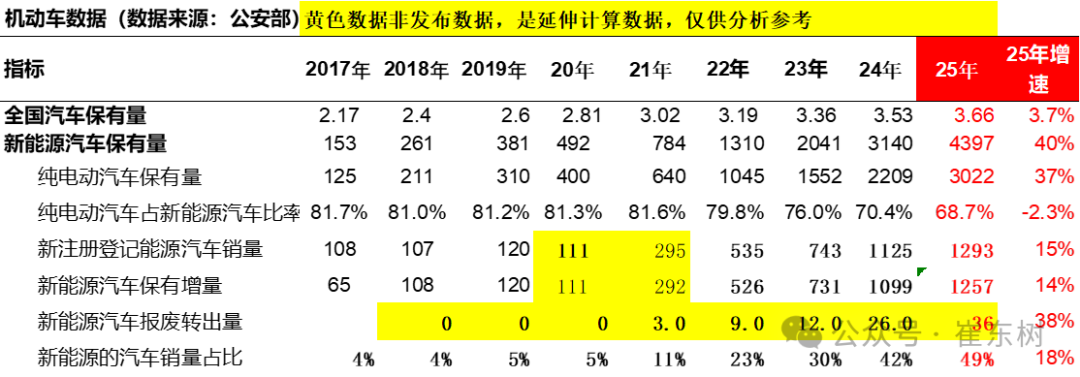
Mei Ri Jing Ji Xin Wen· 2026-02-02 23:09
Group 1: Automotive Consumption Index - The automotive consumption index for January 2026 is reported at 31.1, with expectations of a decline in February sales due to multiple factors including the Spring Festival holiday, previous demand exhaustion, the rollback of new energy vehicle purchase tax, and consumer anticipation of post-holiday promotions and new product launches [1] - The low consumption index for January and the anticipated pressure in February may lead to cautious market sentiment regarding the short-term sales momentum and quarterly performance of mainstream automotive companies [1] - The data highlights the real challenges faced by the automotive industry, particularly the new energy sector, amid policy shifts and seasonal factors, prompting investors to focus more on inventory management and the effectiveness of promotional strategies [1] Group 2: Electric Vehicle Energy Storage - The explosive growth of electric vehicle ownership in China is creating vast distributed mobile energy storage resources, enhanced by the large-scale deployment of charging stations that improve load control capabilities [2] - The innovation in time-of-use pricing mechanisms this year aligns with the flexible charging and discharging needs of electric vehicles, incentivizing their participation in peak shaving and renewable energy consumption [2] - This perspective on electric vehicle energy storage and pricing adjustments expands the assessment of the long-term value of the new energy vehicle industry, encouraging investors to consider the potential of electric vehicles as distributed energy storage units and their additional revenue opportunities [2] Group 3: Huawei's New Model Launch - Huawei's announcement of the upcoming launch of the AITO M6 model, completing its main product lineup, is expected to enhance market confidence in its smart car model's comprehensive planning and continuous iteration capabilities [3] - The release of new models by leading brands in the smart electric vehicle sector indicates a competitive focus on the breadth and speed of product updates, prompting investors to pay closer attention to the alignment of vehicle model cycles and market response efficiency [3] Group 4: Tesla's Humanoid Robot - Tesla's announcement regarding the upcoming third-generation humanoid robot, which can learn new skills by observing human behavior and is expected to achieve an annual production of one million units, reinforces its image as a pioneer in cutting-edge technology [4] - The company's claim of reconstructing its supply chain from first principles rather than relying on existing systems may attract capital interested in disruptive innovation [4] - This initiative is likely to have a dual impact on the robotics and automation sector, enhancing long-term market capacity expectations while prompting a reassessment of the technological pathways and customer base stability of existing related companies [4]

崔东树:电动车储能推动分时电价调整 重构新型电力系统机制
智通财经网· 2026-02-02 09:20
Core Insights - The development of China's new energy vehicles (NEVs) is significantly enhancing the energy ecosystem, with a current ownership of 43.97 million electric vehicles and a battery storage potential of 2000 GWh, contributing to the stability of the power grid [1][5] - The transition to dynamic pricing for time-of-use electricity is driven by the increasing value of energy storage from electric vehicles, which is expected to facilitate the construction of a new power system and support carbon neutrality goals [1][2] Time-of-Use Pricing Policy Adjustment - The National Development and Reform Commission and the Energy Administration will implement a market-based dynamic pricing model for commercial charging stations starting March 2026, while optimizing residential time-of-use pricing [2] - This shift aims to provide price support for the energy storage value of electric vehicles, moving from a fixed pricing model to a more responsive and market-oriented pricing mechanism [2] Rapid Growth of Electric Vehicle Ownership - As of 2025, the total number of NEVs in China is projected to reach 43.97 million, accounting for 12.01% of all vehicles, with pure electric vehicles making up 68.74% of this total [3] - The annual growth rate of new registrations for NEVs is expected to be 14.93%, indicating a robust market expansion [3] Energy Storage Effects of Electric Vehicles - The large-scale deployment of electric vehicles is transforming them into a significant flexible resource for the power grid, capable of participating in load regulation and energy storage [4][6] - The potential for electric vehicles to provide grid support during peak times and absorb excess energy during off-peak times is becoming increasingly evident, enhancing the overall efficiency of the power system [5][6] Charging Infrastructure Development - The number of public charging stations is expected to reach 4.72 million by December 2025, with significant year-on-year growth, which is crucial for the practical implementation of time-of-use pricing [7][8] - The widespread installation of charging infrastructure is enhancing the ability to manage load and respond to market signals, facilitating the transition to a more dynamic pricing model [8]