电池制造工艺

Search documents
马斯克彻底搞定大圆柱电池,发布五年终落地,独家专利破解量产难题
3 6 Ke· 2026-02-03 03:17
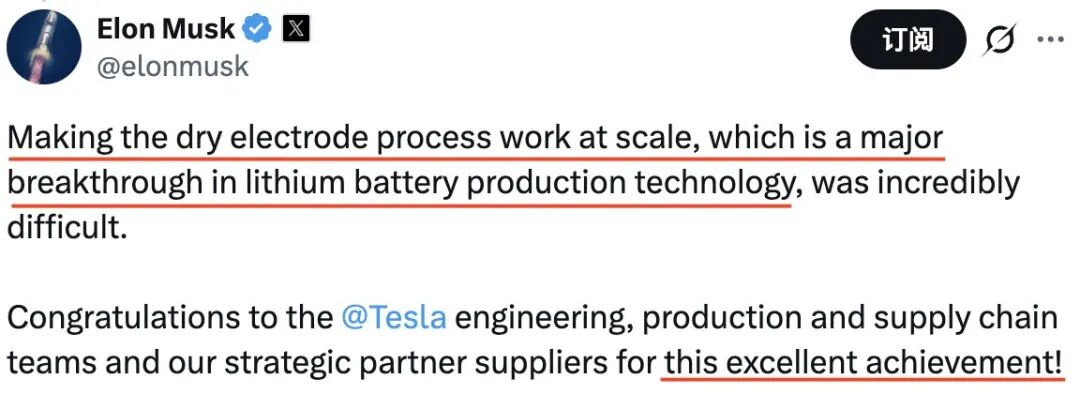
Core Insights - Tesla has achieved a significant milestone by successfully implementing the production of its 4680 battery cells using a dry electrode process at its Austin factory, marking a breakthrough after five years of development [1][23] - The integration of the 4680 battery cells into the Model Y is part of Tesla's strategy to enhance supply chain resilience and mitigate risks associated with trade barriers and tariffs [2][9][21] Group 1: Production and Technology - Tesla has begun producing battery packs for the Model Y that utilize the in-house manufactured 4680 cells, with both the anode and cathode now employing the dry electrode method [1][7] - The dry electrode process is expected to reduce production costs and energy consumption, allowing for a more compact factory footprint and simpler manufacturing processes [12][20] - The new technology has reportedly increased production throughput by three times and reduced factory space requirements by 50% while cutting production energy consumption by 90% [20] Group 2: Strategic Implications - The move to use 4680 cells in the Model Y is seen as a risk mitigation strategy, providing Tesla with an alternative supply option amidst uncertainties in the external supply environment [9][10] - Despite the technological advancements, the performance improvements for consumers may be limited, as the primary focus is on supply chain flexibility rather than significant enhancements in battery performance [10][21] - The announcement has been characterized by some media outlets as a response to tariff challenges rather than a revolutionary step in battery technology [21]