癌症早筛早治

Search documents
中国人最爱的生活方式,正在疯狂致癌
36氪· 2025-10-27 00:09
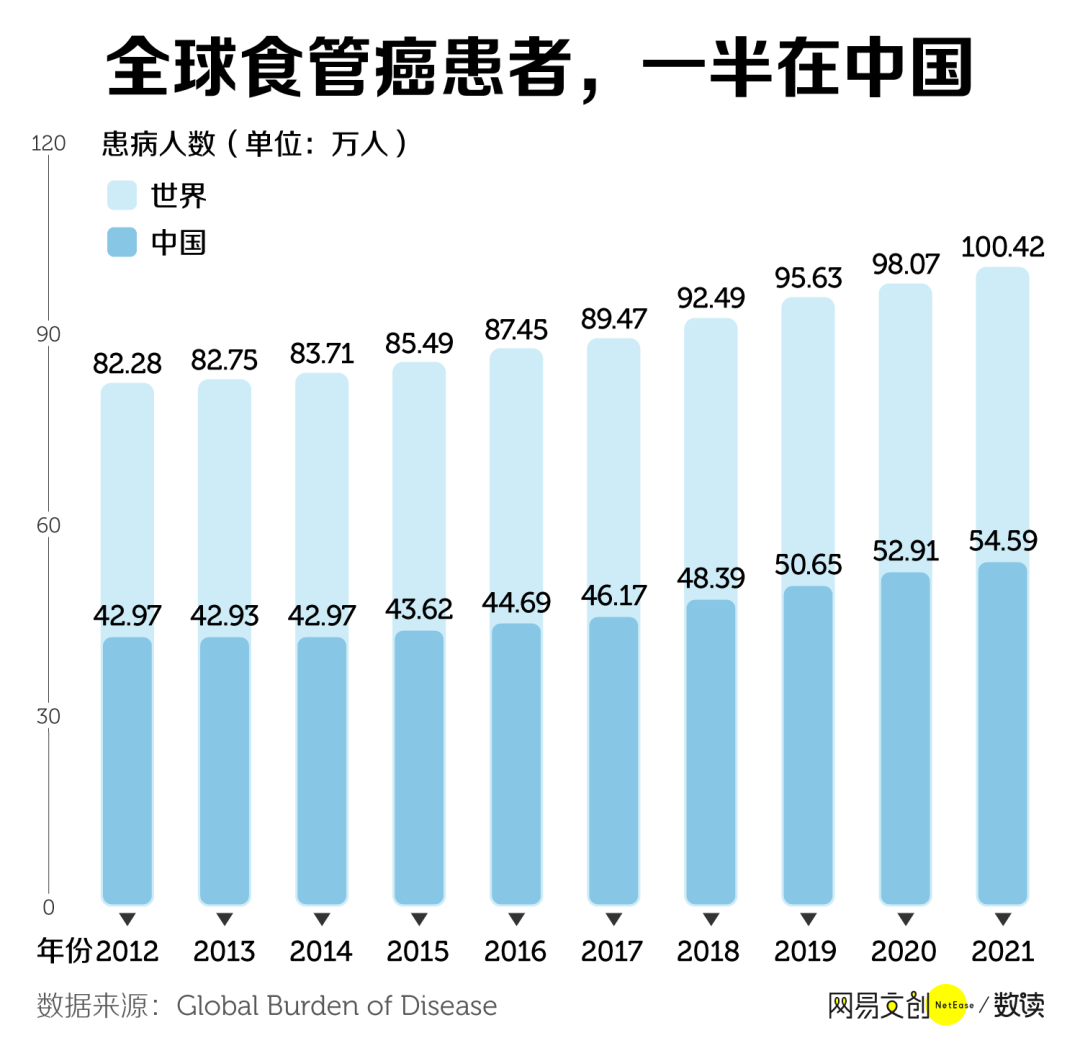
Core Viewpoint - China accounts for half of the global esophageal cancer cases, with a significant burden due to dietary habits and lifestyle choices [6][11][12]. Group 1: Esophageal Cancer Overview - Esophageal cancer originates from the epithelial lining of the esophagus and is one of the most common digestive tract malignancies in China, ranking sixth in incidence and fourth in mortality among all cancers [7][9]. - In 2021, there were approximately 1 million esophageal cancer patients worldwide, with over 75% located in Asia, and China having the highest number of cases and deaths [11]. - The incidence rate in China is 38.37 per 100,000, with men being nearly three times more likely to be affected than women [15]. Group 2: Regional and Demographic Disparities - Rural areas in China have a significantly higher incidence and mortality rate of esophageal cancer, approximately double that of urban areas [17]. - High-risk regions include areas near the Taihang Mountains and parts of Jiangsu, Sichuan, and Guangdong, with Jiangsu having the highest standardized mortality rate at 21.62 per 100,000 [21][12]. Group 3: Dietary and Lifestyle Factors - Major risk factors for esophageal cancer include smoking, alcohol consumption, and poor nutrition, with specific dietary habits such as consuming hot and spicy foods linked to higher incidence rates [23][25]. - Studies indicate that individuals with habits of consuming hot foods and spicy diets have a 1.9 times and 1.5 times higher risk of developing esophageal cancer, respectively [28]. - The consumption of pickled foods, which are prevalent in high-incidence regions, is associated with increased cancer risk due to high salt content and the presence of carcinogenic substances like nitrosamines [29][30]. Group 4: Survival Rates and Early Detection - The five-year survival rate for esophageal cancer in China is only 28.8%, significantly lower than other cancers, primarily due to late diagnosis [32][36]. - Early detection through endoscopic screening can dramatically improve survival rates, with a reported 90% five-year survival rate for early-stage patients [39][40]. - The National Health Commission recommends regular screenings for high-risk populations, particularly those over 45 years old or with a family history of the disease [40].

中国人最爱的生活方式,正在疯狂致癌
Hu Xiu· 2025-10-23 07:25
Core Viewpoint - The article discusses the high prevalence of esophageal cancer in China, attributing it to dietary habits, particularly the consumption of hot and spicy foods, as well as the impact of lifestyle choices such as smoking and alcohol consumption. Group 1: Esophageal Cancer Prevalence - China accounts for over half of the global esophageal cancer cases, with more than 90% being squamous cell carcinoma [10][8] - The incidence and mortality rates of esophageal cancer in China rank sixth and fourth among all malignancies, respectively [7][9] - In 2021, the incidence rate in China was 38.37 per 100,000, with men being nearly three times more likely to be affected than women [15][10] Group 2: Regional and Demographic Disparities - Rural areas in China have a significantly higher incidence and mortality rate of esophageal cancer, approximately double that of urban areas [18][14] - High-risk regions include areas around the Taihang Mountains and parts of Jiangsu, Sichuan, and Guangdong [19][20] - The standardized mortality rate is highest in Jiangsu at 21.62 per 100,000, followed by Sichuan and Henan [21][20] Group 3: Dietary and Lifestyle Factors - Major risk factors for esophageal cancer include smoking, alcohol consumption, and poor nutritional intake [24][27] - Hot and spicy food consumption is linked to higher cancer risk, with studies indicating that individuals with these dietary habits have a 1.9 times higher risk [31][29] - The World Health Organization classifies beverages above 65°C as a potential carcinogen, with common Chinese foods often exceeding this temperature [30][9] Group 4: Survival Rates and Detection Challenges - The five-year survival rate for esophageal cancer in China is only 28.8%, significantly lower than other cancers [41][44] - Early detection is challenging due to the asymptomatic nature of early-stage esophageal cancer, leading to late diagnoses [45][41] - Recommendations for screening include endoscopic examinations for high-risk individuals aged 45 and above [47][41]