
登门槛效应

Search documents
无论和谁相处,一定记住这5个超实用的心理学效应
Jing Ji Guan Cha Bao· 2026-01-23 01:57
Group 1 - The article discusses five practical psychological effects that can enhance social interactions and improve relationships [4] - The first effect is the Primacy Effect, which states that people form initial impressions within seven seconds of meeting someone [5][6] - The second effect is the Twelve-Second Effect, indicating that individuals have a twelve-second window where emotions can lead to impulsive reactions during conflicts [11][12] - The third effect is the Franklin Effect, which suggests that people are more likely to help those who have helped them in the past, fostering positive relationships [15][16] - The fourth effect is the Foot-in-the-Door Technique, where agreeing to a small request increases the likelihood of agreeing to a larger request later [18][19] - The fifth effect is the Sandwich Effect, which involves delivering criticism between two positive statements to make it more acceptable [26][27] Group 2 - The article emphasizes that mastering these psychological effects can lead to more effective communication and relationship-building [4][30] - It highlights the importance of first impressions and managing one's appearance and behavior to create a positive initial impact [9][10] - The article also discusses strategies for emotional regulation during conflicts, such as taking a pause to allow emotions to settle [13][14] - It explains how the Franklin Effect can be a strategic approach to building connections by encouraging mutual support [15][17] - The Foot-in-the-Door Technique is illustrated through a psychological experiment demonstrating its effectiveness in gaining compliance [19][20] - The Sandwich Effect is presented as a method to soften criticism and maintain a positive atmosphere in communication [28][29]
AI生成的帅弟弟,把退休阿姨们钓成了翘嘴
3 6 Ke· 2026-01-16 00:17
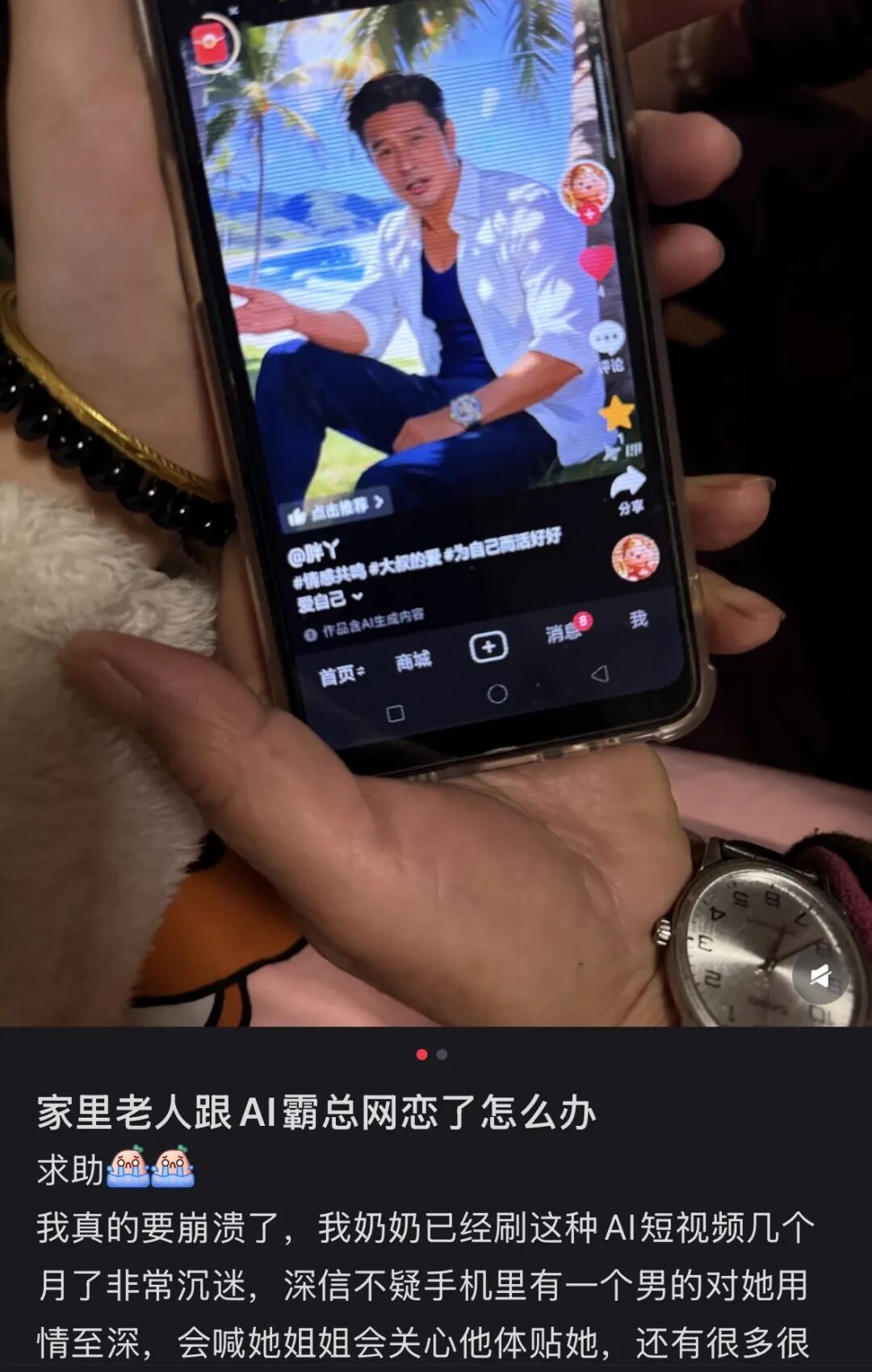
Group 1 - The article discusses the phenomenon of AI-generated characters, particularly the "AI霸总" (AI CEO), who captivates older women on short video platforms, leading to emotional engagement and fantasy relationships [1][4][12] - The character "乐活老罗" is highlighted for his repetitive proposal videos, showcasing a blend of charm and absurdity that appeals to the target audience [4][6][9] - The comments section becomes a space for older women to express their affection, often mistaking the AI-generated content for genuine interactions, indicating a disconnect with the reality of AI [12][18][19] Group 2 - The article notes that the AI-generated content is designed to exploit emotional vulnerabilities, with creators using these personas to sell products targeted at older demographics [39][41][43] - The marketing strategy involves creating a sense of intimacy and care, which encourages older women to engage in online shopping, often for items they might not typically purchase [41][44][46] - The article emphasizes the effectiveness of these tactics, as older users become more comfortable with online transactions, driven by the emotional connection fostered by the AI characters [43][57] Group 3 - Data indicates that the silver-haired demographic (aged 50 and above) is increasingly active on social media, with significant engagement in short video content, making them a prime target for AI-generated interactions [58][59][60] - The article compares the emotional needs of older adults with those of younger generations, suggesting that both groups use AI to fill emotional voids in their lives [65][66] - The discussion highlights the broader implications of loneliness and emotional poverty in modern society, suggesting that the rise of AI characters is a response to these deeper social issues [66][67]

搞定一个人最好的方法,不是请客吃饭,而是坚持“登门槛效应”
Jing Ji Guan Cha Bao· 2025-08-22 02:46
Group 1 - The core concept discussed is the "Foot-in-the-door Effect," which suggests that once a person agrees to a small request, they are more likely to agree to a larger request later to maintain cognitive consistency [4][6][8] - The phenomenon was demonstrated in a psychological experiment where participants who initially agreed to a small request were significantly more likely to agree to a larger request later, with a success rate of 55% compared to 17% for those who were not approached with a small request first [7][14] - The application of this effect is widespread, including in scenarios like street surveys or charity fundraising, where small initial requests lead to higher compliance for larger requests [9][12][14] Group 2 - To effectively utilize the "Foot-in-the-door Effect" in improving relationships, it is recommended to start with small, easily acceptable requests, gradually increasing the difficulty of subsequent requests [15] - Requests should be rationalized with logical reasoning to make them more acceptable, as people are more inclined to help when they understand the reasoning behind the request [16][17] - Expressing gratitude and providing positive feedback after a small request is accepted can reinforce the behavior and increase the likelihood of future compliance [18][19]