白酒行业布局

Search documents
贵州茅台Q3业绩出炉,增速回落至1%以内!政策和估值双重支撑,消费ETF(159928)5日狂揽超7亿元!机构:为什么认为白酒进入低位布局阶段?
Sou Hu Cai Jing· 2025-10-30 05:53
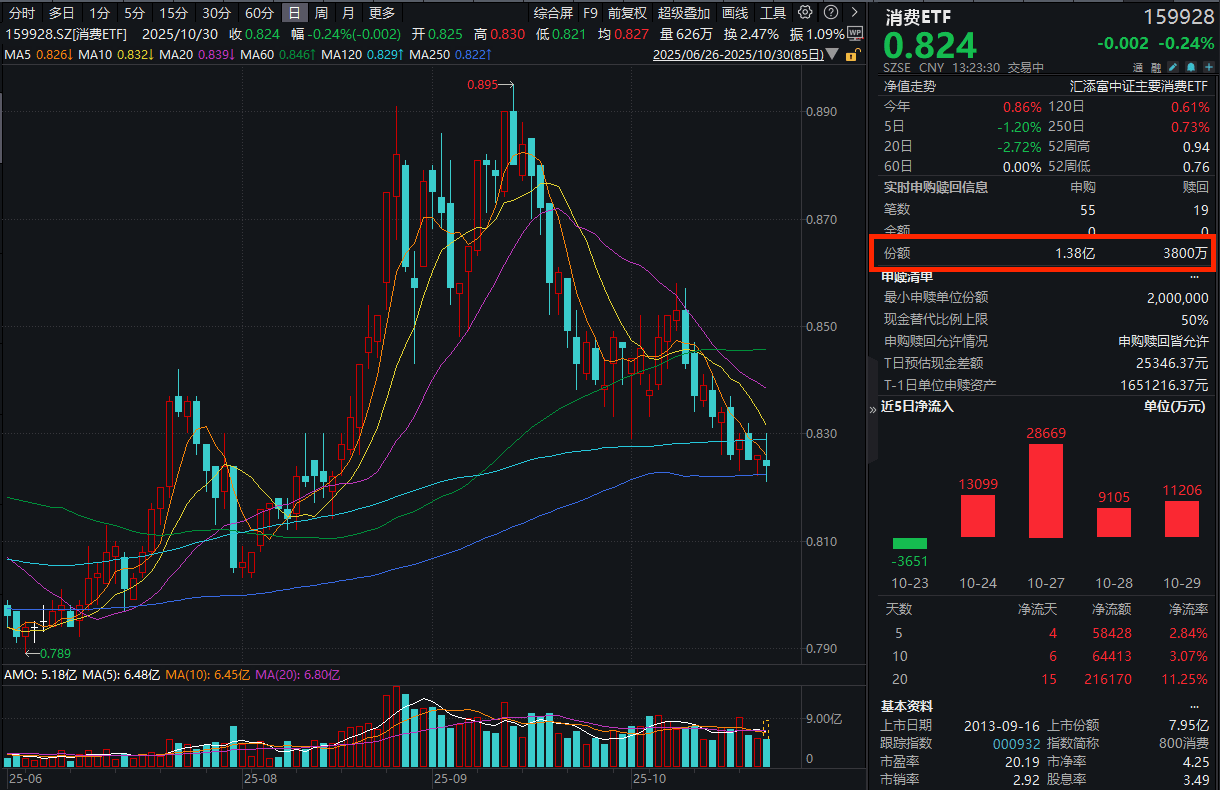
Group 1: Market Overview - The Shanghai Composite Index experienced fluctuations and a slight decline, with the Consumption ETF (159928) dropping by 0.24% and trading volume exceeding 520 million yuan during the day [1] - The Consumption ETF (159928) saw a net subscription of 100 million units during the day, accumulating over 700 million yuan in five days, and its latest scale surpassed 20.9 billion yuan, leading its peers significantly [1] Group 2: Company Performance - Kweichow Moutai reported its Q3 earnings, achieving a revenue of 130.9 billion yuan and a net profit of 64.63 billion yuan for the first three quarters of 2025, both up by 6.3% year-on-year. However, Q3 growth slowed to just 0.4% for revenue and 0.5% for net profit, indicating a rare decline in growth rates [3] - Other liquor stocks showed mixed performance, with Yanghe Co. rising over 2% and Shanxi Fenjiu increasing by over 1%, while Luzhou Laojiao remained stable and Wuliangye slightly declined [3] Group 3: Investment Insights - Guizhou Moutai's slowing growth reflects its leadership role in the industry, prompting other companies to adjust their strategies amid weak demand [3] - The white liquor sector is viewed as entering a layout phase, with investment opportunities emerging despite performance expectations declining significantly for Q3 2025 [5][7] - The valuation of the consumption sector is considered attractive, with the Consumption ETF (159928) trading at a TTM P/E ratio of 19.11, which is lower than 98% of the historical data over the past decade [6] Group 4: Policy and Economic Context - Recent planning documents emphasize the importance of consumption, addressing issues such as employment and income growth pressures, and proposing measures to enhance consumer capacity and increase public service spending [9][10] - The focus on improving the income distribution system aims to boost consumer spending, highlighting the need for a consumption-driven economic model [11]