百家争鸣

Search documents
中央党校王杰教授:从神本到人本 先秦哲学的两次重大转向
Xin Lang Cai Jing· 2025-12-25 23:32
Core Insights - The lecture by Professor Wang Jie focuses on the evolution of Chinese philosophy, particularly the two significant transformations during the pre-Qin period that shaped its unique characteristics and relevance today [3][20]. Group 1: Historical Context and Framework - Chinese philosophy is not a linear development but a complex, multi-layered process that has evolved through historical interactions and transformations [3][4]. - The evolution of Chinese philosophy can be divided into seven stages, starting from the pre-Qin schools of thought to the Qing dynasty's practical studies, each building upon the previous one [6][9]. Group 2: Key Transformations - The first major transformation occurred from a "theological" perspective to a "humanistic" consciousness, marking a shift from divine authority to ethical governance during the Western Zhou period [10][13]. - The second transformation transitioned from "official learning" to "hundred schools of thought," allowing for a more diverse and independent intellectual discourse, particularly during the Warring States period [15][16]. Group 3: Philosophical Implications - The first transformation established a foundation for ethical governance, emphasizing human agency and moral responsibility over divine will [12][14]. - The second transformation fostered a rich intellectual environment where various schools of thought, such as Confucianism, Daoism, and Legalism, could emerge and compete, leading to a dynamic philosophical landscape [17][18]. Group 4: Contemporary Relevance - Understanding these historical shifts is crucial for addressing modern challenges and fostering cultural confidence, as they provide insights into how traditional Chinese philosophy can inform contemporary issues [20][21].


百年文史馆
Xin Lang Cai Jing· 2025-12-22 06:59
Core Viewpoint - The article reflects on the future of cultural and historical institutions in China, emphasizing the importance of the "Hundred Flowers Bloom and Hundred Schools of Thought Contend" policy in fostering cultural innovation and diversity [1] Group 1: Historical Context - The "Hundred Flowers Bloom" phrase was written by Mao Zedong in 1953 for the Chinese Opera Research Institute, while "Hundred Schools of Thought Contend" was inscribed for the newly established "Historical Research" magazine in 1954 [1] - The "Double Hundred Policy" was proposed on April 28, 1956, and has been diligently followed by cultural and historical institutions across the country for 70 years [1] Group 2: Cultural Innovation - The article stresses that cultural institutions should remember and implement the essence of "Hundred Flowers Bloom and Hundred Schools of Thought Contend" [1] - It highlights the necessity of "pushing forward" to ensure a diverse cultural landscape, as mere repetition of old ideas leads to stagnation [1] - The call for innovation is clear: institutions must dare to think, speak, act, and innovate, prioritizing new ideas to strengthen the nation's culture [1]
战国版“吐槽大会”上,他吐槽孟子和邹忌
Xin Lang Cai Jing· 2025-12-19 17:24
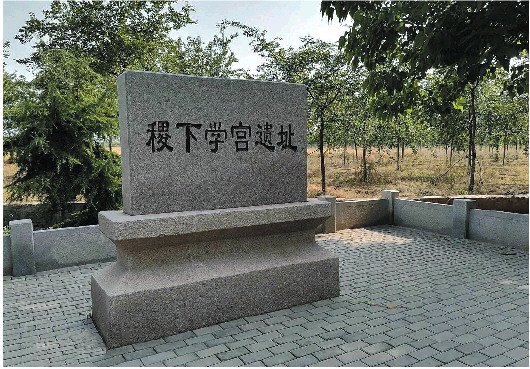
Core Viewpoint - The article discusses the historical significance of the Jixia Academy in the Qi State, highlighting its role as an early form of a government-sponsored university and its notable figure, Chunyu Kun, who rose from humble beginnings to become a prominent advisor and scholar [2][3]. Group 1: Historical Context - Jixia Academy was established during the reign of Duke Huan of Qi and reached its peak under Dukes Wei and Xuan of Qi, serving as a center for intellectual discourse and debate [2][8]. - The academy was founded around 370 BC by Duke Mu of Qi, who sought to consolidate power and attract talent after seizing control of the state [9]. Group 2: Chunyu Kun's Background - Chunyu Kun, a low-born man and a "zhui" (a type of son-in-law), became a significant figure in the academy despite his humble origins and physical stature [3][4]. - His unique position allowed him to advise multiple rulers, using humor and clever anecdotes to convey important political messages [5][6]. Group 3: Political Influence and Strategies - Chunyu Kun utilized indirect speech and allegorical stories to advise Duke Wei of Qi during times of political instability, effectively prompting the ruler to take action against external threats [5][6]. - His ability to communicate effectively with the ruler led to significant military and political decisions that strengthened the Qi State [6][7]. Group 4: Contributions to Philosophy and Language - Chunyu Kun's interactions with other scholars, including Mencius, led to notable philosophical debates that contributed to the development of key concepts in Chinese thought [10][11]. - His use of clever sayings and parables resulted in the creation of several idioms that are still recognized today, showcasing his lasting impact on Chinese language and culture [7][12]. Group 5: Legacy of Jixia Academy - The academy fostered an environment of open discourse, allowing for diverse philosophical schools to flourish, which was crucial for the intellectual development of the time [10][9]. - Despite its eventual decline, the legacy of Jixia Academy and figures like Chunyu Kun continues to influence Chinese cultural and educational traditions [13].