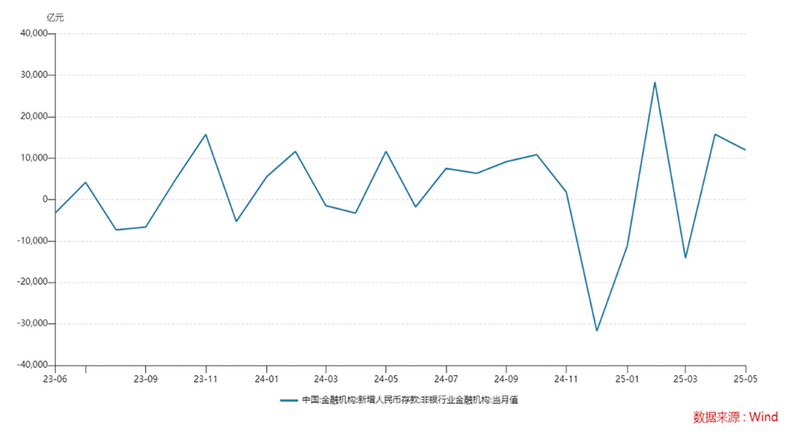
直接融资占比提升

Search documents
未知机构:华创金融徐康团队吴清主席的答记者透露哪些重要信息-20260309
未知机构· 2026-03-09 02:15
Summary of Key Points from Conference Call Industry Overview - The discussion primarily revolves around the Chinese financial market and its mechanisms, particularly focusing on the stability of the market and the role of direct financing and strategic emerging industries in major indices [1][1]. Core Insights and Arguments - The term "improving the construction of a Chinese-style market stabilization mechanism" was introduced for the first time, indicating a significant shift in regulatory focus [1]. - There is an emphasis on increasing the proportion of direct financing within the market, which is seen as crucial for the overall health of the financial ecosystem [1]. - The importance of strategic emerging industries in major indices is highlighted, suggesting a shift towards prioritizing these sectors in investment strategies [1]. Additional Important Content - The introduction of the market stabilization mechanism in a public forum suggests a high probability of achieving a "long bull, slow bull" market, with regulatory measures aligning towards this goal [1]. - During the "14th Five-Year Plan" period, significant improvements in the governance level of China's capital market are expected, which will manifest in four key areas: 1. Continuous inflow of long-term capital will optimize the structure of market participants [1]. 2. Increased dividend levels will guide listed companies towards modern governance practices [1]. 3. Enhanced penalties for violations will deter short-sighted behaviors [1]. 4. A diversified toolbox for market stabilization will gradually be developed [1]. - Under these policy assumptions, there is an optimistic outlook for the overall index performance throughout the year, with a focus on three main investment narratives: "deposit migration," "order reconstruction," and "technology-driven national strength" [1]. Financial Sector Insights - The futures market is experiencing a sustained upward trend, making it a top recommendation for investors [2]. - The insurance sector's investments are influenced by multiple factors, but adjustments have been made, leading to a positive outlook for absolute returns over a five-year horizon [2].
降息推动“存款搬家”效应,5月非银存款创近十年同期新高
Di Yi Cai Jing· 2025-06-15 10:16
Core Insights - The article highlights a significant shift in the flow of funds from traditional bank deposits to higher-yielding financial products such as money market funds and cash management products, driven by declining deposit interest rates [1][4]. Group 1: Financial Data Overview - As of the end of May, the balance of RMB deposits reached 316.96 trillion yuan, reflecting a year-on-year growth of 8.1%, with new deposits in May amounting to nearly 2.2 trillion yuan, an increase of 500 billion yuan compared to the same period last year [2]. - Non-bank deposits saw a substantial increase of 1.19 trillion yuan in May, marking the highest level for the same period in nearly a decade, with a year-on-year increase of 300 billion yuan [3]. - The total scale of bank wealth management products grew by 340 billion yuan month-on-month in May, reaching 31.6 trillion yuan, indicating a strong "deposit migration" effect [4]. Group 2: Market Dynamics - The decline in deposit interest rates has led to a "deposit migration" phenomenon, where both residents and enterprises are moving their funds to higher-yielding financial products [4][6]. - The increase in non-bank deposits is closely linked to heightened activity in the financial markets and a shift in fund flows, as evidenced by the significant rise in bank wealth management products [4][6]. - The overall growth in deposits in May is attributed to multiple factors, including improved market expectations, enhanced economic vitality, and increased demand for "liquid funds" from enterprises and residents [6][7]. Group 3: Loan and Deposit Growth Discrepancies - In May, RMB loans increased by 620 billion yuan, which is a year-on-year decrease of 330 billion yuan, indicating a divergence in the growth rates of deposits and loans [9][10]. - The differences in monthly growth rates of loans and deposits are seen as a reflection of the diversification of financial institutions' assets and changes in financing structures [10][11]. - The overall stability in the growth rate of combined bank deposits and wealth management products remains around 8%, suggesting a balanced financial environment despite monthly fluctuations [10][11].