直营+加盟模式

Search documents
百胜中国,业绩狂飙
Sou Hu Cai Jing· 2026-02-06 07:27
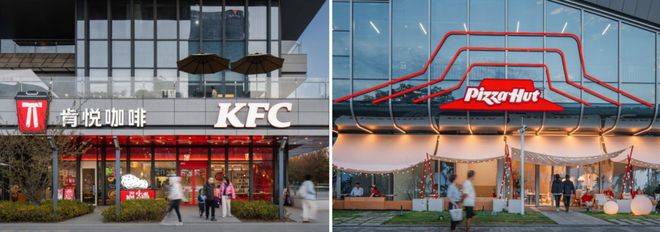
Core Insights - Yum China has achieved significant growth in 2025, with total revenue increasing by 4% to $11.8 billion and operating profit rising by 11% to $1.3 billion, demonstrating a robust performance in a competitive market [2][4] - The company aims to expand its store count to over 20,000 by 2026, with a plan to add more than 1,900 new stores, primarily through a strengthened franchise system [5][6] - The company's strategic focus on innovation and efficiency has led to a record-high operating profit margin of 10.9%, marking the highest level since its U.S. listing [4][14] Revenue and Profit Growth - In 2025, same-store sales achieved positive growth for the third consecutive quarter, with a 7% year-over-year increase in system sales in Q4, indicating strong consumer attraction [4][9] - The operating profit margin expanded year-over-year across all quarters, reflecting the effectiveness of the company's dual strategy of innovation and efficiency [4][14] Brand Performance - KFC added 1,349 new stores in 2025, surpassing 12,000 total locations, with system sales increasing by 5% and restaurant profit margin improving by 50 basis points to 17.4% [9][11] - Pizza Hut achieved a record of 444 new stores in 2025, bringing its total to 4,168, with a restaurant profit margin increase of 80 basis points to 12.8% [13] - The Lavazza brand also expanded, adding 34 new stores, including one in Hong Kong, increasing its total to 146 [13] Innovation and Product Development - Yum China launched approximately 600 new or upgraded products in 2025, focusing on high-frequency innovation to meet diverse consumer preferences [16] - The company emphasized high-value pricing strategies, resulting in a total transaction volume increase of 8% and over 2 billion transactions in 2025 [16] Store Expansion Strategy - The combination of direct operation and franchising has been crucial for Yum China's business expansion, with the franchise proportion rising from 25% to 36% in 2025 [18] - The company identified significant growth opportunities in markets like Chongqing, where the store density is much lower compared to first-tier cities [18]

老乡鸡IPO稳步进行,上市募资深化核心竞争力
Sou Hu Cai Jing· 2025-12-23 03:52
Core Viewpoint - The Chinese fast food brand Laoxiangji is preparing for an IPO on the Hong Kong Stock Exchange, aiming to become the "first stock of Chinese fast food" amidst a highly competitive market, having achieved significant growth and currently ranking first in the industry based on transaction volume in 2023 [1] Group 1: Company Development - Laoxiangji began its journey in 2003 with its first restaurant named "Feixi Laomuhen" in Hefei, Anhui, and has successfully transitioned from a regional brand to a national leader over the years [3] - Since 2020, Laoxiangji has adopted a franchise model, establishing an efficient network of "direct-operated + franchise" stores, resulting in 1,564 stores across 55 cities by April 30, 2025 [3] Group 2: Operational Strategy - Laoxiangji has implemented a standardized operational system, becoming one of the first companies in the Chinese fast food sector to achieve comprehensive standardization across key operational aspects, ensuring consistent quality and service across all locations [4] - The company has a unique "from farm to table" supply chain model, being the first and only Chinese fast food company to implement a comprehensive traceability system, allowing for full control and transparency throughout the supply chain [4] Group 3: Future Plans and Funding - The latest IPO prospectus outlines the primary uses of the raised funds, which include enhancing the integrated supply chain, expanding the store network, improving information technology capabilities, and increasing brand promotion efforts [5] - Laoxiangji aims to leverage its leading position in the industry to strengthen its competitive edge through the IPO, thereby building a wider moat in the market [5]

老乡鸡上市蓄力:“直营+加盟”平衡术驱动增长
Sou Hu Cai Jing· 2025-11-24 11:45
Core Insights - Laoxiangji has officially initiated its journey towards capital market entry by submitting an IPO application to the Hong Kong Stock Exchange in early 2025, marking a significant milestone for the leading Chinese fast-food brand [1] Group 1: Business Model and Expansion Strategy - Laoxiangji has maintained a stable expansion strategy since opening its first store in Hefei in 2003, primarily focusing on a direct-operated model that emphasizes refined operations and standardized systems across all aspects, from ingredient sourcing to service [3] - In 2020, Laoxiangji began to adopt a franchise model to accelerate its national expansion, creating a dual-driven strategy of "direct-operated + franchise" while implementing a stringent franchise management system to maintain quality control [3][4] - As of April 30, 2025, Laoxiangji has established 1,564 stores across 58 cities in China, including 911 direct-operated stores and 653 franchise stores, effectively covering nine provinces and cities [4] Group 2: Future Plans and Market Position - The IPO fundraising plan includes allocating funds to enhance the "direct-operated + franchise" model, focusing on upgrading franchisee training systems, improving supply chain support for franchise stores, and utilizing digital tools for real-time management [6] - Laoxiangji's model retains quality control while allowing for flexible scaling, positioning the company to transition from a regional leader to a national benchmark in the Chinese fast-food industry, especially in a market with low chain penetration and high fragmentation [6]