中式快餐

Search documents
国证国际港股晨报-20260310
Guosen International· 2026-03-10 04:36
Group 1: Market Overview - The Hong Kong stock market experienced a decline, with the Hang Seng Index falling by 1.35%, the Hang Seng China Enterprises Index down by 0.54%, and the Hang Seng Tech Index decreasing by 0.12% [2] - Southbound capital saw a net outflow of 37.213 billion HKD, with the most net buying in the top active stocks being in the Tracker Fund of Hong Kong (2800.HK), Hang Seng China Enterprises (2828.HK), and Southern Hang Seng Tech (3033.HK) [2] - Agricultural stocks faced pressure, with significant declines in companies like China Heartlink Fertilizer (1866.HK) down by 8.87% and First Tractor Company (38.HK) down by 4.6% [2] Group 2: Company Analysis - Encounter Little Noodles (2408.HK) - Encounter Little Noodles has established a competitive advantage through a "high cost-performance" strategy, with an average customer price of only 31.8 HKD in the first half of 2025, significantly lower than competitors [6] - The company has a highly standardized and digitalized operational system, reducing the proportion of raw material costs from 38.3% to 31.4% through scale procurement [6] - The store network is expanding rapidly, with a total of 252, 360, and 503 stores projected for FY 2023, FY 2024, and FY 2025 respectively, indicating a growth rate of 48%, 43%, and 40% [7] Group 3: Industry Insights - The Chinese noodle restaurant market is projected to reach a total scale of 29.7 billion HKD in 2024, accounting for approximately 29.8% of the entire Chinese fast food market, with a compound annual growth rate of 12.7% over the past four years [8] - The segment of noodle restaurants specializing in Sichuan and Chongqing flavors is growing even faster at 12.8%, indicating strong consumer appeal [8] - The competitive landscape is highly fragmented, with the top five players holding only 3.0% of the market share, allowing for significant growth opportunities for chain brands with replicable business models [8] Group 4: Financial Outlook - Following its IPO, Encounter Little Noodles is expected to have a more stable financial position, with net fundraising of 560 million HKD significantly alleviating liquidity issues and reducing the debt ratio [8] - The report projects net profits of 120 million HKD, 230 million HKD, and 350 million HKD for the years 2025, 2026, and 2027 respectively, with corresponding EPS of 0.19 HKD, 0.37 HKD, and 0.56 HKD [8]
机器人“掌勺”北京南站中餐厅
Xin Lang Cai Jing· 2026-02-27 23:35
Core Insights - A new restaurant named "Seven Fresh Kitchen" has opened at Beijing South Railway Station, featuring stir-fry robots as chefs, marking the first of its kind in the station [1][2] - The restaurant has quickly attracted travelers, offering a variety of nearly 20 stir-fried dishes at prices ranging from tens to over twenty yuan [1] - The restaurant's operational efficiency is enhanced by the use of four stir-fry robots and other automated cooking equipment, allowing for rapid meal preparation [1][2] Group 1 - The restaurant has a floor area of approximately 300 square meters and can accommodate over 140 diners, with a small staff of six to seven employees managing hundreds of orders daily [2] - Food safety is prioritized, with QR codes available for customers to check supplier information and live streaming of the cooking process through the JD app [2] - Future plans include integrating the restaurant with the 12306 online ordering system for high-speed train passengers, enabling meal ordering and delivery to seats [3]

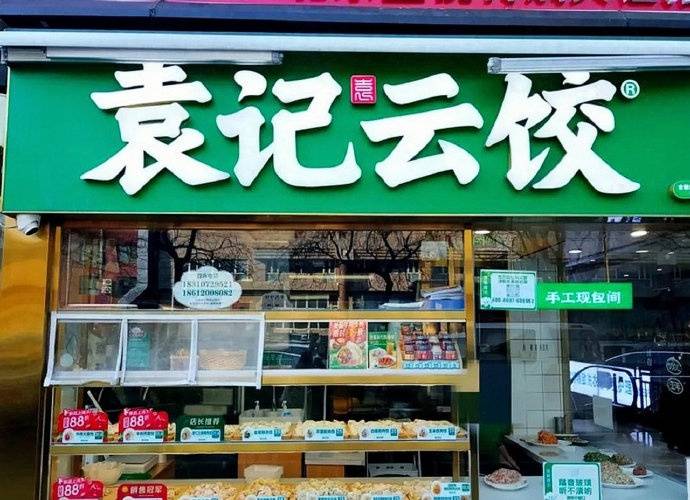
袁记云饺拟挂牌上市,被称为饺子界“蜜雪冰城”
Sou Hu Cai Jing· 2026-02-27 02:50
Group 1 - The core point of the article is that Yuanji Food Group Co., Ltd. is preparing for an IPO on the Hong Kong Stock Exchange, aiming to become a significant player in the Chinese fast-food market, following other companies like Yujian Xiaomian and Baba Mantou [1][3] Group 2 - Yuanji Food submitted its listing application on January 12, 2026, with Huatai International and GF Securities as joint sponsors [3] - The company operates the restaurant brand "Yuanji Yun Jiao" and the retail brand "Yuanji Weixiang" [3] - According to its prospectus, Yuanji Food achieved revenues of 2.026 billion yuan and 2.561 billion yuan in 2023 and 2024, respectively [3] - For the first nine months of 2025, the company reported revenues of 1.982 billion yuan, an 11% increase compared to 1.786 billion yuan in the same period of 2024 [3] - The adjusted net profit for the same period was 192 million yuan, reflecting a 31% year-on-year growth [3] - As of September 30, 2025, Yuanji Food operated 4,266 stores, with total GMV increasing from 4.772 billion yuan in 2023 to 6.248 billion yuan in 2024, a 31% growth [3] - The GMV for the first nine months of 2025 was 4.789 billion yuan [3] - Yuanji Food is recognized as the largest Chinese and global fast-food company by store count, and it is also the largest dumpling and wonton enterprise in China based on GMV [3]

中国最大饺子IPO来了
投资界· 2026-02-26 10:05
Core Viewpoint - Yuanji Food Group, a leading dumpling and wonton company in China, is preparing for an IPO in Hong Kong, showcasing rapid expansion and a unique business model that combines semi-industrial and handmade production methods [7][9][11]. Company Overview - Founded by Yuan Lianghong in 2012, Yuanji Food started from a small stall in Guangzhou and has grown to become the largest dumpling and wonton enterprise in China, with over 4,266 stores across more than 200 cities by 2023 [8][15]. - The company operates primarily through a franchise model, with over 95% of its stores being franchisee-operated, which has facilitated rapid scaling but also presents challenges in quality control and management [19]. Financial Performance - In the first three quarters of 2023, 2024, and 2025, the company reported revenues of 2.026 billion yuan, 2.561 billion yuan, and 1.982 billion yuan respectively, maintaining growth [16]. - The gross profit margins for 2023, 2024, and 2025 were 25.9%, 23%, and 24.7%, indicating a thin profit margin with an average profit of less than 1 yuan per dumpling sold [18][19]. - The average order value has been declining, with prices dropping from 26.5 yuan in 2023 to 22.8 yuan in 2025 [17]. Market Position and Expansion - Yuanji Food is recognized as the largest Chinese fast-food company by store count and the leading dumpling and wonton brand in terms of gross merchandise value (GMV) [15]. - The company has expanded its product offerings to include a variety of items such as noodles and snacks, and has ventured into new markets including Singapore [9][11]. Investment and Valuation - The company has successfully completed multiple rounds of financing, with a B+ round raising 280 million yuan, leading to a valuation of 3.5 billion yuan [10]. - Major investors include industry players like Jinlongyu and Jianfa Investments, indicating strong interest from the market [10].

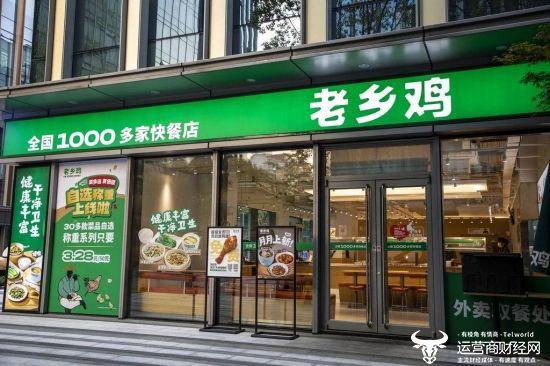
束小龙接棒后的资本化进阶 老乡鸡上市背后的传承与转型
Sou Hu Cai Jing· 2026-02-26 05:19
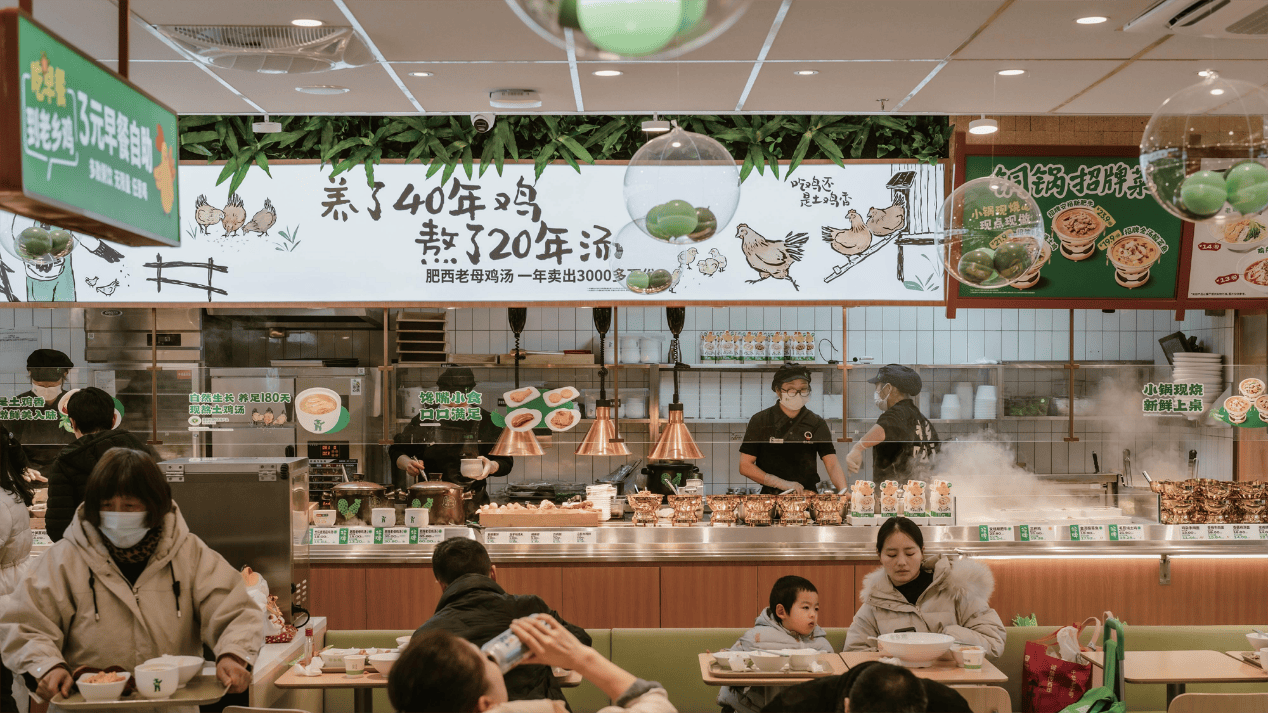
Core Viewpoint - The IPO of Laoxiangji represents not only the capitalization of a Chinese fast-food enterprise but also a story of craftsmanship and legacy transition from Shu Congxuan to Shu Xiaolong, highlighting the integration of core genes and strategic transformation that drives the company's evolution from a regional brand to a capitalized entity [1] Group 1: Early Development and Foundation - Shu Congxuan laid a solid foundation for Laoxiangji's listing by focusing on standardization and quality in Chinese fast food since opening the first store in 2003, and rebranding to "Laoxiangji" in 2012 to facilitate national expansion [3] - He established a comprehensive supply chain covering breeding, processing, and distribution, ensuring quality control of ingredients, which supported the long-term popularity of key dishes like the Golden Chicken Soup [3] - Under his leadership, Laoxiangji developed a rigorous standardized operation system, which was crucial for the steady growth of directly operated stores and laid the groundwork for the subsequent franchise model and IPO [3] Group 2: Leadership Transition and Governance Upgrade - Shu Xiaolong's succession and transformation became the core driver for Laoxiangji's IPO, as he joined the company in 2012 and rose through the ranks to become the chairman in 2023, completing the generational handover [3] - He recognized the capital market's governance requirements and led the termination of the original joint control agreement, modernizing the corporate governance structure and clearing obstacles for the IPO [3] Group 3: Business Strategy and Market Positioning - Shu Xiaolong continued and deepened Shu Congxuan's core strategy while aligning with capital market demands by accelerating the "direct + franchise" dual-driven model, ensuring quality consistency between franchise and directly operated stores [4] - The IPO fundraising is strategically aligned with his focus on supply chain optimization, store network expansion (including franchise stores), and digital upgrades, maintaining the advantages of a comprehensive supply chain while injecting capital for long-term brand growth [4] - The stability of pricing strategy has been a crucial market support before the IPO, with core dish prices remaining affordable, which not only stabilized customer flow in directly operated stores but also eased market expansion for franchisees [4] Group 4: Overall Assessment of the IPO - Laoxiangji's IPO is a successful integration of legacy and capitalization strategy, with Shu Congxuan's early groundwork establishing core competitiveness and Shu Xiaolong's leadership driving governance upgrades, scale expansion, and capital alignment [4] - The franchise model and affordable pricing strategy provide assurance for sustained growth post-IPO, showcasing a mature path for family businesses transitioning to modernization and capitalization [4]
“饺子名片”越来越亮,袁记云饺海外门店数已达16家
Sou Hu Cai Jing· 2026-02-24 07:44
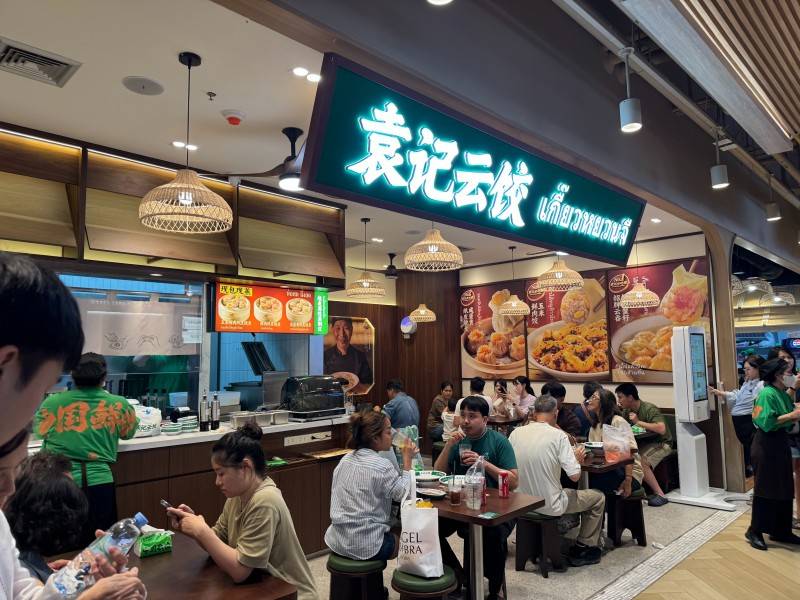
Core Insights - Yuanji Yunjiao is expanding its presence in Southeast Asia, with the opening of its second store in Thailand, reflecting a growing trend in the local consumer market [1] Group 1: Overseas Expansion - Yuanji Yunjiao has reached a total of 16 overseas stores, with 14 in Singapore and 2 in Thailand, showcasing its successful international growth strategy [3] - The brand's overseas strategy focuses on localized operations, aiming to create a diverse professional team that understands local markets and consumer tastes [3] Group 2: Local Adaptation - The first store in Thailand is located in a typical local community in Bangkok, where 80% of residents are Thai locals and Chaozhou Chinese, allowing the brand to root itself in the local culture [3] - The second store has been strategically placed in a well-known shopping mall to attract high foot traffic and align with local consumer preferences [5] Group 3: Cultural Promotion - Yuanji Yunjiao's expansion is not just about food but also about gently promoting Chinese culinary culture, with foreign customers drawn to the variety of flavors and the cultural significance of dumplings [5] - The brand aims to make Chinese dumpling culture globally recognized, aspiring to establish itself as a global Chinese fast-food brand [7]
袁记云饺IPO:一碗饺子的资本江湖与港股新门槛
Sou Hu Cai Jing· 2026-02-24 01:59
Core Insights - Yuanji Yunjiao has achieved a valuation of 3.5 billion and operates 4,266 stores, marking itself as the largest Chinese fast-food chain globally within nine years [1] - The company is going public amid a cooling investment climate, making its IPO particularly noteworthy [1] Business Model - The operational model of Yuanji appears contradictory but is strategically designed; while it promotes "handmade" dumplings, the dough and fillings are pre-made in a central factory, allowing for rapid expansion [3] - Over 95% of revenue comes from supplying franchisees, indicating a profit model based on supply chain margins [6] - The founder's family controls multiple related companies, creating a complete profit chain from raw materials to store decoration, which raises concerns about potential risks [6] Challenges and Crisis Management - In November 2024, a food safety incident led to a 30% revenue drop in some stores, with a closure rate of 6.47% [8] - The crisis highlighted the weaknesses of the franchise model, as managing over 4,000 stores proved difficult, and the brand's premium perception was jeopardized [8] - Following the crisis, the company implemented management changes, including hiring a former KFC China executive to enhance operational control [8] Market Position and IPO Strategy - Yuanji's IPO comes at a time when the Hong Kong stock market is shifting focus from narrative-driven consumer stocks to companies with solid industrial capabilities [9] - The company reported a net profit margin of 7.17% and has 700 million in cash reserves, which strengthens its market position [9] - The presence of a major shareholder, Yihai Kerry (parent company of Jinlongyu), provides financial backing and supply chain support, enhancing its competitive edge in the IPO [9] Industry Implications - Yuanji's IPO sets three rules for future consumer brands looking to list: the importance of supply chain control, addressing franchise management issues, and the necessity for hard assets in the Hong Kong market [11] - The IPO serves as a stress test for the capital market's tolerance for standardized Chinese cuisine and the credibility of the franchise model [11] - Success in the IPO could redefine the capital landscape for Chinese fast food, while failure may highlight inherent issues in the current business model [11]
师从茶咖的袁记云饺,能否得出中餐连锁的终极答案
Hua Er Jie Jian Wen· 2026-02-15 03:51
Core Viewpoint - The prevailing belief among restaurant investors is that "the end of dining is retail," suggesting that creating standardized, replicable food products is more profitable than traditional restaurant operations. Yuanji Yunjiao exemplifies this approach by focusing on retail and standardized production of dumplings, achieving significant growth in a short period [1][2]. Company Overview - Yuanji Yunjiao has adopted a "raw and cooked integrated" retail strategy, generating approximately 97% of its revenue from ingredient sales to franchisees. This model has allowed it to become the largest Chinese fast-food chain globally by store count, with 4,266 locations projected by September 2025, doubling from early 2023 [1][2][4]. Supply Chain and Operations - The company operates five factories and 24 self-operated warehouses, with 86% of its stores located within a 200-kilometer radius of these warehouses, enabling efficient two-day delivery. This "front store, back factory" model allows for standardized production and quick turnover of inventory, with a stock turnover period of just 12.1 days compared to the industry average of 25 days [4][6]. - Yuanji Yunjiao has strong bargaining power with franchisees, as its accounts receivable turnover days are only 2.8 and 5.3 days for 2023 and 2024, respectively, indicating rapid cash flow back to headquarters [7][8]. Financial Performance - Despite a stable gross margin, the profit per order has been declining, with gross profit per order dropping from 2.9 yuan to 2.3 yuan between 2023 and the first three quarters of 2025. This indicates a reliance on scale and high turnover to maintain profitability [9][10]. - The company's gross merchandise volume (GMV) from takeout increased from 32.4% to 44.6% from the previous year, reflecting a shift in consumer behavior towards delivery services [8]. Market Position and Challenges - Yuanji Yunjiao's rapid expansion has led to over 3,500,000 members and a quarterly repurchase rate of 32.3%. However, the growth rate of new franchisees has slowed, raising concerns about sustaining momentum [20][17]. - The company faces challenges in maintaining profitability due to rising material costs, particularly pork, which constitutes 35% of total sales costs. This makes the company vulnerable to fluctuations in the pork market [20][21]. Strategic Initiatives - To address franchisee pressures, Yuanji has reduced product prices below cost to stimulate sales. Additionally, the company is expanding its footprint into lower-tier cities, with a significant increase in store numbers in these areas [14][21]. - Yuanji is also exploring international markets, having opened its first overseas store in Singapore and planning further expansion in Southeast Asia. However, the challenge of recruiting and training labor for its "freshly wrapped" model abroad remains a significant hurdle [26][27].
土豆粉“隐形冠军”:关店600家后,年营收却翻了数倍
虎嗅APP· 2026-02-15 02:32
Core Viewpoint - The article discusses the paradoxical state of the Chinese restaurant market in 2026, highlighting the rapid turnover of trendy brands and the struggles of traditional chains, using the case of "Siblings Potato Noodles" as a representative example of the industry's evolution from chaotic growth to rational development [4][5]. Group 1: Company Background - "Siblings Potato Noodles" started in 2001 from a small 4-square-meter shop in Zhengzhou and expanded to over 1,100 stores by 2008, before undergoing significant contraction [5][10]. - The founder, Song Baomin, has navigated the rapid changes in the restaurant industry over the past 25 years, adapting to shifts in consumer preferences and market dynamics [4][6]. Group 2: Business Strategy and Challenges - The company faced challenges such as a drastic reduction in store numbers from over 1,100 to around 500, halting franchise operations, and significant losses from failed product development [5][6][13]. - Despite initial setbacks, the company's focus on quality and a unique product offering allowed it to carve out a niche in the market, avoiding common pitfalls associated with rapid expansion [5][12]. Group 3: Current Developments and Future Plans - As of 2023, "Siblings Potato Noodles" has stabilized with annual revenues exceeding 100 million, and is now pursuing a "self-revolution" by restarting franchise operations and planning to expand its product line into a "Potato Restaurant" concept [6][13][22]. - The company aims to innovate by integrating Western cuisine into its offerings, with plans to develop new products like potato pizza and milkshakes, while also addressing the challenges of brand identity and market education [22][24]. Group 4: Organizational Changes - Song Baomin emphasizes the importance of professional management and has implemented transparent management practices to enhance organizational efficiency [15][16]. - The company is focusing on building a robust supply chain and digital infrastructure to support its growth and operational needs [15][16]. Group 5: Market Position and Competitive Landscape - The restaurant's decision to limit its delivery services to maintain product quality reflects a commitment to brand integrity, with current delivery sales accounting for less than 20% of total revenue [20][22]. - The upcoming re-launch of the franchise model will involve stricter criteria for franchisees, aiming to balance quality control with expansion efforts [25][26].
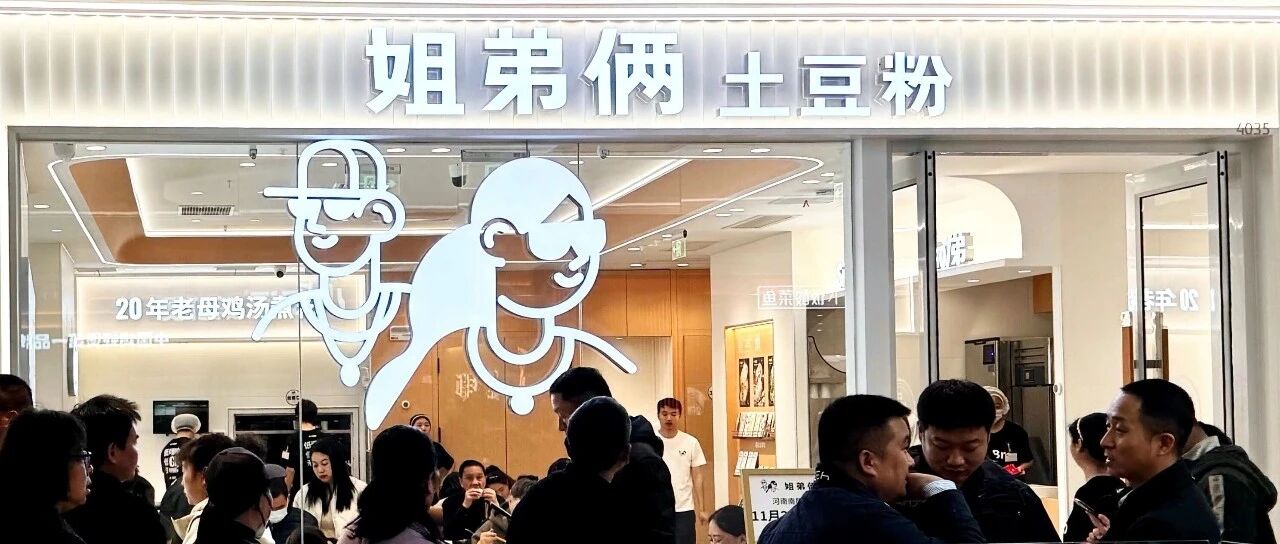
老乡鸡又递交上市申请!社保缺口仍超1亿元 董事长束小龙能解决吗
Xin Lang Cai Jing· 2026-02-11 14:19
Core Viewpoint - The company, Lao Xiang Ji, is making a third attempt to list on the Hong Kong Stock Exchange, indicating a strong commitment to going public despite previous challenges [1]. Financial Performance - Revenue projections for the company from 2022 to 2024 are 4.528 billion RMB, 5.651 billion RMB, and 6.288 billion RMB, respectively, with net profits of 252 million RMB, 375 million RMB, and 409 million RMB for the same years [3][4]. - In the first eight months of 2025, the company achieved a revenue of 4.578 billion RMB and a net profit of 371 million RMB, demonstrating steady growth [3]. Market Position - Lao Xiang Ji claims to be the largest Chinese fast-food brand, holding a 0.9% market share in the industry as of 2024, according to data from Zhi Shi Consulting [4]. Profitability Metrics - The company's gross margins from 2022 to 2024 are reported at 20.3%, 23.3%, and 22.8%, consistently remaining below 25% [5]. - Comparatively, other listed restaurant companies like Xiao Cai Yuan and Yu Jian Xiao Mian have significantly higher gross margins of 68.12% and 61.86% for 2024, respectively [5]. Social Insurance Issues - Lao Xiang Ji has reported a shortfall in social insurance and housing fund contributions amounting to over 100 million RMB across the years 2022 to 2025, with specific deficits of 10.7 million RMB, 21.4 million RMB, 36.3 million RMB, and 31.9 million RMB [5]. - The potential maximum fines due to these social insurance discrepancies are estimated at 16.1 million RMB, 42.7 million RMB, 81.9 million RMB, and 74.7 million RMB for the respective years [5]. Challenges in Listing - The company has faced inquiries from the regulatory body regarding its social insurance issues during previous attempts to list, marking this as its fifth application for an IPO [6].