
知识产权评估

Search documents
海仲知产质押融资对接
Sou Hu Cai Jing· 2025-12-15 17:38
Group 1: Core Perspectives - The transition to a knowledge-based economy emphasizes the importance of intellectual property (IP) as a key competitive advantage for enterprises, necessitating financial mechanisms to realize its economic value [1] - The "Hai Zhong IP Pledge Financing Connection" serves as a bridge between IP and financial capital, facilitating the transformation of technological achievements and promoting industrial upgrades [1] Group 2: Addressing Financing Challenges - Many technology-driven enterprises face difficulties in financing due to their asset-light nature, as traditional financing methods rely on fixed asset collateral, making it hard for them to secure necessary funding [2] - The Hai Zhong IP Pledge Financing Connection offers a new financing option by allowing companies to pledge their intellectual property to obtain funds for research, production, and market expansion [2] Group 3: Regional Economic Development - The initiative helps optimize the innovation ecosystem in regions, attracting more innovative resources and enhancing industrial competitiveness, as demonstrated by the positive impact on industries like salt lake chemicals and clean energy in Haixi Prefecture, Qinghai Province [3] Group 4: Collaborative Model and Process - The financing connection involves multiple stakeholders, including government departments, financial institutions, enterprises, and IP service agencies, with the government providing policy support and coordination [4] - The process begins with companies assessing their IP for pledge eligibility, followed by a financing application to financial institutions, which includes a review of the IP's value and the company's creditworthiness [5] Group 5: Risk Control Measures - Financial institutions implement risk control measures by collaborating with professional IP evaluation agencies to ensure accurate valuation and by continuously monitoring the operational status and repayment capacity of enterprises [6] Group 6: Challenges and Issues - The difficulty in accurately assessing the value of intellectual property poses a significant challenge, as various factors influence its worth, leading to discrepancies in evaluations by different agencies [7] - Some financial institutions exhibit low enthusiasm for IP pledge financing due to perceived high risks and the additional resources required for thorough risk assessment and management [8] - The underdeveloped IP trading market in China limits the liquidity and realization of IP value, causing hesitation among financial institutions regarding accepting IP as collateral [9] Group 7: Recommendations and Measures - Establishing a standardized and reliable IP evaluation system is crucial for improving the accuracy and credibility of assessments, alongside encouraging the development of specialized evaluation agencies [10] - Government policies aimed at risk compensation and interest subsidies can enhance the willingness of financial institutions to engage in IP pledge financing [11] - Strengthening the infrastructure of the IP trading market and promoting transparency can facilitate smoother transactions and enhance the market value of intellectual property [12] Group 8: Future Development Trends - The integration of emerging technologies such as AI, big data, and blockchain into the IP pledge financing process can enhance evaluation accuracy and improve operational efficiency [14] - The trend towards internationalization in IP pledge financing will see increased interest from multinational corporations and international financial institutions, promoting global IP circulation [15] - The service scope of IP pledge financing will expand beyond technology firms to include sectors like cultural creativity and biomedicine, offering a wider range of support services [16]


“知产”变资产,金融活水助力山东科技成果转化
Xin Hua She· 2025-11-19 13:09
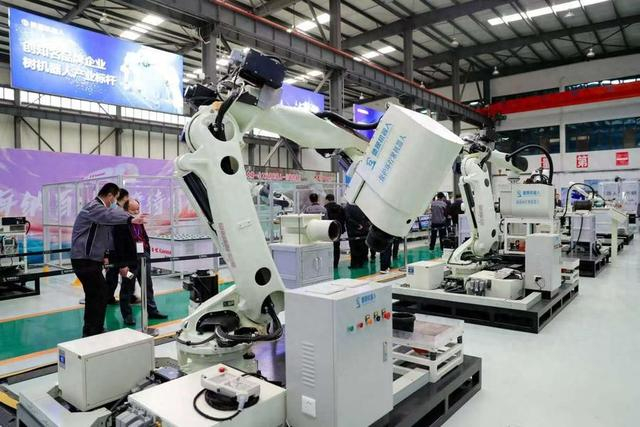
Group 1 - The core viewpoint of the articles highlights the growth and innovation of De Sheng Robotics, a company established in 2018, which has become a national-level "specialized, refined, distinctive, and innovative" small giant enterprise focusing on robotics and high-end intelligent equipment [1][3] - De Sheng Robotics has developed advanced technologies such as the pre-torque robot for pipe fittings and automatic thread detection, indicating its commitment to continuous investment in product research and development [1] - The company faced funding challenges, which were addressed by a tailored loan of 20 million yuan from the Postal Savings Bank of China, aimed at supporting high-quality "specialized, refined, distinctive, and innovative" enterprises [3] Group 2 - The Postal Savings Bank of Shandong Province reported a 30.70% year-on-year increase in technology enterprise loans in the first ten months of the year, reflecting a growing trend in financial support for technology-driven companies [3] - The construction of a "technology flow" evaluation system by the Construction Bank of Shandong Province assesses the value of enterprises' intellectual property through various dimensions, including the proportion of invention patents and their market conversion value [4] - The Shandong Provincial Financial Supervision Administration has accelerated the establishment of the country's first pilot area for financial reform in science and technology, promoting the transformation of scientific and technological "soft power" into financial "hard assets" with a total financing support of 35.2 billion yuan [4]

中经评论:突破“知产”到“资产”瓶颈
Jing Ji Ri Bao· 2025-09-29 00:21
Core Viewpoint - The recent joint notification by the Ministry of Finance, Financial Regulatory Bureau, National Intellectual Property Administration, and National Copyright Administration emphasizes the importance of asset evaluation in the utilization and protection of intellectual property (IP) [1][2]. Group 1: Importance of Intellectual Property Evaluation - Asset evaluation plays an indispensable role in the utilization and protection of intellectual property [1]. - As of June this year, the number of valid invention patents in China reached 5.01 million, a year-on-year increase of 13.2%, with a high-value invention patent ownership rate of 15.3 per 10,000 people, marking a new high [1]. - The conversion and utilization of intellectual property are crucial for transforming scientific and technological achievements into productive forces, which is essential for realizing the value of intellectual property [1]. Group 2: Regulatory Framework and Standards - The establishment of a robust intellectual property value evaluation system is necessary to enhance the credibility and public trust in evaluation results [2]. - The China Asset Appraisal Association previously issued guidelines for intellectual property asset evaluation, which cover basic compliance, operational requirements, and disclosure requirements [2]. - The recent measures from regulatory bodies highlight the importance of standardizing intellectual property asset evaluation practices and strengthening supervision and self-regulation [2]. Group 3: Challenges and Quality Improvement - Intellectual property evaluation is often more challenging than tangible asset evaluation, requiring asset appraisal institutions to possess high professional standards and capabilities [2]. - Issues identified in previous evaluations include errors in discount period calculations and improper analysis of the reasonableness of data provided by enterprises [3]. - To improve the quality of intellectual property asset evaluations, collaboration among multiple departments and institutions is essential, creating a transparent and efficient data service platform [3].