
知识民主化

Search documents
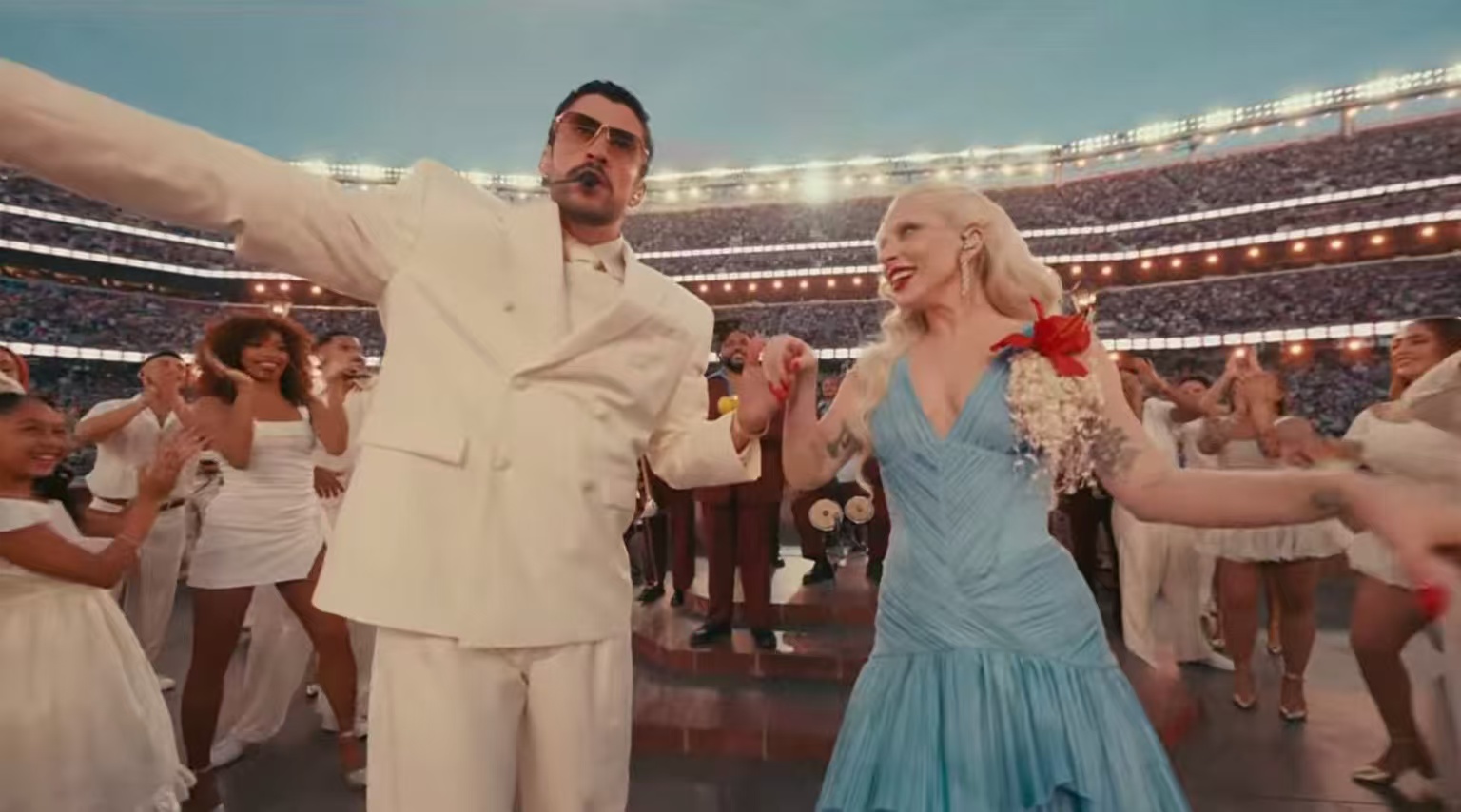
西语登上超级碗,是一场“文化复仇”吗?|文化周报
Xin Lang Cai Jing· 2026-02-15 03:15
Group 1: Bad Bunny's Super Bowl Performance - Bad Bunny's Super Bowl halftime show attracted over 128 million viewers and achieved 48 million views on YouTube within 24 hours, making it the most-watched halftime performance on the platform [2] - The performance featured bold visual designs and elements of Latin culture, sparking discussions about language, identity, and the boundaries of mainstream culture in the U.S. [2][4] - The stage design referenced the colonial history of Latin America, highlighting the exploitation of labor and land control, prompting political reflections on how weaker nations are integrated into capitalist systems [2][4] Group 2: Cultural and Political Implications - The performance was interpreted as a political statement against U.S. immigration policies, with Bad Bunny previously expressing opposition to ICE during the Grammy Awards [4][6] - Critics from both sides of the political spectrum reacted to the performance, with some viewing Bad Bunny as a champion against MAGA policies, while others criticized it as inappropriate and overly political [6] - The show included various Latin American cultural figures, emphasizing a broader concept of "America" that challenges singular national narratives [4][6] Group 3: Latin Music's Rise - Latin music has become the fifth largest genre in terms of consumption, trailing only behind country music, indicating a significant acceptance of Latin pop music in the U.S. [7] - Bad Bunny's success is seen as a challenge to the dominance of English-language mainstream culture, as his performance brought Spanish-language music to a wider audience [7] Group 4: Plagiarism in Literature - A recent plagiarism case involving author Zhuang Zuyi and writer Shu Qiao has drawn attention, with allegations that Shu Qiao's work contains unaltered passages from Zhuang's book [9] - The issue of plagiarism has been a recurring theme in the literary community, with various authors being accused of copying established works [10][11] - The rise of social media platforms has facilitated the exposure of such cases, leading to broader discussions about originality and the boundaries between inspiration and plagiarism [12][13] Group 5: Decline of Traditional Book Reviews - The rise of digital platforms has led to the decline of traditional book reviews, with a shift towards "knowledge democratization" where ordinary readers can participate in critiques [15] - Concerns have been raised about the quality of criticism in this new landscape, as the focus on engagement and popularity may dilute serious literary analysis [15][18] - The role of editors and critics in shaping literary discourse is being challenged, raising questions about the future of serious literary criticism in the digital age [18][19]

马斯克AI百科上线首日演砸:遭遇宕机、抄袭、造假三连击
3 6 Ke· 2025-10-28 11:08
Core Viewpoint - Elon Musk's Grokipedia, an AI-driven online encyclopedia, aims to challenge Wikipedia by promoting a "less biased" alternative, but it faced significant technical issues and trust crises upon launch [2][4][6]. Group 1: Technical Challenges - Grokipedia launched unexpectedly on October 27, 2023, but crashed within an hour due to traffic exceeding expectations, indicating rushed technical preparations [4]. - The launch was delayed by a week from Musk's original plan, raising concerns about the platform's readiness [4]. Group 2: Content and Similarities - Grokipedia claims to have 885,000 articles, which is significantly less than Wikipedia's 8 million, yet users noted striking similarities in content [6]. - The content appears to be generated from the same large language model as Musk's Grok chatbot, suggesting it may utilize real-time data from X's user posts [6]. Group 3: Bias and Controversy - Musk's long-standing criticism of Wikipedia's perceived bias has led to the creation of Grokipedia, which he claims will eliminate bias, yet it has been found to reflect a distinct ideological stance [9][10]. - Grokipedia's entries on sensitive topics, such as gender and medical issues, reveal a bias that contrasts sharply with Wikipedia's more neutral approach [10]. Group 4: Accuracy and Reliability - Grokipedia has faced issues with factual inaccuracies, including fabricating information about Musk's involvement in a political campaign [11][12]. - The platform's reliance on Grok's language model means it inherits the model's flaws, including the potential for misinformation and conspiracy theories [12]. Group 5: Philosophical Implications - The emergence of Grokipedia raises questions about the future of knowledge production: whether to rely on collective wisdom or AI efficiency [15]. - The competition between Grokipedia and Wikipedia reflects a deeper philosophical debate about who defines truth and history in the age of AI [15].
