
破产法修订

Search documents
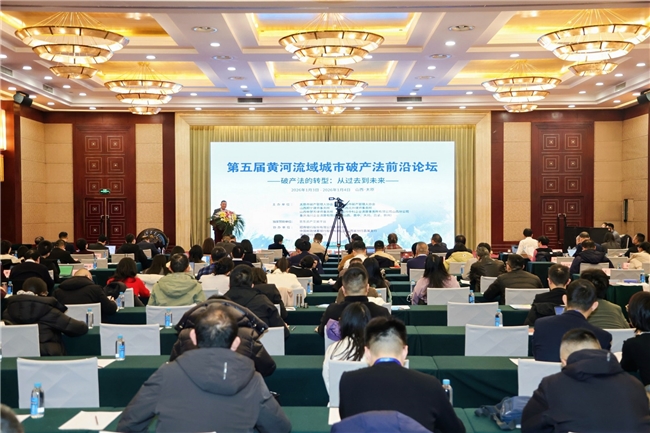
第五届黄河流域城市破产法前沿论坛成功举办
Sou Hu Wang· 2026-01-07 04:28
Core Insights - The Fifth Yellow River Basin Urban Bankruptcy Law Forum was held on January 3-4, 2026, focusing on the theme "Transformation of Bankruptcy Law: From Past to Future," attracting around 200 participants from the bankruptcy law community [1][3] - The forum aimed to examine the context of bankruptcy law revisions and discuss cutting-edge topics such as out-of-court restructuring, cross-border bankruptcy, and digital applications, contributing to the advancement of bankruptcy law and regional economic development [1][3] Group 1: Forum Overview - The forum was organized by various associations and law firms, with sponsorship from JD Asset Trading Platform and support from several banks [3] - The president of the Taiyuan Bankruptcy Administrator Association expressed gratitude for the support received over the past four years and highlighted the forum's growth [5] Group 2: Key Presentations - Professor Li Shuguang from China University of Political Science and Law discussed eight major transformation directions in bankruptcy law, including shifts towards a foundational system, cross-border cooperation, and the integration of digital technology [7] - Professor Woo Su-gun from Ewha Womans University emphasized the global significance of bankruptcy and the evolution of debt, advocating for effective debt management through preemptive control and bankruptcy procedures [9] Group 3: Establishment of New Center - The Out-of-Court Restructuring and Reconstruction Promotion Center was established to explore new paths for rescuing distressed enterprises, with key figures from academia and practice participating in the launch [13] Group 4: Book Launch - The "Report on American Personal Bankruptcy Reform" was introduced, highlighting the collaborative efforts involved in its publication [15][17] Group 5: Additional Presentations - Professor Chen Jingshan discussed the coordination of bankruptcy law modification principles and efficiency, questioning the obligations of directors in bankruptcy applications [21] - Professor Yu Qiwei shared insights on the changing practices of out-of-court restructuring, emphasizing its importance in addressing various practical needs [23] - Professor Zheng Chengxin addressed the challenges in corporate restructuring, advocating for a multi-faceted approach involving legal frameworks and stakeholder collaboration [25] Group 6: Specialized Discussions - Various professors presented on topics such as the highlights of the new bankruptcy law draft, the relationship between bankruptcy law and other legal sectors, and the prioritization of consumer debt claims in bankruptcy proceedings [29][31][33] - Discussions also included the four-dimensional considerations for the professional security of bankruptcy administrators [35] Group 7: Future Directions - The forum concluded with a commitment to continue fostering high-quality dialogue platforms and enhancing collaboration between theoretical and practical sectors in bankruptcy law [75][77]

财新周刊-第39期2025
2025-10-13 14:56
Summary of Key Points from the Conference Call This document is a summary based on the Caixin article [link](https://a.caixin.com/tAkrZ8nR). The summary may deviate from the original intent of the text and does not represent Caixin's views or positions. It is recommended to click the link for detailed comparison and verification. Industry or Company Involved - The discussion primarily revolves around the **bankruptcy law** in China and its proposed revisions, focusing on the implications for corporate and personal bankruptcy. Core Points and Arguments - The **bankruptcy law** is undergoing significant revisions to address the increasing number of bankruptcy cases and the need for a more effective legal framework to manage these cases [12][18][19]. - The proposed revisions aim to enhance the **protection of creditors**, ensuring fair repayment and preventing debt evasion by debtors [29][30]. - A key feature of the revisions is the introduction of a **coordinated mechanism** between government and courts to streamline bankruptcy processes and improve efficiency [22][24][25]. - The revisions also emphasize the importance of **information disclosure** during bankruptcy proceedings to protect creditor rights and ensure transparency [33][34]. - The **personal bankruptcy system** is being considered for inclusion in the law, reflecting a growing recognition of the need to provide relief for individuals facing insurmountable debt [42]. Important but Possibly Overlooked Content - The revisions propose a **two-year period** for the exercise of the right to revoke transactions made by debtors prior to bankruptcy, which could complicate financing for small and medium enterprises [30][31]. - The **tax implications** of debt forgiveness during restructuring are addressed, with proposals to exempt such forgiven debts from taxation to facilitate successful corporate restructuring [39]. - The revisions also highlight the need for a **comprehensive legal responsibility system** for debtors and related parties to ensure accountability in bankruptcy proceedings [34][35]. - The **global context** of bankruptcy practices is acknowledged, with references to international experiences that could inform China's approach to bankruptcy law reform [40][41]. This summary encapsulates the critical discussions and proposed changes regarding bankruptcy law in China, reflecting the ongoing evolution of legal frameworks to better address the complexities of modern economic challenges.