
庭外重组

Search documents
ST金鸿:股票异常波动,庭外重组及业绩存不确定性
Xin Lang Cai Jing· 2026-02-25 09:26
Core Viewpoint - The company ST Jinhong's stock experienced an abnormal fluctuation with a cumulative increase of 14.63% over three consecutive trading days in February 2026, raising concerns about its financial stability and future operations [1] Group 1: Stock Performance - The stock price of ST Jinhong increased by 14.63% over three trading days on February 13, 24, and 25, 2026, indicating significant market activity [1] Group 2: Financial Situation - On January 31, 2026, the company disclosed an unaudited earnings forecast, which will be finalized with the audited annual report [1] - A creditor applied for the company's reorganization and pre-reorganization on February 9, 2026, highlighting potential financial distress [1] - The court approved a liquidation team to assist the company with an out-of-court restructuring on February 24, 2026, indicating ongoing efforts to stabilize the company [1] Group 3: Uncertainties and Risks - The company warned of uncertainties regarding the acceptance of its reorganization application, the subsequent restructuring process, and the final audited results compared to the earnings forecast [1] - There is a risk of bankruptcy and delisting if the reorganization fails, emphasizing the precarious situation the company is in [1]
金鸿控股集团股份有限公司关于公司庭外重组债权申报的公告
Shang Hai Zheng Quan Bao· 2026-02-24 17:07
Core Viewpoint - The Hunan Hengyang Intermediate People's Court has approved Jin Hong Holdings Group Co., Ltd. to proceed with an out-of-court restructuring, which does not signify formal acceptance of the company's reorganization. The purpose of the out-of-court restructuring is to ascertain the company's reorganization value and feasibility, reduce restructuring costs, and enhance efficiency [2][13]. Group 1: Court Approval and Restructuring Process - The court's approval allows Jin Hong Holdings to conduct an out-of-court restructuring with the assistance of a liquidation team, which will help in debt claim submissions and asset evaluations [4][15]. - Creditors are required to submit their claims online by March 26, 2026, detailing the amount, nature of the claims, and any collateral [4][6]. - The restructuring aims to facilitate communication with creditors and potential investors, thereby improving the chances of a successful reorganization plan [16][17]. Group 2: Financial Performance and Risks - The company has reported negative net profits for the years 2022 to 2024, with the 2024 audit report indicating significant uncertainties regarding its ability to continue as a going concern [3][10]. - Following the 2025 annual performance forecast, the company anticipates continued risk warnings due to negative net profits, which may lead to further regulatory scrutiny [2][3]. - If the restructuring fails, the company faces the risk of bankruptcy and potential delisting from the stock exchange [19][20].

ST金鸿:启动庭外重组债权申报,多项风险需关注
Xin Lang Cai Jing· 2026-02-24 10:58
Core Viewpoint - ST Jinhong announced that on February 24, 2026, the Hengyang Intermediate Court agreed to allow the company's liquidation team to assist in an out-of-court restructuring [1] Group 1: Restructuring Process - Creditors must submit their claims online by March 26 through https://lawporter.com [1] - If the court accepts the restructuring in the future, the claims submitted for the out-of-court restructuring will remain valid [1] Group 2: Financial Outlook - The company anticipates that its net profit for the fiscal year 2025, before and after deducting non-recurring gains and losses, will be negative [1] - Following the annual report disclosure, the company may continue to face additional risk warnings [1] Group 3: Risks - If the restructuring fails, the company faces risks of bankruptcy and delisting of its stock [1]
第五届黄河流域城市破产法前沿论坛成功举办
Sou Hu Wang· 2026-01-07 04:28
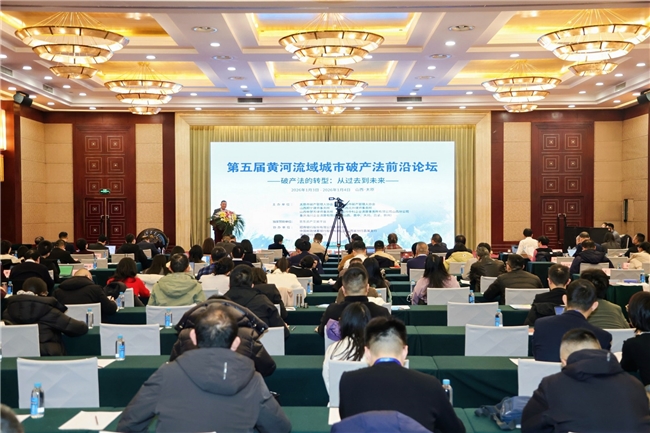
Core Insights - The Fifth Yellow River Basin Urban Bankruptcy Law Forum was held on January 3-4, 2026, focusing on the theme "Transformation of Bankruptcy Law: From Past to Future," attracting around 200 participants from the bankruptcy law community [1][3] - The forum aimed to examine the context of bankruptcy law revisions and discuss cutting-edge topics such as out-of-court restructuring, cross-border bankruptcy, and digital applications, contributing to the advancement of bankruptcy law and regional economic development [1][3] Group 1: Forum Overview - The forum was organized by various associations and law firms, with sponsorship from JD Asset Trading Platform and support from several banks [3] - The president of the Taiyuan Bankruptcy Administrator Association expressed gratitude for the support received over the past four years and highlighted the forum's growth [5] Group 2: Key Presentations - Professor Li Shuguang from China University of Political Science and Law discussed eight major transformation directions in bankruptcy law, including shifts towards a foundational system, cross-border cooperation, and the integration of digital technology [7] - Professor Woo Su-gun from Ewha Womans University emphasized the global significance of bankruptcy and the evolution of debt, advocating for effective debt management through preemptive control and bankruptcy procedures [9] Group 3: Establishment of New Center - The Out-of-Court Restructuring and Reconstruction Promotion Center was established to explore new paths for rescuing distressed enterprises, with key figures from academia and practice participating in the launch [13] Group 4: Book Launch - The "Report on American Personal Bankruptcy Reform" was introduced, highlighting the collaborative efforts involved in its publication [15][17] Group 5: Additional Presentations - Professor Chen Jingshan discussed the coordination of bankruptcy law modification principles and efficiency, questioning the obligations of directors in bankruptcy applications [21] - Professor Yu Qiwei shared insights on the changing practices of out-of-court restructuring, emphasizing its importance in addressing various practical needs [23] - Professor Zheng Chengxin addressed the challenges in corporate restructuring, advocating for a multi-faceted approach involving legal frameworks and stakeholder collaboration [25] Group 6: Specialized Discussions - Various professors presented on topics such as the highlights of the new bankruptcy law draft, the relationship between bankruptcy law and other legal sectors, and the prioritization of consumer debt claims in bankruptcy proceedings [29][31][33] - Discussions also included the four-dimensional considerations for the professional security of bankruptcy administrators [35] Group 7: Future Directions - The forum concluded with a commitment to continue fostering high-quality dialogue platforms and enhancing collaboration between theoretical and practical sectors in bankruptcy law [75][77]

18年后首次全面修订 破产法如何改写“多输困局”?
Yang Shi Xin Wen· 2025-12-27 19:39
Core Viewpoint - The revision of the Enterprise Bankruptcy Law in China, the first comprehensive update since its implementation in 2007, aims to address the challenges faced by businesses and individuals in debt crises, promoting a more supportive legal framework for bankruptcy proceedings and debt resolution [1][5][15]. Group 1: Impact on Businesses - A well-known early education institution in Huzhou abruptly closed, affecting over 2,000 members and leaving consumers with unfulfilled course fees [1][3]. - The closure was attributed to severe impacts from the COVID-19 pandemic, leading to a significant drop in new customers and operational challenges [1][3]. - The local court established a bankruptcy restructuring center to explore proactive applications of bankruptcy procedures to resolve business debt crises [5]. Group 2: Legal and Social Implications - The stigma surrounding bankruptcy often deters business owners from seeking legal relief, as bankruptcy is viewed negatively in society [5][10]. - The bankruptcy process for the early education institution revealed that it had zero assets but owed approximately 350,000 yuan to 23 creditors, highlighting the challenges in recovering consumer funds [7][9]. - The business owner agreed to personally assume 60% of the debt, allowing for a structured repayment plan to creditors, demonstrating a potential pathway for resolution [9]. Group 3: Personal Bankruptcy and Legal Framework - The establishment of the Shenzhen Bankruptcy Court in 2019 aimed to provide a legal bridge for businesses and individuals facing debt crises, allowing for the restructuring of debts [12][15]. - The introduction of personal bankruptcy regulations in Shenzhen offers a legal avenue for individuals to seek relief from debts incurred due to business operations or personal consumption [15][17]. - The ongoing revision of the Enterprise Bankruptcy Law includes provisions for out-of-court restructuring and personal bankruptcy, reflecting a shift towards a more supportive legal environment for debtors [24][28].
汇聚多方智慧 长沙探索推动庭外重组机制
Zhong Guo Xin Wen Wang· 2025-11-24 02:46
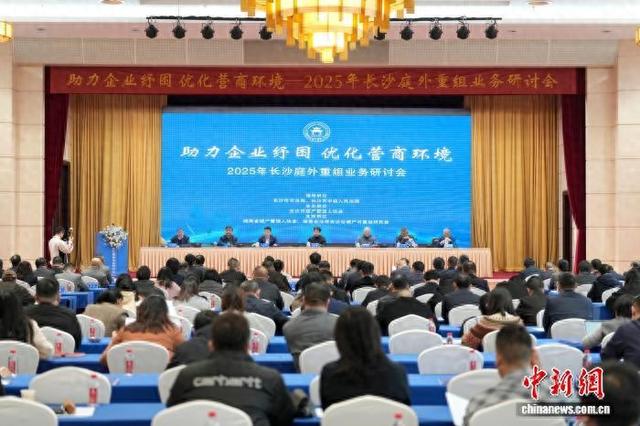
Core Viewpoint - The "Changsha Out-of-Court Restructuring Business Seminar" held on November 23 aims to explore the theory and practice of out-of-court restructuring to assist distressed enterprises and promote high-quality economic development [1][4]. Group 1: Out-of-Court Restructuring - Out-of-court restructuring refers to civil legal actions taken by stakeholders such as debtors, creditors, investors, and strategic investors to negotiate agreements to resolve corporate difficulties without judicial procedures [2]. - The president of the Changsha Bankruptcy Administrator Association, Su Baozhen, highlighted the unique advantages of out-of-court restructuring, including flexibility, lower costs, high acceptance by market participants, and better preservation of enterprise value [2]. - Zhang Shuai, a member of the Changsha Intermediate People's Court, emphasized that out-of-court restructuring complements judicial procedures and is an important institutional innovation to stimulate market vitality [2]. Group 2: Implementation and Coordination - Zhang Shuai proposed four directions for advancing out-of-court restructuring: political guidance, practical and standardized operational procedures, government-court coordination, and internal-external linkage to facilitate procedural transitions [2]. - The deputy director of the Changsha Judicial Bureau, Xiao Wenhui, stated that innovative measures have been implemented to reduce the burden on enterprises and strengthen intellectual property protection, successfully resolving numerous enterprise-related disputes [2]. - The director of the Bankruptcy Liquidation and Mergers and Acquisitions Legal Professional Committee of the All-China Lawyers Association, Ji Nuo, discussed the construction of out-of-court restructuring centers and emphasized the economic implications of bankruptcy law [3]. Group 3: Experience Sharing and Future Plans - Representatives from bankruptcy management associations in cities such as Jinhua, Shenzhen, Chengdu, and Xi'an shared their experiences in establishing out-of-court restructuring service centers [3]. - Participants engaged in discussions on topics including government-court coordination, optimization of the business environment, establishment models for out-of-court restructuring centers, and procedural connections with judicial restructuring [3]. - Yang Jianming, supervisor of the Changsha Bankruptcy Administrator Association, expressed the intention to leverage the seminar to explore the establishment of a Changsha-specific out-of-court restructuring center to better serve high-quality economic development [3].
21专访|深圳破产管理署:企业重组、个人破产制度缘何需要协同
2 1 Shi Ji Jing Ji Bao Dao· 2025-10-14 11:00
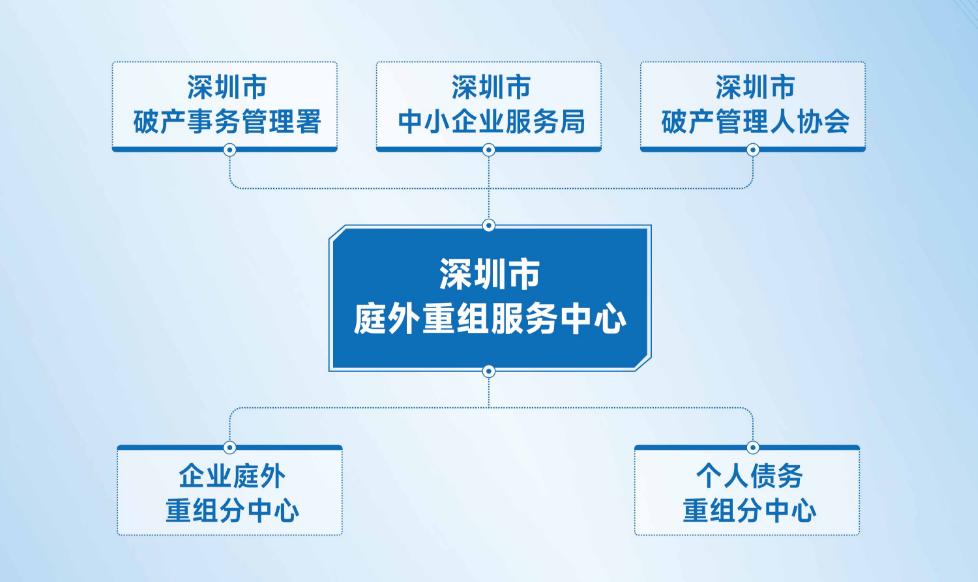
Core Insights - The establishment of the Shenzhen Extrajudicial Restructuring Service Center marks the first government-initiated comprehensive service platform in China that integrates both corporate and personal bankruptcy services [1][6][18] - The center aims to enhance efficiency in handling debts by considering both corporate and personal debts together, as over 50% of personal bankruptcy applicants in Shenzhen have debts related to business operations [6][18] Policy Background - The center aligns with central government policies aimed at improving market exit mechanisms and establishing a personal bankruptcy system [17] - Shenzhen's initiative reflects its status as a pilot area for comprehensive reform, including the exploration of a personal bankruptcy system [18] Service Structure - The center features two sub-centers: one for corporate extrajudicial restructuring and another for personal debt restructuring, providing a one-stop service for both entities and individuals in financial distress [6][18] - The service model combines government support, departmental collaboration, and association participation, enhancing credibility and professionalism in the restructuring process [9][19] Professional Support - A directory of 40 professional service institutions has been established to support the restructuring process, ensuring a high level of expertise in managing complex debt situations [15] - The center has also created an investor directory with 56 interested investment institutions to facilitate financing for distressed market entities [15][19] Operational Timeline - The Shenzhen Extrajudicial Restructuring Service Center officially commenced operations on October 10, 2023, and began offering public policy consultation services on October 15, 2023 [20]
深圳启动全国首个政府主导庭外重组平台 为企业与个人债务困境提供“一站式”化解通道
Nan Fang Ri Bao Wang Luo Ban· 2025-10-13 08:32
Core Viewpoint - The Shenzhen Out-of-Court Restructuring Service Center has been officially launched, marking the first government-initiated comprehensive platform in China for public services related to corporate and personal debt restructuring [1] Group 1: Service Model - The center combines public welfare and market-oriented service models, offering basic services such as policy consultation and debt resolution coordination for free [1] - For complex matters like professional restructuring plan design and investment matching, market-oriented institutions will be involved to reduce costs and improve efficiency [1] Group 2: Service Structure - The platform includes two sub-centers: one for corporate out-of-court restructuring and another for personal debt restructuring, aiming to provide "one-stop" services [1] - The initiative is designed to assist viable companies in overcoming difficulties quickly and to provide a debt clearance pathway for "honest but unfortunate" individuals [1] Group 3: Regulatory Framework - The launch event also introduced the "Shenzhen Enterprise Out-of-Court Restructuring Service Regulations" and "Shenzhen Personal Debt Restructuring Service Regulations," which clarify service processes and responsibilities [1] - The restructuring process emphasizes principles of equality, voluntariness, and market leadership [1] Group 4: Support System - A specialized support system has been established, with the first batch of 40 professional institutions with bankruptcy management experience included in the restructuring specialist directory [1] - Additionally, 56 investment institutions have been invited to join the investor directory to address resource and financing challenges in the restructuring process [1]
破局之道 企业“向死而生”的上海实践——上海探索破产审判优化营商环境调查(上)
Jie Fang Ri Bao· 2025-09-08 02:00
Core Viewpoint - The article highlights the importance of bankruptcy restructuring as a means for companies to recover from financial distress, emphasizing that bankruptcy can provide a second chance rather than being an end point for businesses [1][2]. Group 1: Bankruptcy Restructuring - The case of a Shanghai-based company, which faced severe financial difficulties and was on the verge of judicial auction, illustrates how bankruptcy restructuring can revitalize a business [1][2]. - The Shanghai Bankruptcy Court has seen a significant increase in cases, with 4,911 cases in 2023 and an expected 5,050 in 2024, indicating a high demand for bankruptcy services [1]. - The company underwent an out-of-court restructuring process, which allowed it to negotiate with creditors and stabilize its operations, ultimately leading to the approval of its restructuring plan by the court [3][4]. Group 2: Market-Oriented Solutions - The establishment of the North Bund Enterprise Out-of-Court Restructuring Center in Hongkou District represents a proactive approach to facilitate market-oriented restructuring solutions [3]. - The restructuring process involved the company negotiating with over two-thirds of its creditors to sign restructuring agreements, resulting in a debt restructuring of nearly 4 billion yuan [3]. - The flexibility and confidentiality of out-of-court restructuring allow companies to navigate financial crises without public scrutiny, which can be beneficial for maintaining business operations [2]. Group 3: Judicial Support and Pre-Reorganization - The Shanghai courts have implemented a "pre-reorganization" system to assist companies in distress before they enter formal bankruptcy proceedings, enhancing the chances of recovery [5][6]. - The case of Shanghai Jubao Real Estate Development Co., which faced a funding crisis, demonstrates how pre-reorganization can lead to successful asset recovery and debt repayment [6]. - The court's involvement in guiding the restructuring process has proven effective in ensuring that creditors are repaid and that companies can resume operations [6]. Group 4: Liquidation and Asset Management - Not all companies can be saved; some must undergo liquidation to ensure an orderly exit from the market, which can prevent further disputes and protect creditor interests [8][9]. - The case of Shanghai Shangshu Yonghui Fresh Food Co. illustrates the importance of asset management during liquidation, where the court facilitated the sale of assets to clear debts amounting to over 570 million yuan [9]. - The bankruptcy process serves not only to distribute assets but also to inject capital back into the economy, highlighting its role in resource reallocation [9].
罕见一幕!*ST高鸿业绩说明会遭投资者131问
Mei Ri Jing Ji Xin Wen· 2025-05-13 16:42
Core Viewpoint - The company *ST Gao Hong is facing significant financial challenges, with projected net losses of approximately 1.56 billion yuan in 2023 and 2.29 billion yuan in 2024, raising concerns among investors about its operational management and restructuring progress [2]. Group 1: Financial Performance - The company reported net losses of about -15.6 billion yuan for 2023 and -22.9 billion yuan for 2024 [2]. - Investors expressed concerns that the company's recent performance has eroded its entire market value over two years [2]. Group 2: Restructuring Efforts - The company is actively working on an out-of-court restructuring, including recruiting investors and auditing processes, but progress has been slow due to complex factors [2]. - The chairman's pre-tax remuneration decreased from 700,400 yuan in 2023 to 595,400 yuan in 2024, indicating cost-cutting measures [2]. Group 3: Audit and Legal Issues - The company's 2024 financial statements received a "non-standard" audit opinion due to ongoing investigations and significant litigation, with a total of 21 lawsuits amounting to over 900 million yuan [3][4]. - The company is cooperating with regulatory investigations and is focused on resolving litigation matters [3].
