
社会组织贷款

Search documents
86万家社会组织贷款可及性仅8% 普惠金融支持待破局
Di Yi Cai Jing· 2025-11-06 13:43
Core Insights - The report highlights the urgent need for a diversified funding support system for social organizations in China, which currently number 865,000 and employ over 10 million people [1] - Only 8% of social organizations can obtain bank loans as institutions, with most relying on personal loans or borrowing from friends and family [1][3] - The report emphasizes the necessity for policy clarity and product innovation to address the loan demand of social organizations [2] Group 1: Loan Accessibility and Challenges - The majority of banks refuse to lend to social organizations due to uncertainty about their status as legitimate borrowers [3][4] - Existing banking regulations do not clearly define social organizations as eligible loan recipients, leading to confusion in credit approval processes [3][4] - Social organizations face structural mismatches with traditional bank credit assessment models, which are based on profitability and collateral, while these organizations operate on a non-profit basis [4] Group 2: Recommendations for Improvement - Short-term solutions include clarifying the legal status of social organizations as borrowers and developing tailored credit products [6][7] - Financial institutions are encouraged to create specialized credit assessment frameworks that align with the unique characteristics of social organizations [6][7] - Collaboration among financial regulators, civil affairs, and social work departments is essential to establish a supportive ecosystem for social organization financing [7]
86万家社会组织贷款可及性仅8%,普惠金融支持待破局
Di Yi Cai Jing· 2025-11-06 13:26
Core Insights - The majority of banks refuse to lend to social organizations primarily due to the inability to confirm their status as legitimate borrowers [1][3] - Only 8% of social organizations can obtain bank loans as institutions, with most relying on personal loans or borrowing from friends and family [1][3] - The report emphasizes the need for a clear policy framework and innovative financial products to address the loan accessibility issues faced by social organizations [2][5] Summary by Sections Current Loan Situation - As of now, there are 865,000 social organizations in China, employing over 10 million people, which require diverse funding support for their operations and projects [1] - The report indicates that banks lack understanding of the characteristics and conditions of social organizations, leading to information asymmetry [4] Challenges in Financing - The existing loan regulations do not clearly include social organizations as eligible borrowers, causing banks to face legal ambiguities during credit approval [3][4] - Social organizations often fall into low credit ratings within banks' internal systems due to their non-profit nature, which conflicts with traditional profit-oriented lending criteria [4] Recommendations for Improvement - Short-term solutions include clarifying the legal status of social organizations as borrowers and developing tailored credit assessment systems [2][5] - Financial institutions are encouraged to innovate and create loan products specifically designed for social organizations, ensuring compliance and effective use of funds [5][6] - Collaboration among financial regulators, civil affairs, and social work departments is essential to establish a supportive ecosystem for social organization financing [6]
社会组织贷款陷资格困扰 千亿普惠市场待激活
2 1 Shi Ji Jing Ji Bao Dao· 2025-11-06 08:46
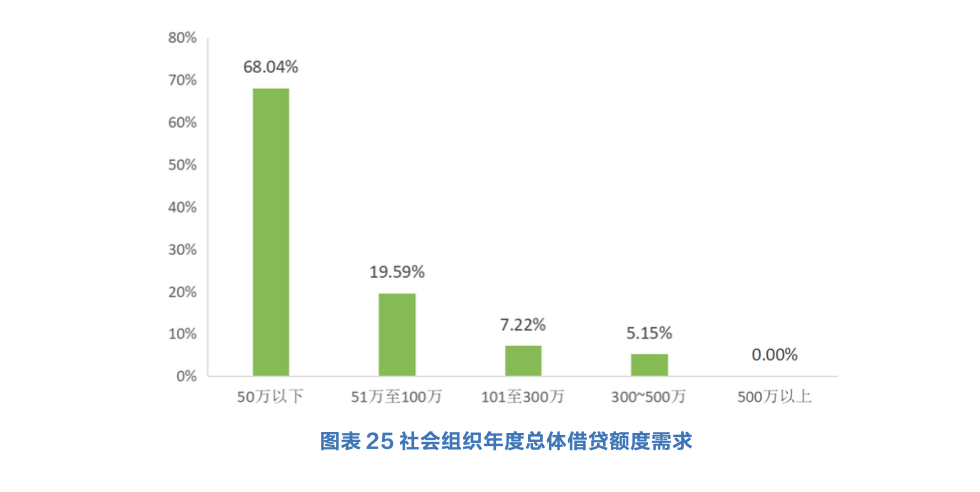
Core Viewpoint - The rapid development of social organizations in China has become a significant force in social construction and livelihood security, but they face challenges due to a single source of funding [1][2]. Funding Sources and Challenges - As of the end of 2024, the total number of social organizations in China is expected to reach 871,800, employing over 11 million people and playing crucial roles in various sectors such as poverty alleviation, education, elderly care, environmental protection, and rural revitalization [2]. - Social organizations primarily rely on social donations and government purchasing services for funding, leading to a bottleneck in financial resources [4]. - Economic conditions, fluctuations in donation willingness, and delays in government funding have exacerbated the financial strain, causing many organizations to struggle with project initiation due to lack of funds [5]. Loan Demand and Accessibility - A survey covering 213 social organizations across 28 provinces revealed that 45.54% of these organizations have clear borrowing needs, mainly due to delayed government project funding, cash flow imbalances, and the need for startup capital for new projects [6]. - Nearly 90% of social organizations have annual loan demands below 1 million yuan, with over 90% able to handle interest rates of 5% or lower, indicating a preference for small, short-term, and low-risk loans [6]. - Despite the clear demand, only 32.86% of organizations successfully obtained loans, with 75.71% relying on personal loans from founders or friends, and only 8% securing loans as social organizations [8]. Barriers to Loan Acquisition - Loan qualification issues are the primary barrier for social organizations, with over 40% of rejected applications due to "inconsistent social organization identity," significantly higher than other reasons such as lack of collateral or unstable income [9]. - The current loan regulations do not explicitly include social organizations as eligible borrowers, leading to banks' reluctance to lend [10][15]. - A lack of a clear credit assessment system for social organizations further complicates the situation, as banks struggle to evaluate repayment capabilities [15]. Market Potential - The total annual loan demand from social organizations is estimated at approximately 151.69 billion yuan, indicating a substantial untapped market for inclusive finance in the public welfare sector [18]. - While some regions have initiated pilot programs for social organization loans, such as in Shenzhen and Zhejiang, there is a lack of nationwide specialized financial products [18]. - Expanding inclusive finance to cover public welfare services could not only support the growth of social organizations but also activate the potential for social and economic benefits [18].


社会组织贷款陷资格困扰,千亿普惠市场待激活
2 1 Shi Ji Jing Ji Bao Dao· 2025-11-06 08:22
Core Viewpoint - Expanding inclusive finance to the public welfare sector can enhance the development of social organizations and activate the potential of inclusive public welfare, achieving a win-win situation for social and economic benefits [1][3]. Group 1: Current Status of Social Organizations - Social organizations in China have rapidly developed over the years, becoming a significant force in social construction and livelihood security, with a total of 871,800 organizations by the end of 2024, employing over 11 million people [2]. - These organizations primarily rely on social donations and government purchasing services for funding, facing a bottleneck due to the single source of funding [2][3]. Group 2: Financing Challenges - A survey covering 213 social organizations across 28 provinces revealed that 45.54% of these organizations have clear borrowing needs, mainly due to delayed government project funding, cash flow imbalances, and the need for startup capital for new projects [4]. - Nearly 90% of social organizations have annual loan demands below 1 million yuan, with over 90% able to bear interest rates of 5% or lower, indicating a preference for small, short-term, and low-risk loans [4]. Group 3: Loan Acquisition Issues - Despite clear demand, the actual loan acquisition rate for social organizations is low, with only 32.86% successfully obtaining loans, primarily relying on personal credit loans from founders or relatives [8]. - The main barrier to obtaining loans is the "social organization identity," with over 40% of rejected applications due to this issue, significantly higher than other reasons such as lack of collateral or unstable income [8]. Group 4: Policy and Regulatory Environment - Current policies do not clearly define social organizations as loan recipients, leading to banks' reluctance to lend, despite recent regulatory changes that theoretically include them [9][12]. - The lack of a clear credit assessment system for social organizations further complicates the situation, as banks struggle to evaluate repayment capabilities [12][13]. Group 5: Market Potential - The total annual loan demand from social organizations is estimated at approximately 151.69 billion yuan, with 70% of the demand under 1 million yuan [15]. - There is a significant untapped market for inclusive public welfare loans, with only a few regions having initiated pilot programs, indicating a need for clearer policies and dedicated financial products [15].
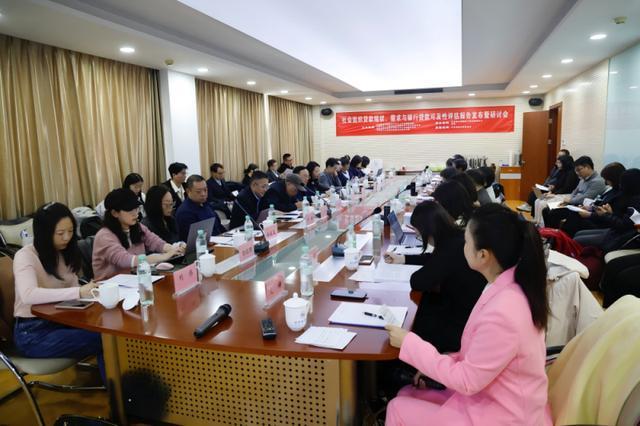
共探普惠金融如何赋能社会组织,我国首份社会组织贷款专项调研报告在京发布
Hua Xia Shi Bao· 2025-10-31 15:13
Core Viewpoint - The development of social organizations in China is significantly hindered by financing challenges, necessitating a robust financial support system to enhance the accessibility of loans for these organizations [2][3][4]. Group 1: Current Situation of Social Organizations - As of now, there are approximately 860,000 social organizations in China, employing over 10 million people, primarily funded through donations and government services [3]. - The financial pressure on social organizations is substantial, with around 30% of their total revenue coming from personal advances by founders, leading to potential issues such as delayed employee salaries [3][4]. Group 2: Loan Accessibility Issues - A significant 45% of social organizations face challenges in obtaining loans to address temporary liquidity shortages, with many being excluded from the credit system despite being legal entities [4][5]. - Only 8% of social organizations that have sought loans have successfully obtained them through their organizational identity, with most relying on personal loans or borrowing from friends and family [5]. Group 3: Recommendations for Improvement - The report suggests that improving the loan system for social organizations requires clear policies and innovative financial products, including establishing a dedicated credit assessment system for non-profit entities [6]. - Short-term actions should focus on policy clarity and product innovation, while medium-term efforts should aim at creating a supportive institutional environment and diverse credit products [6]. Group 4: Risk Assessment and Collaboration - The repayment capacity of social organizations can be evaluated based on their income sources, such as government contracts and foundation support, which can provide a reliable basis for loan assessments [7]. - Collaboration among government departments, financial institutions, social organizations, and research entities is essential to address the challenges surrounding social organization loans [8].
多方共探普惠金融赋能社会组织高质量发展新路径
Xin Hua Cai Jing· 2025-10-31 11:31
Core Insights - The report titled "Assessment of the Current Status, Demand, and Accessibility of Bank Loans for Social Organizations in China" reveals that only 8% of social organizations have accessed bank loans, indicating a significant gap in financial support for these entities [1][2] - The total number of social organizations in China has reached 860,000, employing over 10 million people, highlighting the scale and importance of these organizations in the economy [1] Group 1: Current Status of Social Organizations - There are 860,000 social organizations in China, employing more than 10 million individuals [1] - Only 8% of these organizations have obtained bank loans, with most relying on personal loans or borrowing from friends and family to meet financial needs [1] Group 2: Financial Support and Collaboration - The healthy development of social organizations is dependent on robust financial support, and the quality development of inclusive finance requires active participation from social organizations [2] - A collaborative effort among government departments, financial institutions, social organizations, research institutions, and media is essential to address the issues surrounding bank loans for social organizations [2] Group 3: Recommendations for Improvement - Short-term recommendations include clarifying the legal loan eligibility of non-profit entities, establishing a dedicated credit assessment system for social organizations, and innovating suitable credit products [2] - Medium-term strategies involve enhancing institutional support and building capabilities by integrating social organizations with financial system databases and developing diverse credit product support policies [2] - Long-term goals focus on creating a supportive ecosystem for inclusive finance tailored to social organizations, fostering a virtuous cycle of policy support, financial innovation, and organizational self-discipline [2]