社区合伙人模式

Search documents
聚合力还要添活力
Xin Lang Cai Jing· 2026-01-20 18:52
Core Viewpoint - The "Community Partner" model is an innovative grassroots governance approach that integrates diverse local resources to meet the evolving and personalized needs of residents, moving beyond traditional community governance methods [1][2]. Group 1: Community Governance Challenges - Traditional community governance faces limitations due to constraints in human, material, financial resources, and professional capabilities, leading to a focus on basic public services that may not meet the diverse and refined needs of residents [1]. - The "Community Partner" model addresses these challenges by promoting collaboration among residents, businesses, and social organizations, allowing each party to leverage their strengths for mutual benefit [1]. Group 2: Implementation Strategies - Successful implementation of the "Community Partner" model requires deep integration of party-building work into community services and grassroots governance, ensuring that the model operates without bias [2]. - Establishing replicable and sustainable systems and mechanisms for "partners" is essential, including improving supply-demand matching and incentive measures to ensure participation pathways, service direction, and rights protection [2]. - Engaging residents and businesses actively in the "Community Partner" initiative is crucial for enhancing professional capabilities and fostering a sense of belonging and achievement among participants [2]. Group 3: Community Transformation - The transformation of community staff from "managers" to "platform builders" and the shift of residents and businesses from "passive observers" to "active co-builders" can consolidate governance efforts and enhance service efficiency [2]. - The goal is to create a community that is emotionally connected and shares outcomes, making community issues a collective responsibility [2].
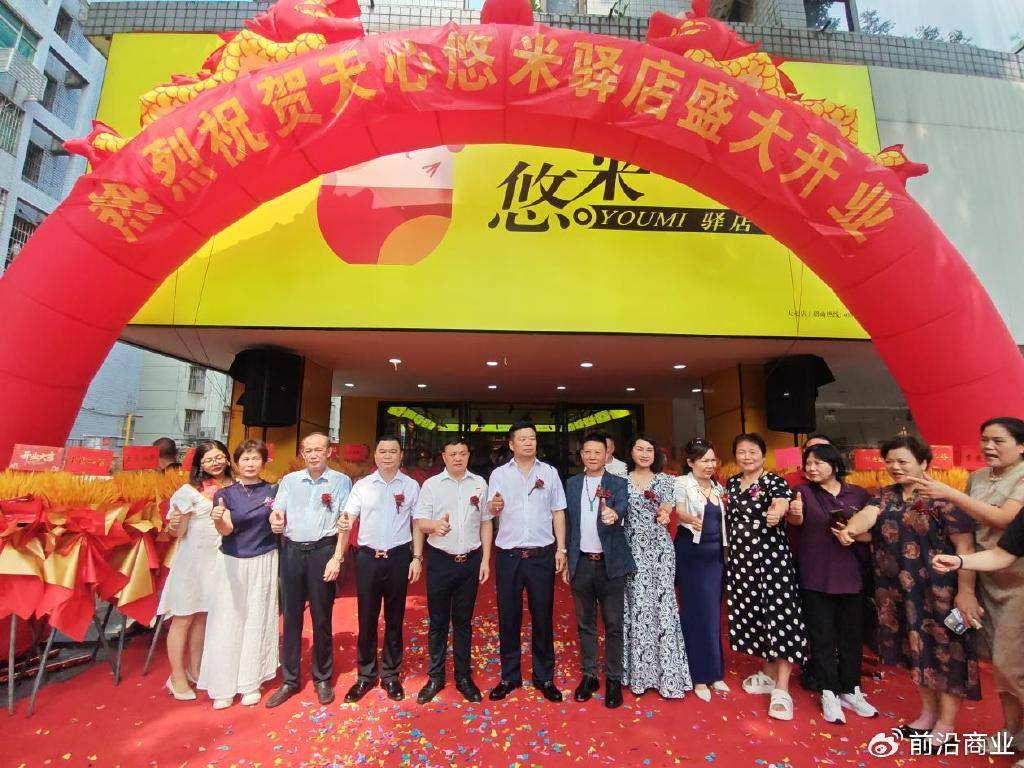
破局内卷,悠米驿店打造便利店行业有温度的“胖东来”
Sou Hu Cai Jing· 2025-07-16 16:35
Core Insights - The article highlights the growing consensus to eliminate "involution" and unhealthy competition in the market, with government bodies emphasizing fair competition to foster innovation [1][3] - Umi Yidong has successfully differentiated itself in the convenience store sector by focusing on community service and personalized experiences, achieving record-breaking sales figures [1][5] Industry Overview - The convenience store sector in China has seen significant growth, with total sales reaching 424.8 billion yuan in 2023 and a store count of 320,000 [3] - Retail sales in convenience stores grew by 9.1% from January to April 2023, outperforming other retail formats [3] Company Performance - Umi Yidong's recent openings have achieved impressive sales, with individual stores surpassing 300,000 yuan in daily sales, including a record of 327,000 yuan at the Tianxin store [3][5] - The company has opened multiple new stores in July 2023, with plans for further expansion in the coming months [3] Competitive Strategy - Umi Yidong emphasizes a community-centric approach, focusing on customer experience and emotional connections, akin to the successful model of "Fat Donglai" [7][8] - The company has developed a unique membership system that transforms one-time customers into lifelong users, achieving a member repurchase rate of 78%, significantly higher than the industry average of 45% [9] Customer Engagement - Umi Yidong enhances customer loyalty by creating a welcoming atmosphere and offering community-oriented services, such as shared amenities and social events [10] - The average customer dwell time in Umi Yidong stores is 18 minutes, three times the industry average, indicating strong customer engagement [10]