
内卷

Search documents
中国AI也开始“卷”,陷入消耗战
日经中文网· 2026-03-26 08:00
Core Viewpoint - The article discusses the significant increase in investment by major Chinese internet companies in AI and cloud infrastructure, highlighting the competitive landscape and the potential risks associated with these investments [2][5][8]. Group 1: Investment Trends - By 2027, the combined investment of Alibaba, Tencent, ByteDance, and Baidu in data centers and related infrastructure is expected to reach approximately $84 billion, a 60% increase from 2025 [2][5]. - Alibaba plans to invest nearly 9 trillion yen in AI and cloud infrastructure over the next three years, while Tencent aims to double its investment in AI services and model development to over 800 billion yen by 2026 [7]. Group 2: AI Development and Competition - Alibaba has developed generative AI models like "Qwen" and aims to increase annual sales from cloud services and AI-related businesses to $100 billion within five years, requiring an annual growth rate of over 40% [5]. - The competition in the AI service sector is intensifying, with major companies focusing on autonomous AI agents, spurred by government initiatives to expand AI applications [7][8]. - Both Alibaba and Tencent are launching AI agents to enhance user engagement and drive revenue, with Tencent planning to integrate AI capabilities into its WeChat platform [8]. Group 3: Financial Performance - Alibaba's net profit for the fourth quarter of 2025 fell by 67% year-on-year to 16.3 billion yuan, marking the second consecutive quarter of profit decline due to increased promotional expenses in the competitive food delivery sector [4]. - Despite the challenges, Alibaba's cloud business showed growth in sales and adjusted EBITA, indicating resilience amid the competitive landscape [4].



多卖172万辆,少赚800亿,中国汽车越卖越亏
商业洞察· 2026-03-07 09:22
Core Viewpoint - The Chinese automotive industry is experiencing a paradox where total sales volume is increasing, but total revenue is declining, leading to a significant drop in average vehicle prices and profit margins [8][10][26]. Group 1: Sales and Revenue Trends - In 2025, China's new car sales volume grew by 6.7% to 27.3 million units, yet the retail revenue fell by 1.5%, resulting in a loss of approximately 79.1 billion RMB [9][10]. - This marks the second consecutive year where sales volume and revenue diverged, a rare occurrence in the automotive sector [11]. - The average price of new cars dropped to 170,000 RMB in 2025, a 7.5% decrease from 2024, and lower than the prices in 2021 and 2022 [22][23]. Group 2: Factors Influencing Price Decline - The decline in average prices is attributed to a shift in consumer preferences, with high-end fuel vehicles declining and the average price of new energy vehicles decreasing [24][25]. - The automotive industry's profit margin fell to 4.1% in 2025, the lowest in five years, indicating a challenging economic environment [26]. Group 3: Regulatory Environment and Market Dynamics - Despite regulatory efforts to curb internal competition (referred to as "involution"), the pressure on prices remains, with some leading companies reportedly intensifying competitive practices [28]. - Improvements have been noted in payment terms for suppliers, with many major automakers reducing their payment periods to an average of 54 days [28]. Group 4: Future Outlook for 2026 - Early indicators for 2026 show a rebound in average vehicle prices, with January's average reaching 186,000 RMB, surpassing the previous year's figures [30]. - The automotive industry is expected to continue its growth trajectory, with sales and revenue likely to align again, as historical trends suggest [31]. - Supply chain pressures, particularly in memory chips and battery materials, may influence pricing strategies moving forward [32][36].
郭广昌大女儿没有被首富之女标签绑架,她在美国用旗袍书写属于自己的故事
Sou Hu Cai Jing· 2026-02-27 09:26
Core Viewpoint - The daughter of Guo Guangchang, a billionaire, has chosen to establish a small studio in New York focusing on handmade qipaos, breaking the stereotype that wealthy heirs must inherit or rely on family wealth. This decision reflects a response to the intense competition in China, known as "involution" [1][3][5]. Group 1: Business Strategy and Market Opportunity - The daughter has successfully brought qipaos to the overseas Chinese community and independent fashion circles, achieving a customer repurchase rate exceeding 76% [3]. - During her studies abroad, she identified a significant gap in the market for high-quality, original qipaos, particularly in areas like San Francisco's Chinatown and Flushing, New York [5]. - Her business model relies on word-of-mouth and customer loyalty, having operated her studio for four years without depending on her father's resources [7][11]. Group 2: Cultural and Social Commentary - The choice to pursue a niche market in qipaos serves as a direct critique of the competitive pressures faced by young people in China, highlighting a cultural shift towards individual choice and self-realization [3][11]. - The public reaction has evolved from skepticism to admiration, with discussions around the implications of her actions on generational wealth and the expectations placed on heirs [9][11]. - Guo Guangchang's support for his daughter's decision underscores a broader trend among wealthy families, where the focus is shifting from inheritance to personal agency and entrepreneurial spirit [13].

宁德时代孙明岩:“内卷”本质是创新保护缺失导致的同质化竞争
Zhong Guo Jing Ying Bao· 2026-02-11 06:57
Core Viewpoint - The essence of the current industry "involution" is insufficient innovation protection leading to homogeneous competition, highlighting the need for a robust intellectual property (IP) system to create a healthy industrial ecosystem [1] Group 1: Company Strategy - CATL invests nearly 20 billion yuan annually in R&D and has established a global patent portfolio of 60,000 patents, creating a comprehensive "innovation-protection-application" management system [1] - The company adopts a "technology licensing + light asset operation" (LRS model) approach to effectively mitigate market risks and enhance its global technological influence [1] Group 2: Industry Challenges - There is a lack of mention of "involution" by foreign patent holders when licensing or enforcing patents, indicating a cognitive bias regarding the value of innovation among Chinese entities [1] - The global leading innovation capability of China's power battery sector requires more robust legal protection [1] - The fundamental issue of "involution" stems from a lack of innovation protection, necessitating the strengthening of IP protection to reshape competitive order [1] Group 3: Call to Action - The Chinese power battery industry is urged to adopt a "leader mentality" in constructing its IP strategy to continuously enhance the global competitiveness of Chinese enterprises [1]

综合开发研究院原院长、经济学家樊纲荣膺“2025年度十大宏观经济学家”
Xin Lang Cai Jing· 2026-02-11 03:32
Group 1 - The core viewpoint of the article highlights the announcement of the "Top Ten Macroeconomists of 2025," emphasizing the need for proactive fiscal policies and moderately loose monetary policies to support China's economic development amidst challenges [1][3] - The evaluation of the economists was conducted by a committee considering five dimensions: professionalism, influence, innovation, foresight, and activity level, with results based on voting and reference to the foresight and output rates of their works [2][4] Group 2 - Economist Fan Gang was awarded the title of "Top Ten Macroeconomists of 2025," with notable insights including the importance of addressing the impact of AI on employment while promoting new industries and jobs created by AI [5] - Fan Gang raised questions about whether China can avoid the "Thucydides Trap" and find a new direction for economic development [5] - He pointed out that "involution" and vicious competition partly stem from an imperfect merger and acquisition mechanism [5] - In discussions about building a maritime power, he emphasized leveraging latecomer advantages through higher levels of openness [5] - Fan Gang also discussed the transformation of the perception of "Made in China" from misunderstanding to recognition [5]
李想朋友圈: Agent会十倍、百倍放大人与人的差距
理想TOP2· 2026-02-04 01:44
Group 1 - The core viewpoint is that while AI agents were initially thought to reduce the capability gap between individuals, they are actually amplifying disparities significantly, potentially by factors of ten or a hundred [1] - Current consumer demand and available time are lagging behind productivity growth, leading to a situation where productivity increases may result in internal competition and deflation for a period [1] Group 2 - In 2025, three groundbreaking AI products were identified: Claude Code, Doubao Phone, and Manus, indicating significant advancements in the AI sector [3] - In January 2026, three more remarkable AI products emerged: OpenClaw, MoltBook, and Chrome Gemini, showcasing the rapid evolution of AI technology [3]

1月23日投资提示:很卷
集思录· 2026-01-22 14:11
Core Viewpoint - The recent trend of issuing two new stocks per week on the Beijing Stock Exchange has led to a decline in the performance of new stock offerings, indicating a saturation of speculative funds in the market [1]. Group 1: New Stock Performance - The initial excitement around new stock offerings has diminished, with the combined return from two new stocks this week only reaching 0.08%, similar to the return from a single stock in the past [1]. - Investors have expressed a preference for a single new stock issuance per week, as it simplifies the process and allows for additional interest earnings from reverse repos [1]. Group 2: Market Dynamics - The increase in new stock issuances has resulted in a competitive environment, referred to as "involution," where the profitability of new stock subscriptions is decreasing [1].

宋志平:建设市场新蓝海
Sou Hu Cai Jing· 2026-01-19 12:42
Core Insights - The article discusses the challenges faced by Chinese enterprises in a highly competitive environment characterized by "involution," where companies engage in excessive competition leading to diminished profits and innovation [1][3][4] - It emphasizes the need for businesses to focus on micro-management and understanding the essence of operations to thrive in a new economic normal [1][4] Group 1: Involution and Competition - "Involution" is a significant issue across various industries in China, driven by factors such as globalization setbacks, technological shifts, and deep structural adjustments in the domestic economy [3][4] - The article highlights that many companies are trapped in homogeneous competition, leading to price wars that erode profit margins and stifle innovation [3][4] Group 2: Case Studies and Strategies - The case of Shandong Luhua Group is presented as a model for breaking through involution by focusing on product differentiation rather than price competition, achieving nearly 20 billion yuan in revenue and 2.7 billion yuan in profit in 2023 [6][7] - Luhua's strategy includes maintaining high product quality and respecting upstream suppliers, which fosters a sustainable industry ecosystem [7] Group 3: Policy and Industry Transformation - The Chinese electrolytic aluminum industry serves as an example of successful transformation through government intervention, where a production capacity ceiling was set at 45 million tons, leading to increased profits and a healthier market [9][10] - The article notes that from 2017 to 2024, the industry's total profit is expected to approach 100 billion yuan, demonstrating the effectiveness of macroeconomic regulation [10] Group 4: Mergers and Industry Consolidation - Historical examples from Japan's cement industry illustrate how government-led consolidation can effectively address overcapacity, resulting in a stable market with three major players maintaining reasonable pricing [12][13] - The article discusses how the Chinese cement industry underwent a similar consolidation under the leadership of Song Zhiping, leading to significant profit increases from 20-30 billion yuan to over 150 billion yuan between 2018 and 2021 [13] Group 5: Future Economic Strategies - Song Zhiping proposes five rules for constructing a new economic blue ocean in China, emphasizing the importance of industry self-regulation, consolidation, capacity reduction, pricing strategies, and innovation [15][16][17][18][19] - The article highlights the shift from "engineer dividends" to "scientist dividends," indicating a new era of innovation driven by returning talent and enhanced domestic research capabilities [15] Group 6: Conclusion - The article concludes with the notion that effective management and a focus on value creation are essential for long-term sustainability in the face of increasing global uncertainties [23]

读懂中国经济“换挡提速”的密码
Zhong Guo Jing Ji Wang· 2026-01-19 01:53
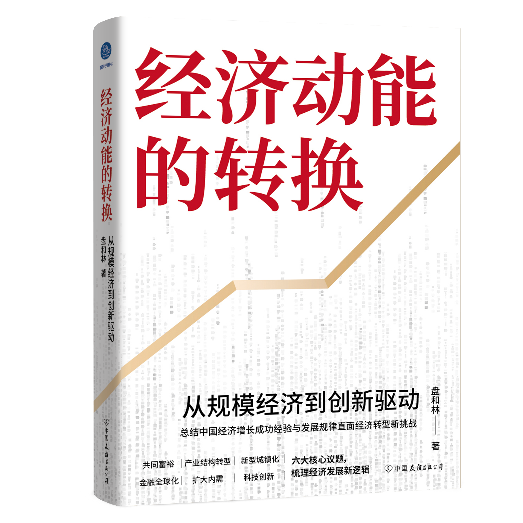
Core Insights - The book "Economic Dynamics of Transition: From Scale Economy to Innovation-Driven" by Professor Pan Helin provides a clear narrative on how China's economy has evolved and the necessity for a shift towards innovation-driven growth [3][4] - It emphasizes the importance of historical context in understanding the current economic landscape and future directions [3] Group 1: Historical Context and Economic Growth - The book begins by discussing the significance of the 1978 reform, highlighting it as a transformative institutional change aimed at stimulating individual initiative [4] - It uses the example of Xiaogang Village to illustrate how stable property rights incentivized farmers to invest and take risks, thereby revitalizing the agricultural sector and the broader economy [4] - The narrative continues through various reform milestones, indicating that the core principle has been to reward those willing and able to contribute, which has unleashed the creativity of millions [4] Group 2: Old Logic of Economic Growth - The first part of the book outlines six key components of China's previous growth model: distribution system, scale economy, real estate economy, financial leverage, globalization, and digital economy [5] - These elements are interrelated and have collectively driven China's rapid economic expansion, with scale economies providing unique advantages in a large market [5] - The author argues that understanding these components is crucial for assessing which advantages will continue to play a role in future growth and which mechanisms are nearing their limits [5] Group 3: Challenges and the Need for Transition - The middle section addresses six new challenges facing the economy, including common prosperity, involution, post-urbanization, financial risks, de-globalization, and technological competition [6] - Common prosperity is framed as essential for long-term stability, as widening income gaps could lead to structural risks [6] - The author identifies involution as a symptom of a slowing economy, where competition yields diminishing returns, signaling the inadequacy of the old growth logic [6] Group 4: Future Directions for Economic Growth - The latter part of the book proposes a new growth logic focused on building a more robust domestic market and enhancing economic efficiency through technological innovation [7] - It emphasizes the importance of domestic demand in light of changing international conditions and the limitations of the old growth model [7] - Innovation is highlighted as the key to improving total factor productivity and moving away from reliance on factor accumulation, with institutional frameworks being crucial for fostering a conducive environment for innovation [7] Group 5: Value of the Book - The book is praised for clearly articulating past successes and the necessity for transformation, providing a solid analytical framework for future growth [8] - It avoids exaggeration and complex jargon, instead relying on straightforward institutional logic and real-world examples to build a foundational understanding of the Chinese economy [8]
戴瑾:芯片产业合作中国做不好,为啥?咱们有个词叫“内卷”
Xin Lang Cai Jing· 2026-01-18 00:22
Core Viewpoint - The article discusses the challenges faced by the Chinese semiconductor industry in fostering collaboration, attributing these difficulties to a phenomenon referred to as "involution" [1] Group 1: Industry Challenges - The concept of "involution" is highlighted as a significant barrier to effective collaboration within the semiconductor sector in China [1] - The article suggests that internal competition among companies leads to inefficiencies and hinders cooperative efforts [1] Group 2: Implications for Collaboration - The lack of successful collaboration in the semiconductor industry is seen as a critical issue that could impact China's position in the global market [1] - The discussion emphasizes the need for a shift in mindset to overcome the challenges posed by involution and enhance industry cooperation [1]
