神经环路

Search documents
加拿大皇家科学院院士卓敏:脑科学破译情绪密码 开辟治疗新路径
Shang Hai Zheng Quan Bao· 2025-11-28 18:47
Core Insights - Brain science is reshaping the understanding of emotional issues, indicating that anxiety and depression are not merely psychological problems but are linked to pathological changes in brain neural circuits [2][3] - The concept of "pain emotion" is introduced, suggesting that chronic psychological discomfort can activate specific neural circuits, leading to persistent anxiety or depression [3][4] - The need for precise identification and intervention in emotional issues is emphasized, distinguishing between short-term and chronic anxiety [5] Group 1: Understanding Emotional Issues - The development of brain science clarifies the neural mechanisms behind emotional problems, focusing on learned changes in brain circuits rather than just psychological states [3] - Chronic anxiety is linked to molecular mechanisms that become reinforced in the brain, making it difficult to resolve simply through cognitive understanding [4] - Modern lifestyle factors, such as constant exposure to information via smartphones and social media, contribute to heightened sensitivity in neural circuits, increasing the prevalence of emotional issues [4] Group 2: Identification and Intervention Strategies - Accurate identification of emotional problems is crucial for effective intervention, with a focus on differentiating between short-term and chronic anxiety [5] - A layered judgment approach is proposed for assessing chronic anxiety, involving self-awareness, professional evaluation, and AI-assisted monitoring tools [5] - Multi-dimensional intervention strategies are recommended, including environmental changes, psychological counseling, and memory restructuring techniques [5][6] Group 3: Future of the Emotional Health Industry - Emotional issues represent a global public health challenge, creating significant demand for industry solutions, but the translation of brain science findings into practical applications requires collaboration among academia, industry, and research [7] - Innovative drug development is identified as a key area for translating brain science into marketable solutions, with a focus on creating targeted therapies that selectively inhibit overactive neural circuits [7] - The research team is optimistic about the potential for precision-targeted medications to be clinically available within the next 5 to 10 years, aiming for effective treatments for anxiety and depression similar to those for other common diseases [7]


冲动、理性与多巴胺:你的每个决定,大脑早有安排?
3 6 Ke· 2025-11-10 12:42
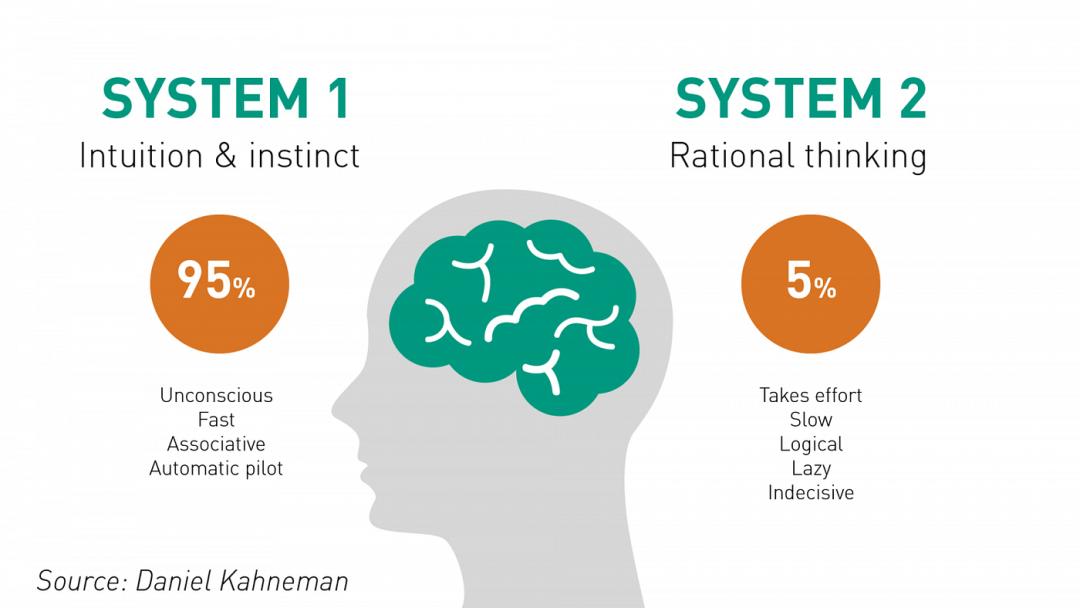
Core Insights - The article discusses the complexities of human decision-making and how it is influenced by various cognitive processes and neural mechanisms [1][2][9] Group 1: Decision-Making Mechanisms - Decision-making is a developing interdisciplinary science that combines neuroscience, psychology, mathematics, economics, and engineering [1] - Daniel Kahneman's concept of two thinking systems: System 1 is fast and automatic, while System 2 is slow and deliberate, allowing for corrections of errors made by System 1 [2] Group 2: Neural Activity in Decision-Making - Neuroscientific studies reveal multiple neural circuits in the brain that evaluate options from various perspectives, reflecting the complexity of decision-making [4] - Recent research published in "Nature" constructed a comprehensive decision-making map of the mouse brain, recording over 620,000 neurons across 279 brain regions [5][7] Group 3: Experimental Findings - The decision-making process in mice involves a complete cycle of visual input, choice, action, and reward feedback, demonstrating that even minor choices activate extensive brain regions [7] - The findings challenge the traditional linear pathway model of decision-making, suggesting a distributed network where signals emerge simultaneously across various brain areas [8]