禁废令

Search documents
再生纸浆“带病”进口为何屡禁不止
Ke Ji Ri Bao· 2025-12-25 00:22
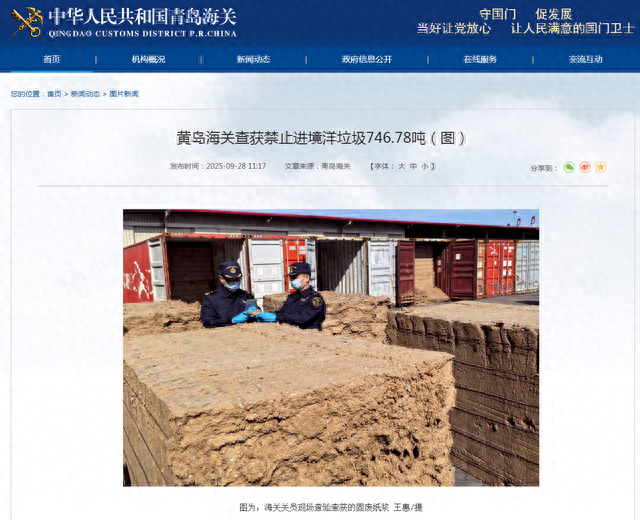
Core Viewpoint - The import of recycled paper pulp in China faces significant challenges due to the use of dry pulping technology, which has led to the entry of contaminated solid waste disguised as recycled pulp, prompting calls for stricter regulations and standards in the industry [1][5][6]. Group 1: Regulatory Issues - In September 2023, Qingdao Customs seized 746.78 tons of goods declared as "recycled paper pulp," which were found to be solid waste prohibited for import [1]. - The implementation of the "ban on waste" policy in January 2021 aimed to transition from importing waste paper to importing pulp, but some companies still import waste paper under the guise of recycled pulp [1][5]. - The General Administration of Customs has mandated that importers specify the production method of recycled pulp, either "dry" or "wet," to enhance regulatory oversight [5][6]. Group 2: Dry Pulping Technology Concerns - Dry pulping technology, which involves mechanically crushing waste paper without proper purification processes, results in high contamination levels, with up to 20% impurities [4][5]. - Experts argue that dry pulping is not a mature technology and poses safety risks due to the generation of flammable dust during production and storage [5][6]. - The production cost of dry pulping is lower than wet pulping by over 15%, incentivizing companies to take risks despite potential customs rejections [4][5]. Group 3: Industry Standards and Recommendations - The current national standard for recycled paper pulp is deemed insufficient, lacking mandatory controls on microbial content and heavy metals, which allows contaminated materials to enter the country [6][7]. - Experts recommend revising the national standard to include stricter quality indicators, such as limiting impurities to no more than 0.5% and setting maximum allowable levels for heavy metals [8][9]. - There is a consensus among industry experts that dry pulping should not be included in the definition of recycled paper pulp to prevent the import of solid waste [9]. Group 4: Technological Innovations and Future Directions - The Chinese paper industry is shifting towards more sustainable practices, including the adoption of chemical-mechanical pulping, which has a higher raw material utilization rate of up to 90% [10][11]. - Projects like "forest-pulp-paper integration" are being developed to enhance domestic raw material supply, reducing reliance on imported recycled pulp [11][12]. - The industry is encouraged to invest in green technologies and improve supply chain management to enhance competitiveness in a low-carbon economy [12].
“再生纸浆”系列报道引起重视,海关及行业协会出手
Di Yi Cai Jing· 2025-10-09 03:44
Core Viewpoint - The recent reports on "recycled pulp" have garnered significant attention from authorities, leading to the Customs General Administration and the China Paper Association to enhance standards and strengthen customs supervision [1][5]. Group 1: Regulatory Actions - The Customs General Administration is organizing a seminar to discuss the importation of recycled pulp, involving industry representatives and experts [1][2]. - The seminar will focus on the current situation of recycled pulp imports, production processes, and associated risks, including contamination and public health concerns [2][9]. - Since 2021, there have been multiple cases of solid waste being imported under the guise of recycled pulp, with significant quantities being returned [4][5]. Group 2: Industry Practices - Some paper companies have been circumventing regulations by importing shredded waste paper as recycled pulp, undermining the effectiveness of the waste ban [5][7]. - The dry grinding process used for producing recycled pulp skips essential purification steps, leading to potential contamination with harmful substances [7][8]. Group 3: Expert Recommendations - Experts are advocating for stricter standards in the revised "Recycled Pulp" regulations, including mandatory indicators for fiber quality and contamination detection [9]. - There is a strong call within the industry to enhance the standards for imported dry-processed recycled pulp to eliminate substandard products [8][9].