
科学外交

Search documents
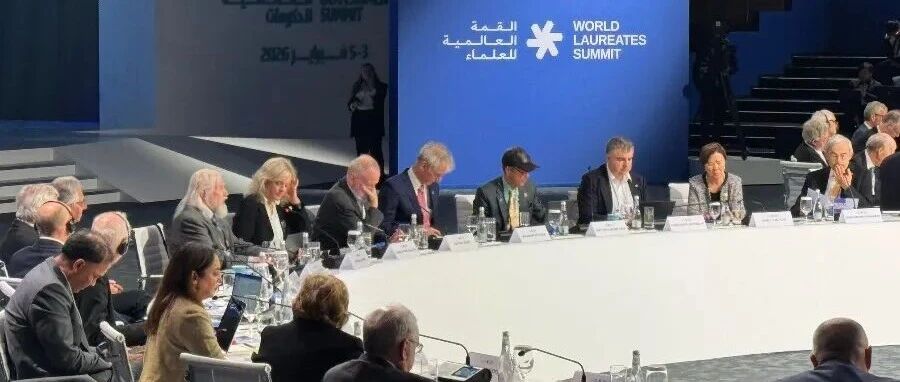
39位诺奖得主,在迪拜掀起一场“科学外交”
21世纪经济报道· 2026-02-03 02:48
Group 1 - The 2026 World Leading Scientists Summit (WLS) held in Dubai gathered over 1,000 participants, including 39 Nobel laureates, highlighting the event's significance in the global scientific community [1][3] - The UAE has elevated artificial intelligence and digital infrastructure to a national strategic level, aiming to reshape its role in the global technology landscape through investments in data centers, energy, and semiconductors [1] - The summit emphasized the intersection of scientific discovery and policy-making, aiming to align evidence with action to address global challenges such as climate change and public health [10][11] Group 2 - AI is recognized as a significant opportunity, with experts noting its potential to transform jobs and enhance productivity, particularly in industries like maritime where AI can optimize processes and reduce emissions [6][7] - Despite the optimism surrounding AI, scientists express caution regarding its limitations, emphasizing the need for human oversight and the current inadequacies of AI in certain fields [7] - The summit aims to bridge the gap between scientific culture and policy culture, facilitating direct dialogue between scientists, policymakers, and industry leaders to foster innovation and address pressing global issues [10][11]

德媒:与中国合作,欧洲才能跟上时代步伐
Huan Qiu Wang Zi Xun· 2025-11-06 23:30
Core Insights - China is emerging as a new technological powerhouse, with Chinese scientists taking a leading role in nearly half of all collaborative research projects with the US in 2023, indicating a significant increase in China's scientific influence [1][2] - The analysis of nearly 6 million research papers shows that 45% of the leadership in Sino-American research collaborations is now held by Chinese researchers, suggesting that by 2027-2028, China could match the US in key strategic fields such as artificial intelligence, semiconductor research, and materials science [1][2] Group 1 - China is making substantial investments in the scientific field and placing science at the core of its development strategy, expanding research openness and actively organizing international cooperation [2] - The country is developing a robust international scientific collaboration network by encouraging students and scientists to study and work globally, while also attracting talent from around the world [2] - China's strategic advantages include speed, strategic investment, and a state-led research system, although international research collaboration is becoming increasingly challenging due to geopolitical tensions [2] Group 2 - While the US remains a leader in artificial intelligence, China is rapidly catching up and is playing a crucial role in AI patent applications [2] - European institutions are lagging significantly behind their Chinese and American counterparts in global comparisons, indicating a shift in the global economic and geopolitical order [2] - For Europe, one potential strategy to keep pace with advancements is to consciously collaborate with Chinese teams in order to stay relevant in the evolving technological landscape [2]