科学育儿理念

Search documents
拒绝“躺平”!准妈妈的“活力养胎”新选择
Xin Lang Cai Jing· 2026-01-09 17:40
Core Viewpoint - Regular exercise during pregnancy is essential for maternal and fetal health, challenging the traditional belief that rest is the best approach during this period [2][10]. Group 1: Importance of Exercise During Pregnancy - Exercise is recommended for pregnant women without medical contraindications, as it can improve physical fitness and reduce the risk of various pregnancy complications [2]. - Excess weight gain during pregnancy is linked to significant risks, including gestational hypertension, gestational diabetes, and complications during delivery [2]. - Regular exercise can help control weight, lower the risk of gestational diabetes and hypertension, enhance cardiovascular function, and alleviate pregnancy-related discomforts [2][10]. Group 2: Safety Considerations - Safety is the primary principle for exercising during pregnancy, requiring a comprehensive evaluation by a doctor before starting an exercise regimen [3][7]. - Absolute contraindications for exercise include severe heart disease, uncontrolled hypertension, and premature rupture of membranes [3][4]. - Relative contraindications include mild to moderate respiratory diseases, recurrent miscarriage history, and severe obesity [4][6]. Group 3: Guidelines for Exercise - Recommended exercise types include aerobic activities like brisk walking and swimming, resistance training, and pelvic floor exercises [8]. - The suggested exercise intensity is moderate, with a goal of 30 minutes of activity on five days a week, ensuring the ability to converse during exercise [8]. - Exercise recommendations vary by pregnancy stage: gentle activities in early pregnancy, increased activity in mid-pregnancy, and reduced intensity in late pregnancy [10]. Group 4: Postpartum Exercise - The traditional "lying-in" concept should be updated, as early postpartum activity can aid recovery and prevent issues like urinary incontinence [10]. - Postpartum exercise should be gradual, starting with light activities and progressing to moderate intensity over time [10]. - A safe and comfortable environment for exercise is crucial, along with proper hydration and attention to bodily signals [10].
趋势研判!2025年中国儿童床垫行业发展背景、产需情况、市场规模及前景展望:随着消费升级和育儿观念革新,儿童床垫规模增长至179亿元[图]
Chan Ye Xin Xi Wang· 2025-07-19 02:36
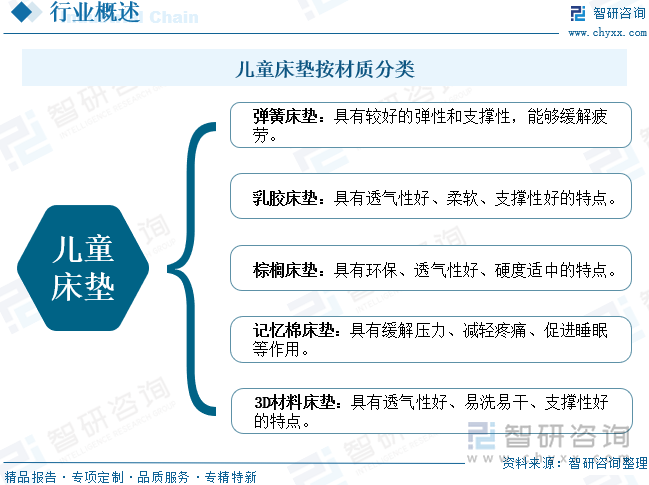
Core Insights - The children's mattress market in China is experiencing rapid growth, driven by rising income levels and evolving parenting concepts, with market size projected to increase from 9.216 billion yuan in 2015 to 17.908 billion yuan in 2024, representing a compound annual growth rate (CAGR) of 7.66% [1][17] - The demand for high-quality, functional, and safe products is expected to continue driving market expansion, particularly as younger generations of parents become the primary consumers [1][17] Industry Overview - Children's mattresses are designed to support the unique skeletal development of children, categorized into four growth stages: 1-5 years, 8-10 years, 11-13 years, and 14-18 years [3][5] - The industry includes various types of mattresses, such as spring, latex, palm, memory foam, and 3D material mattresses [3] Market Demand and Population Statistics - The total population of children aged 0-14 in China is projected to be 223 million in 2024, providing a solid foundation for the children's mattress market despite a slight decline from 2023 [7] - The demand for natural latex has been increasing, with production expected to reach approximately 371,400 tons in 2024, while demand is projected to grow from 700,800 tons in 2015 to 1,026,400 tons in 2024 [14] Policy Support - The Chinese government has implemented various policies to promote the replacement of old home furnishings, benefiting the children's mattress sector as part of the broader home improvement market [9][11] - Key policies include the "2025 Home Renovation 'Renewal' Work" and the "Consumption Promotion Special Action Plan," which aim to support green and intelligent home products [9][11] Industry Structure - The children's mattress industry has a well-established supply chain, including upstream raw material suppliers, midstream manufacturers, and downstream sales channels [12] - The rise of e-commerce has made online sales a significant channel for children's mattress distribution [12] Competitive Landscape - The industry consists of numerous manufacturers, with around 20 major companies producing over 200,000 mattresses annually [20] - Major brands include Xilinmen, Mousse, Mengbaihe, and others, with many companies focusing on mid-range products [20][21] Development Trends - The industry is moving towards smart technology integration, with future mattresses expected to incorporate sensors and AI for real-time monitoring and adjustment of sleep quality [27] - Environmental sustainability is becoming a fundamental requirement, with a shift towards using natural materials and reducing chemical additives in production [28] - There is a growing trend towards personalized products, with designs tailored to different age groups and preferences, enhancing consumer engagement [29]