科学5阶精准喂养体系

Search documents
多维度对比!辅食行业“一哥二哥”竞速IPO,两条路径的资本博弈
Sou Hu Cai Jing· 2026-01-14 14:14
Core Insights - The infant and toddler complementary food industry in China is experiencing significant activity, with leading companies Ying's Holdings and Grandpa's Farm racing to go public [2][4] - The market size for infant complementary food in China is projected to surpass that of the EU and Japan by 2024, making it the second largest market after the US [5] - The industry is highly fragmented, with the top five brands holding only a 14.2% market share, indicating potential for consolidation [7] Company Overview - Ying's Holdings, established in 2014, has a diverse product range including infant food and hygiene products, and has consistently ranked first in market share from 2022 to 2024 [10][11] - Grandpa's Farm, founded in 2015, has shown rapid growth, ranking second in total transaction volume for 2024 and leading in the organic infant complementary food segment [13] - Ying's Holdings reported a revenue of 1.974 billion yuan for 2024, while Grandpa's Farm reported 875 million yuan [15] Growth and Profitability - Grandpa's Farm has a remarkable compound annual growth rate (CAGR) of 42.6% from 2022 to 2024, with a year-on-year growth of 40.6% in 2024 [17] - Ying's Holdings experienced a revenue growth rate of only 12.3% in 2024, indicating potential growth challenges [17] - In terms of profitability, Ying's Holdings' net profit decreased by 4.4% in 2024, while Grandpa's Farm's profits have been steadily increasing [17] Market Positioning - Ying's Holdings focuses on a "scientific five-stage precise feeding system," while Grandpa's Farm emphasizes high-end organic products, priced approximately 30% higher than Ying's [19][21] - Both companies face challenges related to brand recognition and market perception, with Ying's Holdings dealing with trademark disputes and Grandpa's Farm facing scrutiny over its dividend payouts [22][24] Production and Quality Control - Ying's Holdings employs a mixed production model with about 55.1% of its products outsourced, raising concerns about quality control due to past consumer complaints [25][27] - Grandpa's Farm previously relied entirely on third-party manufacturing, which led to issues with product quality and compliance with safety standards [26][27] - Both companies have low research and development (R&D) spending relative to their revenues, indicating a reliance on marketing over product innovation [28] Industry Challenges - The infant food industry is characterized by high marketing expenses and low R&D investment, which could hinder long-term sustainability [28][30] - The future of the infant complementary food industry will likely depend on a return to product quality, enhanced R&D capabilities, and building a strong brand image [32]

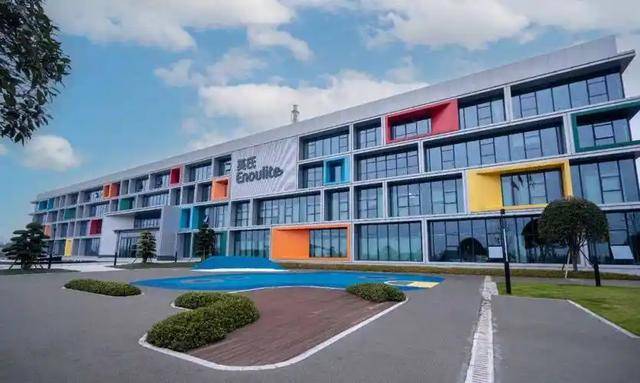
荣获国际双认证,探秘英氏控股“超级工厂”
Bei Ke Cai Jing· 2025-12-19 08:13
Core Insights - The article highlights the importance of ensuring nutritional matching, raw material safety, reliable processes, and information transparency in infant food choices, with Ying's brand being a trusted name in this sector [1] Group 1: Company Overview - Ying's brand, established in 2008, specializes in infant complementary foods, offering a range of products including rice flour, instant porridge, noodles, fruit and vegetable puree, cooking oil, meat puree, biscuits, and teething sticks [1] - The Ying's Nutrition and Health Science Industrial Base in Liuyang, Hunan, is set to be fully operational by the end of 2024, covering an area of 125.09 acres and featuring a 100,000-level GMP clean workshop and a central laboratory [1] Group 2: Production Process - The Liuyang factory employs fully automated production lines, completing the process from selected "9031 rice" to packaged rice flour in approximately 5 hours, with no human contact throughout the production stages [2] - Low-temperature ultra-micro grinding technology is used to ensure the rice is ground to a fineness that passes through a 100-mesh sieve, preserving nutrients and aroma [2] Group 3: Quality Control - The quality control laboratory utilizes advanced equipment such as two-dimensional liquid chromatography and inductively coupled plasma mass spectrometry (ICP-MS) to detect contaminants at parts per billion (ppb) levels [5] - Ying's products adhere to three national infant food standards, with a "zero tolerance" policy for pathogens, and each batch undergoes 17 foreign matter tests and 42 physicochemical indicators [5] - The "Five Common Quality Management System" integrates the entire supply chain to form a "quality community," which has been recognized by the Hunan Provincial Market Supervision Administration [5] Group 4: Industry Impact - Ying's Liuyang factory aims to bridge industrial collaboration in the Yangtze River middle urban agglomeration, providing high-quality infant food to meet the demands of families in Hubei [5]

英氏控股:股权代持十年,有无白手套?为规避实控人认定与股份限售
Xin Lang Cai Jing· 2025-12-18 10:29
Group 1 - The article discusses the complex history of shareholding arrangements in Ying's Holdings, highlighting the use of proxy shareholding to obscure actual ownership, which has persisted from 2008 to 2017 across multiple subsidiaries [3][4][14] - The process of dissolving these proxy arrangements raised concerns about transparency and compliance, as funds were temporarily held in a personal account of the financial officer rather than being directly distributed to actual shareholders [4][14] - The company has been scrutinized for its attempts to avoid clear identification of actual controllers, with three individuals identified as joint actual controllers holding a combined 52.02% of shares, yet the identification of their holding platforms has been questioned [5][14] Group 2 - There are indications that the company has sought to circumvent lock-up requirements for indirect shareholdings, as several board members did not provide lock-up commitments for their indirect holdings, exploiting a perceived regulatory loophole [6][15] - Following regulatory pressure, the company and its actual controllers agreed to voluntarily include indirect holdings in lock-up commitments, raising questions about whether this was a proactive measure or a reactive response to regulatory scrutiny [6][15] Group 3 - The company is embroiled in a trademark dispute with Ying's Baby Products Group, which poses a significant risk to its brand, as both parties have registered similar trademarks across various product categories, leading to ongoing legal battles [7][16] - The company claims to hold the largest market share in the infant food sector, yet it acknowledges a slowdown in revenue growth for its core products since 2024, while newer product lines face intense competition [8][17] Group 4 - Quality control issues have emerged, with multiple consumer complaints regarding product safety and quality, including reports of foreign objects found in products, which could damage the company's reputation [9][18] - The company has received 22 consumer complaints in the past year, primarily related to product quality and food safety, indicating potential vulnerabilities in its operational processes [9][18] Group 5 - The overall narrative suggests that Ying's Holdings is navigating a challenging path towards regulatory compliance and corporate governance, with the listing process revealing a need for greater transparency and clarity in its operations [10][19] - Investors are looking for a mature enterprise with clear historical records and defined responsibilities, rather than a company that appears to be making adjustments in response to regulatory inquiries [10][19]
英氏控股:股权代持十年,有无白手套?为规避实控人认定与股份限售绞尽脑汁,会不是上市即高峰?屡被投诉
Xin Lang Cai Jing· 2025-12-18 10:06
Group 1 - The article discusses the complex history of shareholding arrangements in Ying's Holdings, highlighting the use of proxy shareholding to obscure actual ownership, which raises questions about transparency and compliance [2][10] - The company has been trying to avoid the recognition of actual controllers, with three individuals identified as controlling 52.02% of shares, yet the identification of their holding platforms is complicated [3][11] - There are concerns regarding the decision-making mechanisms of these holding platforms, which may create confusion about who truly holds power within the company [12] Group 2 - The company has found ways to circumvent lock-up commitments for indirect shareholding, which could pose risks to stock price stability and governance if management can sell shares post-IPO without restrictions [4][12] - A significant trademark dispute exists between Ying's Holdings and Ying's Baby Products Group over the "Ying's" trademark, which could impact brand reputation and sales if unresolved [5][13] - The company claims to hold the largest market share in the infant food sector, but growth has slowed, and competition is fierce, raising doubts about future growth prospects [6][14] Group 3 - Quality control issues have been reported, with multiple consumer complaints regarding product safety and quality, which could affect the company's reputation and consumer trust [6][15] - The article concludes that the company's responses to regulatory inquiries reveal a patchwork approach to compliance, suggesting a lack of preparedness for the IPO process [7][15]