婴童零辅食

Search documents
盯上这届年轻父母,有商家年入15亿,即将冲出行业“第一股”
创业邦· 2026-02-13 03:37
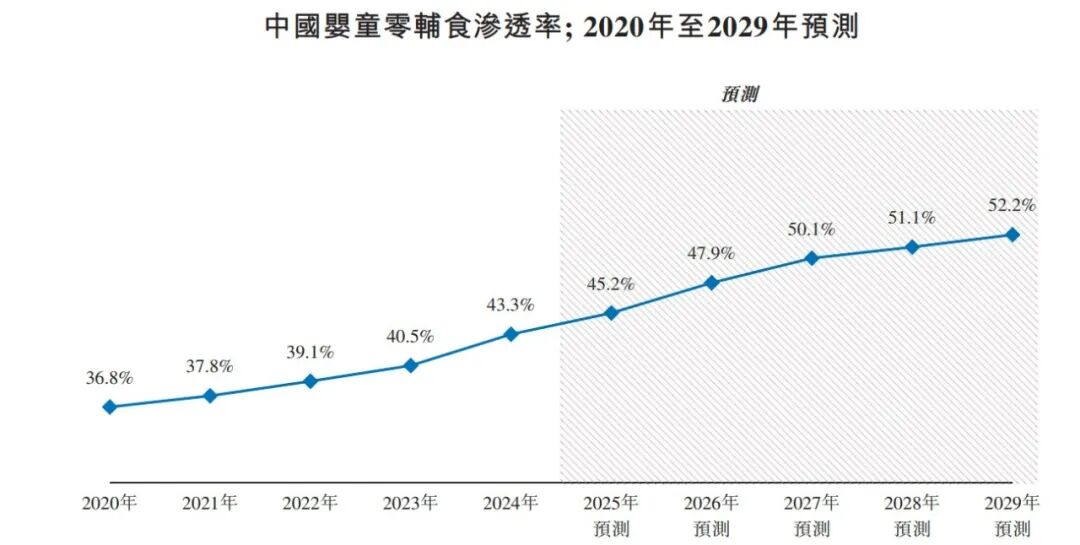
Core Viewpoint - The infant complementary food market in China is experiencing rapid growth, driven by a new generation of parents who prioritize scientific feeding and refined parenting practices, despite a declining birth rate [4][5][7]. Market Overview - The penetration rate of complementary food for infants aged 6 months to 6 years has increased from 36.8% in 2020 to 43.3% in 2024, with projections to reach approximately 52.2% by 2029 [5]. - The market size has grown from 36.2 billion RMB in 2020 to 45.9 billion RMB, with expectations to exceed 60 billion RMB by 2029 [5]. Competitive Landscape - Major players like "Grandpa's Farm" and "Ying's Holdings" are leading the market, with "Grandpa's Farm" achieving a GMV of 15 billion RMB in 2024 and holding a 23.2% market share in the organic infant complementary food segment [12]. - The top five companies in the infant complementary food market have a combined market share of only 12.8%, indicating a highly fragmented market with significant growth potential [22]. Product Trends - New parents are increasingly purchasing a variety of products beyond traditional grain-based foods, including meal accompaniments and nutritional supplements to meet diverse nutritional needs [5]. - High-end positioning and attractive packaging are driving consumer willingness to pay more for products, with nearly half of consumers showing a preference for mid-to-high-end products [9]. Financial Performance - "Grandpa's Farm" reported revenues of 622 million RMB, 875 million RMB, and 780 million RMB for the years 2023, 2024, and the first three quarters of 2025, respectively [10]. - The gross profit margin for "Grandpa's Farm" has consistently remained between 55% and 59%, with net profits of 75.64 million RMB, 103 million RMB, and 87.42 million RMB for the respective years [12]. Consumer Behavior - The demand for organic products is a key driver for "Grandpa's Farm," with about one-third of its SKUs certified organic [12]. - The best-selling product is organic baby noodles, priced around 68 RMB for a 200g bag, reflecting a strong market response to products designed for gradual development of chewing skills [15]. Future Outlook - The market is expected to continue evolving, with brands needing to innovate and refine their offerings to meet the growing demand for personalized nutrition and convenience [25]. - The industry is entering a new phase characterized by capital-driven consolidation and standardization, with successful brands focusing on quality control and consumer engagement [25].

盯上这届年轻父母,有商家年入15亿,即将冲出行业“第一股”
3 6 Ke· 2026-02-13 00:54
Core Insights - The infant complementary food market in China is experiencing rapid growth, driven by a new generation of parents who prioritize scientific feeding and refined parenting practices [1][5][16] - The market penetration rate for infant complementary foods has increased from 36.8% in 2020 to 43.3% in 2024, with projections to reach approximately 52.2% by 2029 [2] - The market size has grown from 36.2 billion yuan in 2020 to 45.9 billion yuan, with expectations to exceed 60 billion yuan by 2029 [2] Company Insights - "爷爷的农场" (Grandpa's Farm) has positioned itself as a leading brand in the infant complementary food sector, with a focus on high-end, organic products [6][8] - The brand's revenue from infant complementary foods accounts for over 80% of its total revenue, with reported revenues of 622 million yuan in 2023, 875 million yuan in 2024, and 780 million yuan in the first three quarters of 2025 [6][8] - The brand has achieved a compound annual growth rate of 42.6% from 2022 to 2024, ranking first among the top five companies in the industry [8] Market Dynamics - The infant complementary food market is characterized by a low concentration rate, with the top five companies holding only 12.8% of the market share, indicating significant growth potential for new entrants [16] - The market is evolving towards more personalized and refined product offerings, catering to specific dietary needs and preferences of infants [17][18] - High profit margins are prevalent in the industry, with "爷爷的农场" maintaining a gross margin of 55%-59%, similar to other leading brands [12][14] Consumer Trends - New parents are increasingly willing to pay a premium for high-quality, safe, and nutritious products, reflecting a shift in consumer behavior towards more discerning purchasing decisions [14][15] - The demand for diverse product types, including not just basic cereals but also meat-based and nutritional supplements, is on the rise [1][5] - The trend towards outdoor consumption and social sharing is influencing product development and marketing strategies [1] Future Outlook - The industry is expected to continue its growth trajectory, with innovations in product offerings and marketing strategies becoming critical for success [16][18] - Brands are encouraged to focus on quality control, transparency, and consumer education to build trust and maintain high profit margins [15][18] - The competitive landscape will increasingly hinge on the ability to meet the evolving needs of consumers while ensuring product safety and efficacy [17][18]
多维度对比!辅食行业“一哥二哥”竞速IPO,两条路径的资本博弈
Sou Hu Cai Jing· 2026-01-14 14:14
Core Insights - The infant and toddler complementary food industry in China is experiencing significant activity, with leading companies Ying's Holdings and Grandpa's Farm racing to go public [2][4] - The market size for infant complementary food in China is projected to surpass that of the EU and Japan by 2024, making it the second largest market after the US [5] - The industry is highly fragmented, with the top five brands holding only a 14.2% market share, indicating potential for consolidation [7] Company Overview - Ying's Holdings, established in 2014, has a diverse product range including infant food and hygiene products, and has consistently ranked first in market share from 2022 to 2024 [10][11] - Grandpa's Farm, founded in 2015, has shown rapid growth, ranking second in total transaction volume for 2024 and leading in the organic infant complementary food segment [13] - Ying's Holdings reported a revenue of 1.974 billion yuan for 2024, while Grandpa's Farm reported 875 million yuan [15] Growth and Profitability - Grandpa's Farm has a remarkable compound annual growth rate (CAGR) of 42.6% from 2022 to 2024, with a year-on-year growth of 40.6% in 2024 [17] - Ying's Holdings experienced a revenue growth rate of only 12.3% in 2024, indicating potential growth challenges [17] - In terms of profitability, Ying's Holdings' net profit decreased by 4.4% in 2024, while Grandpa's Farm's profits have been steadily increasing [17] Market Positioning - Ying's Holdings focuses on a "scientific five-stage precise feeding system," while Grandpa's Farm emphasizes high-end organic products, priced approximately 30% higher than Ying's [19][21] - Both companies face challenges related to brand recognition and market perception, with Ying's Holdings dealing with trademark disputes and Grandpa's Farm facing scrutiny over its dividend payouts [22][24] Production and Quality Control - Ying's Holdings employs a mixed production model with about 55.1% of its products outsourced, raising concerns about quality control due to past consumer complaints [25][27] - Grandpa's Farm previously relied entirely on third-party manufacturing, which led to issues with product quality and compliance with safety standards [26][27] - Both companies have low research and development (R&D) spending relative to their revenues, indicating a reliance on marketing over product innovation [28] Industry Challenges - The infant food industry is characterized by high marketing expenses and low R&D investment, which could hinder long-term sustainability [28][30] - The future of the infant complementary food industry will likely depend on a return to product quality, enhanced R&D capabilities, and building a strong brand image [32]
爷爷的农场“伪洋”标签,藏不住了
凤凰网财经· 2026-01-13 15:20
Core Viewpoint - The company "爷爷的农场" (Grandpa's Farm) is facing significant challenges as it prepares for its IPO on the Hong Kong Stock Exchange, with concerns over brand authenticity, product quality, and financial practices [1][2][19]. Group 1: Brand Identity Issues - The brand has been criticized for falsely presenting itself as a "European national baby food brand," which has eroded consumer trust [3]. - The founders are Chinese nationals who established the brand in China, contradicting earlier claims of European origins [5][8]. - The majority of the products are now produced domestically, with minimal imports, leading to accusations of misleading marketing practices [10]. Group 2: Quality Control Concerns - The company relies heavily on OEM manufacturing, resulting in weak quality control and multiple regulatory penalties for product quality issues [11]. - Since 2019, the company has faced at least eight instances of product non-compliance, including issues with key nutritional indicators [12]. - Recent media reports have highlighted discrepancies in product labeling, raising further questions about quality and transparency [13]. Group 3: Financial Practices and Risks - The company's sales and distribution expenses have increased significantly, while R&D spending remains disproportionately low, raising concerns about long-term sustainability [14]. - A substantial portion of marketing expenses is directed towards e-commerce platforms, with rising costs and declining conversion rates adding operational pressure [14]. - The company has engaged in complex transactions with related parties, which could raise red flags during the IPO review process [17]. Group 4: Dividend Practices and Employee Welfare - The company has distributed large dividends prior to the IPO, which some view as a strategy to extract value at the expense of long-term investment in the business [18]. - There are significant arrears in employee social insurance contributions, indicating potential compliance issues and a lack of focus on employee welfare [18][19]. - The juxtaposition of high dividends and low investment in R&D and employee benefits reflects a troubling imbalance in the company's operational philosophy [19].

“爷爷的农场”闯关港交所 营销费用为研发开支10倍以上
Mei Ri Jing Ji Xin Wen· 2026-01-13 12:55
Core Viewpoint - "爷爷的农场" is a prominent brand in the Chinese infant food sector, recently filed for an IPO on the Hong Kong Stock Exchange, revealing significant marketing expenditures compared to R&D investments, raising questions about its long-term sustainability and product quality control [1][4]. Group 1: Market Position and Financial Performance - The company holds a market share of approximately 3.3% in the infant food sector, ranking second in overall GMV and first in organic infant food GMV in China for 2024 [2]. - Revenue figures for the reporting period are 622 million yuan, 875 million yuan, and 780 million yuan, with profits of 75.46 million yuan, 103 million yuan, and 87.42 million yuan respectively [4]. - The average selling price of infant food products has declined from 23.7 yuan per unit in the first three quarters of 2024 to 21.8 yuan per unit in the first three quarters of 2025 [2]. Group 2: Cost Structure and R&D Investment - Marketing expenses significantly exceed R&D expenditures, with marketing costs being 10 to 16 times higher than R&D costs during the reporting period [4]. - The gross margin for infant food products is 59.9%, while the gross margin for family food products is lower at 46.5% for the first three quarters of 2025 [3]. Group 3: Production and Quality Control - The company relies heavily on third-party manufacturers for nearly all its products, collaborating with 62 contract manufacturers, including 13 overseas [5]. - There have been past quality issues, including a 2019 incident where imported products failed safety inspections, leading to regulatory scrutiny [6]. Group 4: Corporate Governance and Financial Practices - The company has approved significant dividends, totaling 63 million yuan for the first three quarters of 2025, despite having outstanding social insurance and housing fund payments amounting to 17.4 million yuan over the reporting period [7][8]. - There are related party transactions involving sales and advertising services with companies controlled by the chairman, raising potential governance concerns [8].
爷爷的农场冲刺港股IPO“大拆解”:有机细分赛道一哥,强化供应链安全
Xin Lang Cai Jing· 2026-01-12 08:44
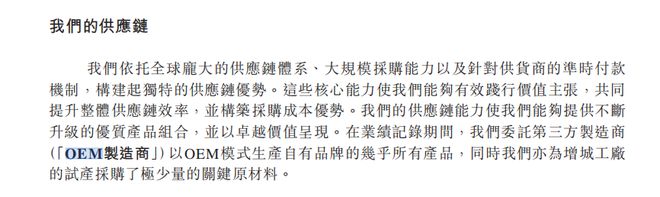
Core Viewpoint - The company "爷爷的农场" is preparing for an IPO on the Hong Kong Stock Exchange, emphasizing its commitment to high-quality organic baby food products and its leading market position in China for organic baby food sales in 2024 [1]. Group 1: Market Position and Growth Potential - The company ranks first in the Chinese organic baby food market by transaction volume for 2024, indicating strong market leadership [1]. - The penetration rate of organic baby food in China is low compared to Western markets, suggesting significant growth potential as consumer preferences shift towards high-end and organic products [1]. - The company has maintained steady revenue and profit growth over the past two years, supported by a robust product development system and unique supply chain management [1]. Group 2: Supply Chain and Production Strategy - The company employs a dual-track supply chain model, integrating global top-tier raw materials and production processes while maintaining strict quality control [8][10]. - It has established partnerships with 62 OEM manufacturers, including 13 overseas partners from countries like Spain, France, Australia, and Italy, to ensure high-quality production [3]. - The company is building its own production capacity with a new facility in Guangzhou, set to enhance its ability to respond to market demands and maintain supply chain flexibility [10]. Group 3: Research and Development - The company prioritizes R&D, collaborating with universities and research institutions to develop product formulas and industry standards, thereby enhancing its competitive edge [4]. - R&D expenditures increased by 60.3% from 0.18 billion to 0.28 billion, with a corresponding rise in R&D expense ratio from 2.8% to 3.2%, surpassing the average of comparable companies [7]. - A high-standard infant dietary research laboratory has been established to ensure precise nutritional analysis and quality control throughout the product lifecycle [7]. Group 4: Quality Control Measures - The company implements a rigorous quality control system, including a three-tier verification process for all products, ensuring compliance with high-quality standards [11]. - It conducts over 10,000 product inspections since 2020, with a total testing expenditure exceeding 15 million yuan, reflecting its commitment to quality assurance [12]. - The company’s approach to quality control redefines traditional outsourcing relationships, emphasizing deep involvement and stringent standards throughout the supply chain [13].
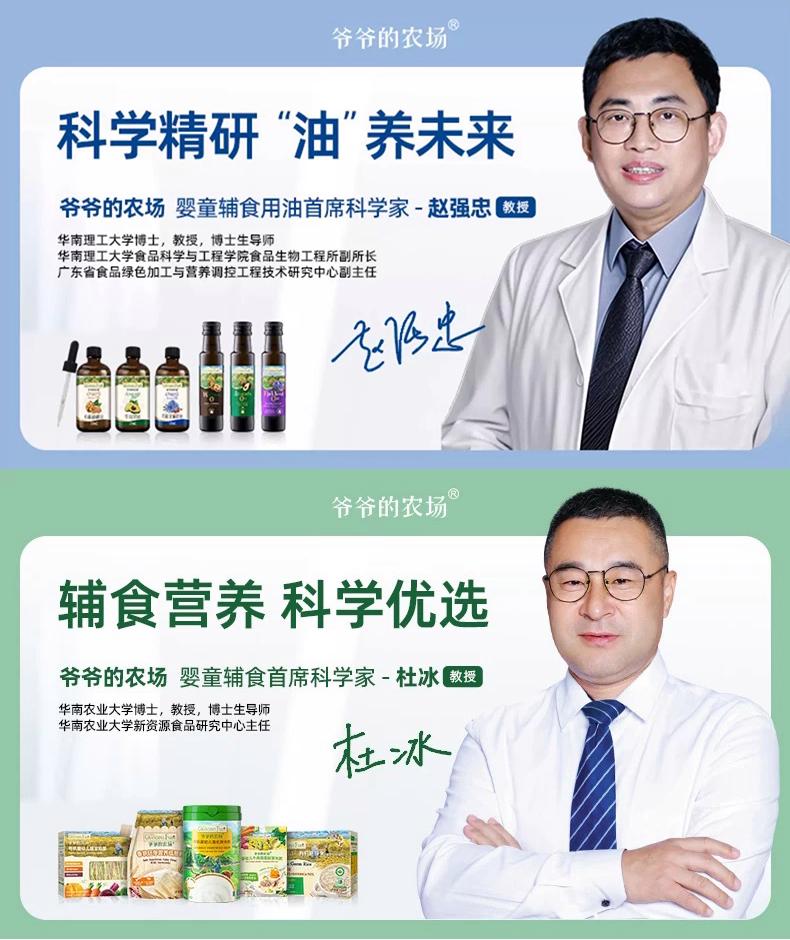
爷爷的农场IPO“大拆解”:多名大客户“兼任”供应商 三成收入用于“投流”
Zhong Guo Jing Ying Bao· 2026-01-08 16:33
Core Viewpoint - The company "爷爷的农场" is aiming for an IPO on the Hong Kong Stock Exchange, showcasing strong growth in the organic baby food sector, but faces challenges related to its business model and market dynamics [1][2]. Group 1: Company Overview - "爷爷的农场" has been established for 10 years and is ranked first in China's organic baby food sector, with a revenue growth rate exceeding 40% and a gross margin close to 60% [1]. - The company has a diverse product range, including baby food, cooking oils, and snacks, with 269 SKUs, over one-third of which are certified organic [2]. - As of September 30, 2025, the company reported revenues of 6.22 billion yuan for 2023, 8.75 billion yuan for 2024, and 7.80 billion yuan for the first three quarters of 2025, with profits of 754.6 million yuan, 1.03 billion yuan, and 874.2 million yuan respectively [2][10]. Group 2: Sales Channels and Marketing Costs - The company heavily relies on e-commerce, with over 70% of its revenue coming from this channel, and sales from e-commerce platforms were 4.5 billion yuan, 6.52 billion yuan, and 5.63 billion yuan for the respective years [3][4]. - Marketing expenses are significant, with sales and distribution costs of approximately 2.01 billion yuan, 3.06 billion yuan, and 2.83 billion yuan, representing 32.3%, 35.0%, and 36.3% of total revenue for the respective periods [4]. - The company incurs about 1 yuan in service and promotion fees for every 3.6 yuan in sales on e-commerce platforms, indicating high marketing costs [4]. Group 3: Business Model and Production - "爷爷的农场" operates primarily on an OEM model, with only 27 out of 640 employees involved in manufacturing, relying on 62 OEM manufacturers for production [6][10]. - The company has a factory in Guangzhou for limited self-production and quality control, but the majority of its production is outsourced [6]. - The overlap between major customers and suppliers raises concerns regarding pricing fairness and regulatory scrutiny, particularly in relation to IPO approval [8]. Group 4: Market Challenges and Opportunities - The company faces challenges from a declining birth rate in China, with the number of children aged 0-6 decreasing from 110 million in 2020 to 80.7 million in 2024 [10]. - Despite the declining birth rate, the organic baby food market is expected to grow due to increasing consumer demand for high-quality products, with significant opportunities for market penetration and product extension [10]. - The company is positioned to leverage its brand strength in the organic segment and may achieve sustainable growth by optimizing its supply chain and marketing efficiency [10].
欠缴1740万社保、公积金,“假洋牌”爷爷的农场冲刺上市
Guan Cha Zhe Wang· 2026-01-08 13:59
Core Viewpoint - The company "爷爷的农场" (Grandpa's Farm) is preparing for its IPO on the Hong Kong Stock Exchange, revealing significant issues regarding employee social insurance and housing fund contributions, which have accumulated to a shortfall of 17.4 million yuan [2][4]. Group 1: Brand and Market Position - The brand has transitioned from an overseas image to a localized identity, aiming to clarify its origins and marketing strategies [1]. - Since its establishment in 2018, the company has rapidly expanded its product offerings in the infant food sector, achieving a GMV of 1.5 billion yuan in 2024, ranking second in the market [8]. - The company reported a revenue increase from 622.4 million yuan in 2023 to 875.3 million yuan in 2024, marking a 40.6% year-on-year growth [8]. Group 2: Financial Performance - The company’s gross profit rose from 345.1 million yuan in 2023 to 514.4 million yuan in 2024, with a gross margin of 58.8% [11]. - Despite a decline in sales volume for its core infant food products in 2025, the average selling price increased, but overall revenue from this segment decreased by 2.7% [9]. Group 3: Employee Welfare and Compliance Issues - The company has a significant shortfall in social insurance and housing fund contributions, with amounts due of 4.7 million yuan, 6.8 million yuan, and 5.9 million yuan for the years 2023, 2024, and the first nine months of 2025, respectively [2][4]. - The company acknowledges the legal implications of its non-compliance but claims that it does not foresee significant adverse effects on its business operations [4][6]. Group 4: Operational Challenges - The company operates primarily on an OEM model, which has led to challenges in supply chain management and quality control [13]. - To address these issues, the company is developing its own production facility in Guangzhou, which is expected to take time to become fully operational [14].

毛利率比肩农夫山泉、代工撑起行业第二,爷爷的农场靠“假洋牌”轻松大赚?
Sou Hu Cai Jing· 2026-01-08 10:21
Core Viewpoint - Grandpa's Farm, a baby food brand, is rapidly growing in the market but faces significant concerns regarding its brand authenticity, production model, food safety issues, and high marketing expenses [1][3][11]. Financial Performance - Revenue for Grandpa's Farm reached RMB 622.39 million in 2023, with a projected increase to RMB 875.35 million in 2024, reflecting a year-on-year growth of 40.6% [3][4]. - The net profit for 2023 was RMB 75.46 million, with a declining net profit margin from 12.1% in 2023 to 11.2% in the first three quarters of 2025 [3][8]. - The gross profit margin was notably high, at 55.5% in 2023, compared to the snack industry average of 26%-28% [3][5]. Product Categories - The high gross margin is primarily supported by the baby food segment, with gross margins of 55.8% in 2023, increasing to 60.7% in 2024 [5]. - The company remains heavily reliant on the baby food segment, which accounted for 93.1% of revenue in 2023, although this is projected to decrease to 80.4% by 2025 [5][6]. Sales and Marketing Strategy - The company heavily relies on e-commerce platforms, with direct sales channels contributing approximately 70% of total revenue [6]. - Marketing expenses have risen significantly, constituting 36.3% of revenue by 2025, indicating a heavy investment in promotional activities compared to only 2.2%-3.2% for R&D [8][9]. Brand Authenticity and Safety Concerns - The brand's "European import" identity has been questioned, as it is primarily operated by a Chinese company, raising concerns about its authenticity [11][13]. - The company has faced multiple food safety issues, including high sodium content in products marketed as "children's use" and instances of product recalls due to non-compliance with safety standards [15][16][18]. Operational Model - Grandpa's Farm operates primarily on an OEM production model, relying on 62 suppliers, which raises concerns about quality control and product consistency [6][18]. - The company has not established significant in-house production capabilities, which may hinder its ability to maintain quality standards [6][18].

毛利率达57%却“重营销轻品控”?爷爷的农场冲刺港股上市
2 1 Shi Ji Jing Ji Bao Dao· 2026-01-08 05:10
Core Viewpoint - Grandpa's Farm International Holdings Limited is preparing for an IPO on the Hong Kong Stock Exchange, aiming to capitalize on the growing demand for high-quality infant food products in China, where it ranks second in the market for infant complementary food by total transaction value in 2024 [1]. Company Overview - Founded in 2015, Grandpa's Farm specializes in infant complementary food and family food products, marketed under its own brand [1]. - The company has positioned itself in the high-end organic segment, emphasizing its Dutch origins and global supply chain [2][3]. - As of September 2025, the company has developed 269 SKUs, with a significant focus on high-frequency household consumables [2]. Financial Performance - In 2023, the company reported revenues of 622 million RMB, with a gross profit of 345 million RMB and a net profit of 75.46 million RMB [3]. - Projected revenues for 2024 are expected to rise to 875 million RMB, with gross profit increasing to 514 million RMB and net profit reaching 103 million RMB [3]. - For the first three quarters of 2025, revenues reached 780 million RMB, with a gross profit of 447 million RMB [3]. - The gross margins for 2023, 2024, and the first three quarters of 2025 were 55.5%, 58.8%, and 57.3%, respectively [3]. Business Segments - The infant complementary food segment is the primary revenue driver, contributing over 80% of total revenue and maintaining a higher gross margin [3]. - In the first three quarters of 2025, the infant complementary food segment generated 627 million RMB in revenue with a gross margin of 59.9% [4]. - The family food segment is emerging as a secondary growth driver, with revenues increasing from 43 million RMB in 2023 to 153 million RMB in the first three quarters of 2025 [4]. Market Position - The infant complementary food industry in China is highly fragmented, with the top five market players accounting for only 14.2% of the market [11]. - Grandpa's Farm holds a market share of 3.3%, trailing behind the market leader, Ying's Holdings, which has a share of 5.7% [11]. - Ying's Holdings is also pursuing an IPO, which could further intensify competition in the market [11]. Marketing and Production - The company operates on an OEM model, producing all its products through third-party manufacturers, which raises concerns about quality control [5][10]. - Marketing expenses are significant, with sales and distribution costs accounting for approximately 32.3% to 36.3% of total revenue in recent years [10]. - The company has faced multiple regulatory penalties related to food safety issues, which could impact its reputation and operational success [8][9].