科技与自然共生

Search documents
让历史活在每一段向前延伸的轨道中(环球走笔)
Ren Min Ri Bao· 2025-12-04 22:16
Core Viewpoint - The Albulaline and Bernina Railway, celebrated for its harmonious integration of technology and nature, has been recognized as a UNESCO World Heritage site, emphasizing the importance of preserving its unique value through tourism and education [2][3]. Group 1: Historical Significance - The Albulaline, praised by cultural critic Isidor Karmatin in 1913, transformed the previously inaccessible Graubünden region into a beautiful and connected area [1]. - The railway was proposed by Dutchman Willem Jan Holsboer in the late 19th century and took five years to complete, connecting the capital city of Chur with the resort town of St. Moritz [2]. - The Albulaline and the Bernina line, completed in the same year, were recognized for their ecological design and were inscribed as UNESCO World Heritage sites in 2008 [2]. Group 2: Maintenance and Preservation - The Rhaetian Railway Company invests approximately 60 million Swiss francs (about 5.3 billion RMB) annually in maintenance, adhering to UNESCO's protection standards [3]. - The railway's original stone bridges and tunnels have been preserved, showcasing traditional craftsmanship in restoration efforts [3]. Group 3: Tourism Development - The Swiss railway culture emphasizes tourism, with the Rhaetian Railway Company introducing scenic carriages as early as 1926 and adapting to changing passenger needs [4]. - The newly opened "Landwasser World" eco-park combines the railway with agriculture, villages, forests, and water systems, providing immersive experiences for train enthusiasts and hikers [4]. - The Swiss government collaborates with various foundations to create a diverse funding network for the maintenance of historical railway facilities [4]. Group 4: Cultural Heritage and Community Engagement - The legacy of the railway is maintained through the respect for individuals who contributed to its history, fostering a sense of belonging among railway workers [5]. - Educational initiatives incorporate railway heritage into school curricula, while community events celebrate the railway's history and engage the public [5]. - The Albulaline and Bernina Railway serve as a bridge between the past and future, intertwining natural beauty with industrial history [5].
外媒观察:“草原云谷”绿电驱动算力是科技与自然共生的典范
人民网-国际频道 原创稿· 2025-05-15 02:20
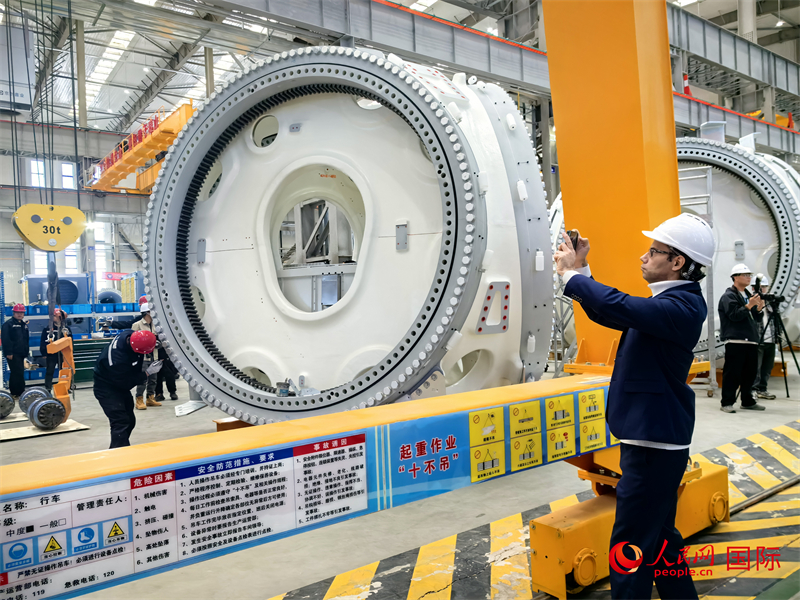
Core Viewpoint - Inner Mongolia is becoming a significant hub for renewable energy in China, with plans for a cumulative power generation of over 200 billion kilowatt-hours in 2024 and an external supply of 60 billion kilowatt-hours, leading the nation in these metrics [1]. Group 1: Renewable Energy Development - Inner Mongolia is accelerating the development of the renewable energy equipment manufacturing industry and promoting the entire renewable energy supply chain [1]. - The region is recognized for its abundant wind and solar resources, which are essential for supporting national data processing demands [10]. Group 2: International Media Engagement - A group of 23 foreign media journalists from 19 Asia-Pacific countries visited the Yunda Wind Power Equipment Manufacturing Factory in Ulanqab, witnessing the transformation of large wind turbine components [1][3]. - Journalists expressed surprise at the size and energy storage capacity of the wind turbines, highlighting the efficiency of the production process [5]. Group 3: Comparative Insights - A journalist from the Philippines noted that while renewable energy serves as a supplementary source in their country, Inner Mongolia is making systematic efforts to transition towards green energy [6]. - The visit led to a broader understanding of Inner Mongolia's innovative practices in green energy, contrasting with the journalist's previous perceptions focused on agriculture and dairy [10]. Group 4: Technological Integration - Major domestic tech companies like Huawei and Alibaba have established data centers in the Ulanqab area, benefiting from the local energy advantages, with green electricity usage potentially exceeding 80% [8]. - The average annual temperature of 4.3°C in Ulanqab allows for a 20%-30% reduction in cooling energy consumption compared to southern regions [8].