
科技公司转型

Search documents
国产万元电动自行车走红欧洲
21世纪经济报道· 2025-10-15 07:46
Core Insights - The article highlights the rapid growth of the E-bike market, projecting a global market size of $35 billion in 2024, expected to reach $62.25 billion by 2030, with China playing a significant role in this expansion due to its supply chain advantages and cost-effectiveness [1]. Company Development - Engwe, a brand under Shenzhen Dayu Sports Technology, has emerged as a leading player in the E-bike sector, ranking first in the outdoor sports category of the "2025 Mid-Year China Cross-Border E-Commerce Brand Influence List" [1]. - The company has achieved a 70.4% year-on-year sales growth in the first four months of this year, serving over 2 million users across more than 60 countries [1]. Founding Team and Key Milestones - Engwe's core founding team includes Xiong Hao and other members with diverse backgrounds, initially focusing on domestic e-commerce and ODM models for brands like Yadi and Green Source [4]. - A pivotal moment occurred in 2021 when the company shifted its focus to foreign trade, launching a high-cost performance model priced at €999 [4]. - Engwe's flagship product, the X26, raised $1.25 million on a crowdfunding platform in 2022, becoming the ninth largest global crowdfunding item [4]. Market Strategy and Sales Channels - Engwe has fully transitioned to an export-focused model, with approximately 70% of sales in Europe, particularly in Italy, Germany, and France, and 25% in the U.S. [7]. - The company has opted for a self-operated and franchise model for 60%-65% of its sales, avoiding reliance on third-party platforms to maintain profit margins and brand integrity [7][8]. Product Differentiation and Market Position - Engwe's core product features a lightweight design with a carbon fiber frame, smart functions, and compliance with European regulations, distinguishing it from domestic offerings [10]. - The E-bike industry is characterized by a fragmented competitive landscape, with the top 10 brands holding less than 20% market share, indicating significant opportunities for growth, especially for Chinese brands [11]. Future Goals and Funding Needs - Engwe aims to transition from a "brand + product" model to a "technology-driven" approach over the next three years, focusing on R&D in battery optimization and smart controls [13]. - The company's funding needs are primarily for inventory costs, R&D, and logistics, with a preference for self-funding and bank financing to maintain independence [13].

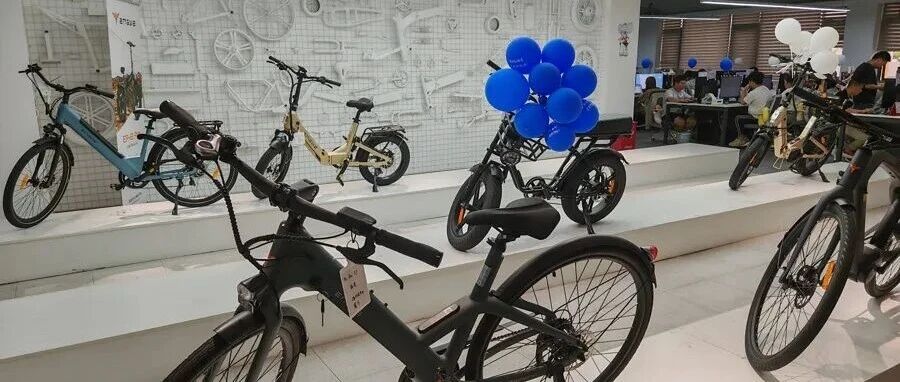
卖上千欧元的国产E-bike,圈粉200万老外
2 1 Shi Ji Jing Ji Bao Dao· 2025-10-15 00:28
Core Viewpoint - The global E-bike market is experiencing significant growth, with projections indicating a rise from $35 billion in 2024 to $62.25 billion by 2030, positioning China as a key player in this sector due to its supply chain advantages and cost-effectiveness [2]. Company Overview - Engwe, a brand under Shenzhen Dayu Sports Technology, has emerged as a leading representative of Chinese E-bike exports, ranking first in the outdoor sports category of the "2025 Mid-Year China Cross-Border E-Commerce Brand Influence List" [2]. - Engwe's products are available in over 60 countries, serving more than 2 million users, with a sales increase of 70.4% year-on-year in the first four months of this year [2]. Development Journey - Engwe's founding team, led by Xiong Hao, transitioned from domestic e-commerce to international markets, initially focusing on ODM models for other brands before launching their own brand in 2021 [3]. - A pivotal moment occurred in 2021 when Engwe introduced a high-cost performance model priced at €999, marking a shift towards brand ownership [3]. - The flagship product, the X26, gained significant attention in 2022, raising $1.25 million on a crowdfunding platform and becoming a top item globally [3]. Market Strategy - Engwe has fully transitioned to an export-focused model, with approximately 70% of sales coming from Europe, particularly Italy, Germany, and France, and 25% from the U.S. [4][5]. - The company has established a robust offline presence with 15 proprietary stores and over 400 franchise stores in Europe, avoiding reliance on third-party platforms to maintain profit margins and brand integrity [4][5]. Product Features - Engwe's core product emphasizes lightweight design, smart features, and compliance with European regulations, with weights ranging from 14.2 to 15.4 kg and speeds capped at 25 km/h [7]. - The company differentiates its product offerings between domestic and international markets, focusing on smart E-bikes for overseas sales while maintaining a different product line for the domestic market [7]. Industry Landscape - The E-bike industry is characterized by a fragmented competitive landscape, with the top 10 brands holding less than 20% market share, indicating ample opportunities for growth, particularly for Chinese brands leveraging supply chain advantages [8]. - The global E-bike market is expected to grow at an annual rate of approximately 10%, with Engwe projecting a market share increase to 1.5%-2% by 2024 [8]. Financial Strategy - Engwe's funding needs are primarily for inventory costs, R&D, and logistics, with 30% of sales allocated to R&D and over 20% to logistics [9]. - The company relies on internal profits and bank financing to support its growth while maintaining independence from external investors [10]. Future Goals - Engwe aims to transition from a brand and product-driven model to a technology-driven approach over the next three years, focusing on advanced technology development and expanding its brand matrix [11]. - The company plans to enhance its European market presence by establishing local teams and adopting dual operational models similar to Gree and Xiaomi [11].