
科技反腐

Search documents
AI抓贪官
Xin Lang Cai Jing· 2026-01-16 00:33
Core Viewpoint - The article highlights a recent case in Zhejiang Jiangshan where an AI-driven regulatory system detected irregularities in a bidding process, leading to the uncovering of corruption involving a former city investment company's official [2] Group 1: AI and Corruption Detection - The Zhejiang Provincial Bidding Supervision System utilizes AI to monitor bidding processes, identifying anomalies such as unusually high scores for bidders with poor credit ratings [2] - The system's alert mechanism, indicated by a "beep," signifies potential collusion or bid-rigging among participants [2] Group 2: Public Reaction and Implications - There is widespread public approval for the use of technology in combating corruption, with many expressing hope that similar systems will be implemented nationwide to enhance transparency [2] - The incident reflects a growing trend of leveraging big data and AI in public sector oversight, marking a significant innovation in anti-corruption efforts [2]


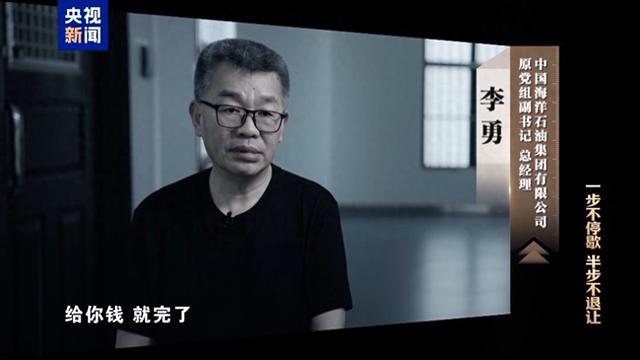
中海油原总经理李勇坦白受贿细节:外国代理商开车来,拿个箱子给钱
Xin Lang Cai Jing· 2026-01-14 13:25
Core Viewpoint - The documentary highlights the use of technology in combating corruption within Chinese state-owned enterprises, focusing on the case of Li Yong, a former executive of China National Offshore Oil Corporation (CNOOC), who engaged in corrupt practices through inflated commissions in overseas projects [1][3][4]. Group 1: Corruption Case Details - Li Yong, former deputy secretary of the Party Committee and general manager of CNOOC, was investigated by the Central Commission for Discipline Inspection (CCDI) in March 2024 for his involvement in corruption related to overseas projects [3]. - He manipulated intermediary commissions in overseas projects, colluding with unscrupulous agents to allow unreasonable high commissions, which he believed were discreet but were detected through data analysis [3]. - A specific case involved Li Yong receiving bribes in the form of cash from an agent named Sun, who paid him in a parking lot, leading to a confrontation over commission reductions [3]. Group 2: Consequences and Sentencing - After retiring in October 2023, Li Yong was soon investigated, leading him to attempt to destroy evidence of his corruption by burning cash, but he realized this would not erase his crimes [4]. - He was detained and later sentenced to 14 years in prison for bribery, along with a fine of 3 million RMB, highlighting the severe repercussions of his actions [4]. - Li Yong expressed regret over his actions, stating that he left nothing of value behind and felt a sense of despair over his downfall [5].

视频丨年度反腐大片第四集《科技赋能反腐》今晚播出
Yang Shi Xin Wen· 2026-01-14 00:31
Group 1 - The article emphasizes the deepening understanding of the laws of anti-corruption struggles under the leadership of Xi Jinping, highlighting the expansion of anti-corruption achievements and the development of a unique Chinese path to combat corruption [1] - The television documentary "Step Forward Without Hesitation, Step Back Without Retreat" focuses on the use of technology in anti-corruption efforts, showcasing how information technology is employed to identify and address corruption issues effectively [1] - The article mentions the increased efforts by disciplinary inspection and supervision agencies to combat cross-border corruption, utilizing information technology to uncover corrupt activities even outside the country [1] Group 2 - Ouyang Baiqing, Deputy Director of the International Cooperation Bureau of the Central Commission for Discipline Inspection, states that all overseas evidence is obtained, and illicit funds are fully recovered, emphasizing the need to be vigilant against new forms of corruption such as bribery through virtual currencies [5] - The article discusses the transformation of public power supervision through digitalization, which is becoming an essential method for promoting the "three no-corruption" strategy [9] - Xu Huibo, a member of the Jiangshan Municipal Commission for Discipline Inspection, highlights the importance of a system that aggregates intelligence from numerous sources, enhancing the effectiveness of anti-corruption efforts [13]
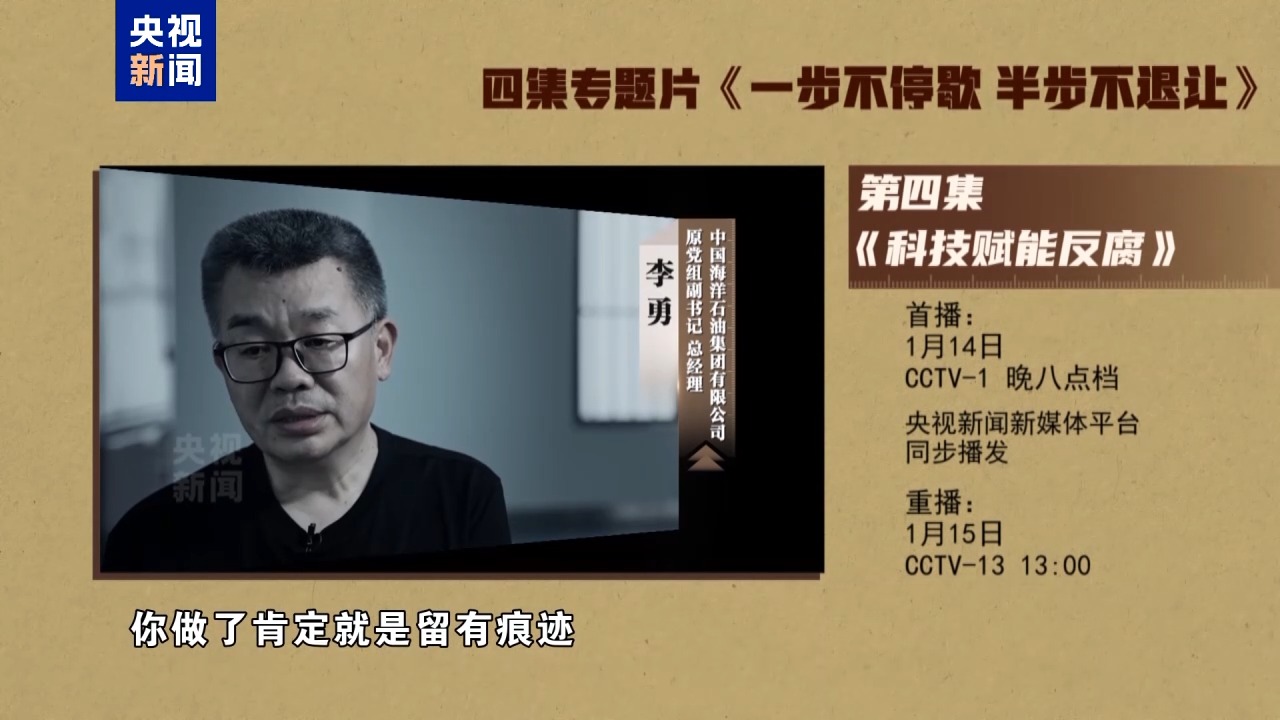
运用科技手段精准发现腐败线索
Xin Lang Cai Jing· 2026-01-13 23:59
Core Viewpoint - The article emphasizes the advancements in anti-corruption efforts in China, highlighting the use of technology to enhance the detection and prevention of corruption, particularly in the context of a new television documentary series that showcases these developments [1] Group 1: Anti-Corruption Efforts - The documentary titled "Step Forward, Not Back" focuses on the role of technology in combating corruption, showcasing how disciplinary inspection and supervision agencies are employing innovative methods to tackle both new and hidden forms of corruption [1] - Under the leadership of Xi Jinping, the understanding of the patterns of anti-corruption struggles has deepened, leading to a more scientific and effective approach to these efforts [1] Group 2: Technological Integration - The use of information technology is highlighted as a key tool in identifying and addressing corruption issues, allowing for precise detection of misconduct and rapid resolution of cases [1] - The documentary aims to enhance the level of intelligent and technological anti-corruption measures, indicating a shift towards a more data-driven approach in governance [1] Group 3: Cross-Border Corruption - The article notes an increased focus on cross-border corruption, with disciplinary agencies intensifying their efforts to address corruption that occurs outside of China, ensuring that such actions cannot be hidden or escaped from accountability [1]
不断提高反腐败穿透力
Zhong Yang Ji Wei Guo Jia Jian Wei Wang Zhan· 2026-01-13 23:45
Group 1 - The core message emphasizes the need to understand new trends and characteristics of corruption, innovate methods, and improve the accountability mechanism for anti-corruption efforts [2][3] - There is a focus on enhancing the effectiveness of anti-corruption measures through technology and systematic approaches, aiming for a comprehensive governance strategy [3][4] - The importance of collaboration among various supervisory bodies to achieve a multi-dimensional oversight system is highlighted, ensuring timely identification and effective management of corruption issues [4][5] Group 2 - The financial sector is identified as a key area where corruption is increasingly complex and hidden, necessitating advanced analytical methods to uncover corrupt practices [3][5] - The need for a digitalized and intelligent supervision platform is stressed, which would create a closed-loop management system for problem detection and resolution [3][4] - There is a call for systemic reforms in governance, particularly in sectors prone to new and hidden forms of corruption, such as financial regulation and public project approvals [5]