
移动技术

Search documents
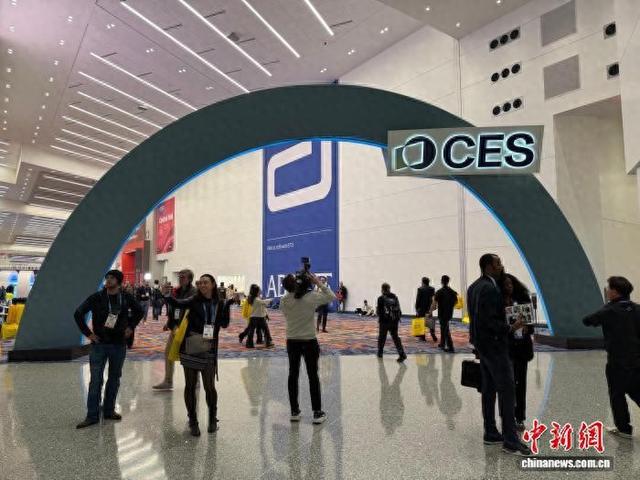
2026年美国消费电子展开幕 聚焦AI、机器人等科技趋势
Zhong Guo Xin Wen Wang· 2026-01-07 11:29
Group 1 - The 2026 Consumer Electronics Show (CES) opened in Las Vegas, focusing on six key technology trends: artificial intelligence (AI), digital health, energy technology, enterprise technology, mobile technology, and robotics [2][3] - The CES exhibition covers over 2.6 million square feet and attracts more than 4,100 exhibitors from over 150 countries, including major companies like NVIDIA, Qualcomm, Amazon, Lenovo, TCL, BOE, and Hisense, as well as numerous innovative startups [3] - The event features hundreds of activities, including forums and seminars, with industry leaders such as AMD's CEO Lisa Su and Lenovo's CEO Yang Yuanqing discussing new trends in the consumer electronics industry [3] Group 2 - BOE showcased over 60 cutting-edge display technologies and IoT solutions, including the global debut of the "HERO2.0 smart cockpit," highlighting its innovations in AI and green low-carbon technology [3] - The robotics AI software company MARI, founded by Chinese scientists, made its debut at CES, winning the CES Innovation Award for its mobile autonomous intelligent robot system, and plans to collaborate with leading robotics manufacturers to promote the application of robotics technology in complex industrial scenarios [4] - The CES is recognized as a platform for innovators, with the Consumer Technology Association's CEO Gary Shapiro emphasizing the importance of global innovators in shaping future technological breakthroughs [5]


铁磁性和反铁磁性共存 原子级厚度二维材料可大幅降低存储器能耗
Ke Ji Ri Bao· 2025-09-29 23:53
Core Insights - Researchers at Chalmers University of Technology in Sweden have made a breakthrough in developing a new type of layered magnetic material that allows ferromagnetism and antiferromagnetism to coexist within a single atomic-thin two-dimensional structure, reducing memory energy consumption to about one-tenth of its previous levels [1][2] Group 1: Material Development - The new material is an alloy composed of magnetic and non-magnetic elements such as cobalt, iron, germanium, and tellurium, enabling the coexistence of ferromagnetic and antiferromagnetic properties in a single structure [2] - The two-dimensional crystal films in the memory are stacked through van der Waals forces rather than traditional chemical bonds, which avoids interface issues found in multilayer structures, enhancing manufacturing reliability and simplifying production processes [2] Group 2: Implications for Technology - This discovery could lead to a new generation of ultra-efficient and reliable storage solutions for artificial intelligence, mobile technology, and advanced data processing, addressing the exponential growth of digital data [1] - As digital data volume is expected to account for nearly 30% of global energy consumption in the coming decades, the need for energy-efficient storage technologies is becoming increasingly critical [1]