稀土提纯技术

Search documents
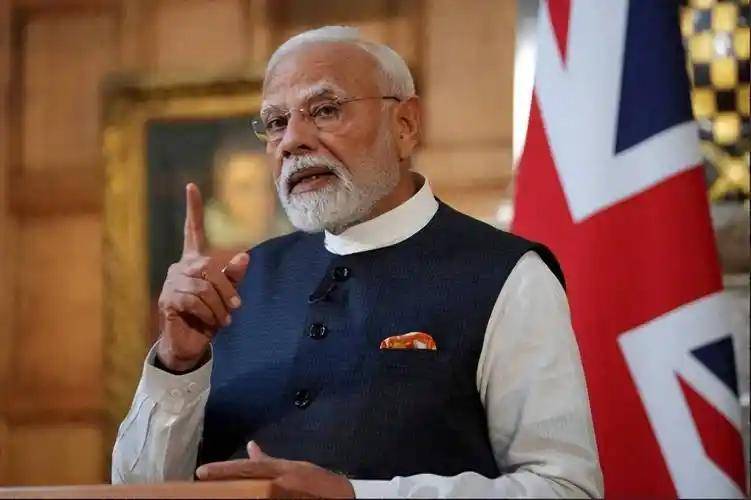
700亿卢比砸稀土!印度690万吨储量却外购870吨磁体,纯度仅70%
Sou Hu Cai Jing· 2026-02-03 15:44
Core Viewpoint - The Indian government has allocated an additional $2 billion (approximately 160 billion rupees) to boost its rare earth industry, bringing the total investment to 700 billion rupees, amidst ongoing diplomatic tensions with China over rare earth supply chains [1][3]. Group 1: Investment and Budget Allocation - The Modi government has recently approved a significant budget increase for the rare earth sector, totaling 700 billion rupees [1]. - This investment is seen as a response to India's urgent need to secure its rare earth supply chains, particularly for its automotive industry, which is facing production halts due to shortages [7][11]. Group 2: Diplomatic Context - India's diplomatic efforts to negotiate with China for rare earth supplies have been met with silence, highlighting the challenges in securing cooperation from Beijing [3][9]. - The Indian government made significant political sacrifices, including cutting ties with Taiwan and halting exports to Japan, in hopes of gaining concessions from China [5][11]. Group 3: Industry Challenges - Despite having substantial rare earth reserves (690 million tons), India struggles with the technology and expertise required for refining these materials, relying heavily on imports for high-purity products [15][17]. - India's current capabilities allow it to process only four types of rare earth elements, with purity levels failing to meet industrial standards, limiting its ability to produce high-end products [19][21]. Group 4: Future Prospects and Concerns - The investment of 700 billion rupees may not yield the desired results due to the complexities of rare earth processing, which requires specialized knowledge and infrastructure that India currently lacks [23][31]. - There is a growing concern that without mastering industrial capabilities, India's ambitions of becoming a major player in the global market may remain unfulfilled, leading to inefficient projects and subpar materials [33][35].

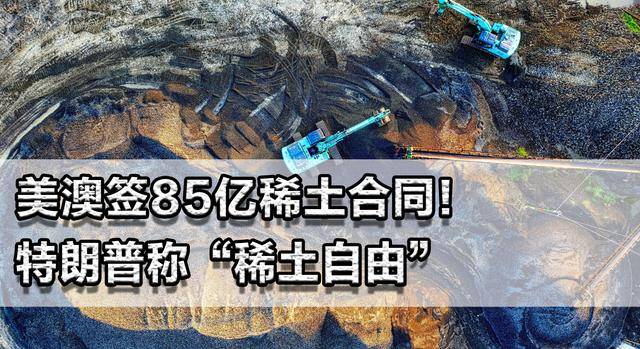
美澳签85亿稀土合同!特朗普称“稀土自由”,关键你没有提纯技术
Sou Hu Cai Jing· 2025-10-22 08:08
Core Viewpoint - The recent $8.5 billion rare earth cooperation agreement between the U.S. and Australia highlights the U.S.'s overconfidence in overcoming its reliance on China, despite lacking the necessary refining technology to utilize the raw materials effectively [1][3]. Group 1: U.S.-Australia Cooperation - The U.S. and Australia plan to invest $1 billion each to support critical mineral projects, but Australia's lithium exports still heavily depend on China, indicating a significant gap in processing capabilities [5]. - The agreement mentions "processing capacity," yet the planned gallium refining plant in Western Australia will only have an annual capacity of 100 tons, which is insufficient to meet demand [3]. Group 2: China's Dominance in Rare Earths - Over 90% of global rare earth refining capacity is concentrated in China, which leads in green smelting and high-purity refining technologies [3]. - The U.S. military's requirements for high-purity rare earths cannot be met domestically, as the highest purity achieved is only 99.1% to 99.9%, comparable to China's technology from the 1990s [3]. Group 3: Technological Barriers - The key issue in the rare earth competition is not merely access to raw materials but the ability to refine them effectively, which China currently dominates [7]. - The U.S. may acquire raw materials, but without Chinese technological support, establishing a competent refining system will be challenging [5][7]. - Previous setbacks, such as MP Materials facing business stagnation due to export restrictions to China, illustrate the difficulties within the U.S. supply chain [5].