稀土产业链

Search documents
未知机构:中信证券金属价格创近三年新高持续推荐稀土产业链战略配置价值核心标的北方-20260228
未知机构· 2026-02-28 02:40
Summary of Key Points from the Conference Call Industry Overview - The rare earth industry is entering a new era of high-quality development, with national policies continuously improving and refining to enhance the security of rare earth resources, which has become a core aspect of national security [1][2] - The transition from a resource powerhouse to an industrial powerhouse is being driven by strict policy controls, technological innovation, and green transformation [1] Supply Dynamics - Global rare earth supply growth is slowing, with a rigid supply logic likely to persist [2] - Domestic supply is constrained by national quotas, leading to a slowdown in growth [2] - Import volumes of rare earth minerals have been declining, with a cumulative year-on-year decrease of 25% from January to November 2025 [2] - It is projected that global rare earth supply will increase to 513,000 tons by 2028, with a compound annual growth rate (CAGR) of 5.6% from 2024 to 2028, indicating a continued slowdown in growth [2] Demand Trends - Traditional demand is expected to grow rapidly, particularly in sectors such as electric vehicles, industrial motors, and variable frequency air conditioners [3] - The demand for high-performance neodymium-iron-boron is projected to reach 369,000 tons by 2028, with long-term high growth anticipated in downstream sectors like new energy [3] - Emerging fields such as humanoid robots and the low-altitude economy are expected to become new growth drivers for rare earth permanent magnet demand, with projections of neodymium-iron-boron demand reaching 33,000 tons by 2035, accounting for 5.5% of total demand, and further increasing to 7.6% by 2040 [3] Market Outlook - Starting from 2026, the global supply-demand gap for rare earths is expected to widen, leading to a tightening market [3] - The projected supply-demand gaps for praseodymium-neodymium oxide are estimated to be -9,000 tons, -13,000 tons, and -21,000 tons for 2026, 2027, and 2028 respectively, indicating a tightening supply situation [3] - With exports gradually recovering and the rigid supply of imported minerals from Southeast Asia increasing, rare earth prices are expected to stabilize and rise, enhancing the profitability of companies in the industry [3] - The price of praseodymium-neodymium oxide is anticipated to rise to an average of 800,000 yuan per ton by 2026, reinforcing the strategic value of investing in the rare earth industry chain [3]

中国稀土有多牛?即便G7联手围攻,关键技术西方终究难以突破
Sou Hu Cai Jing· 2026-02-16 01:18
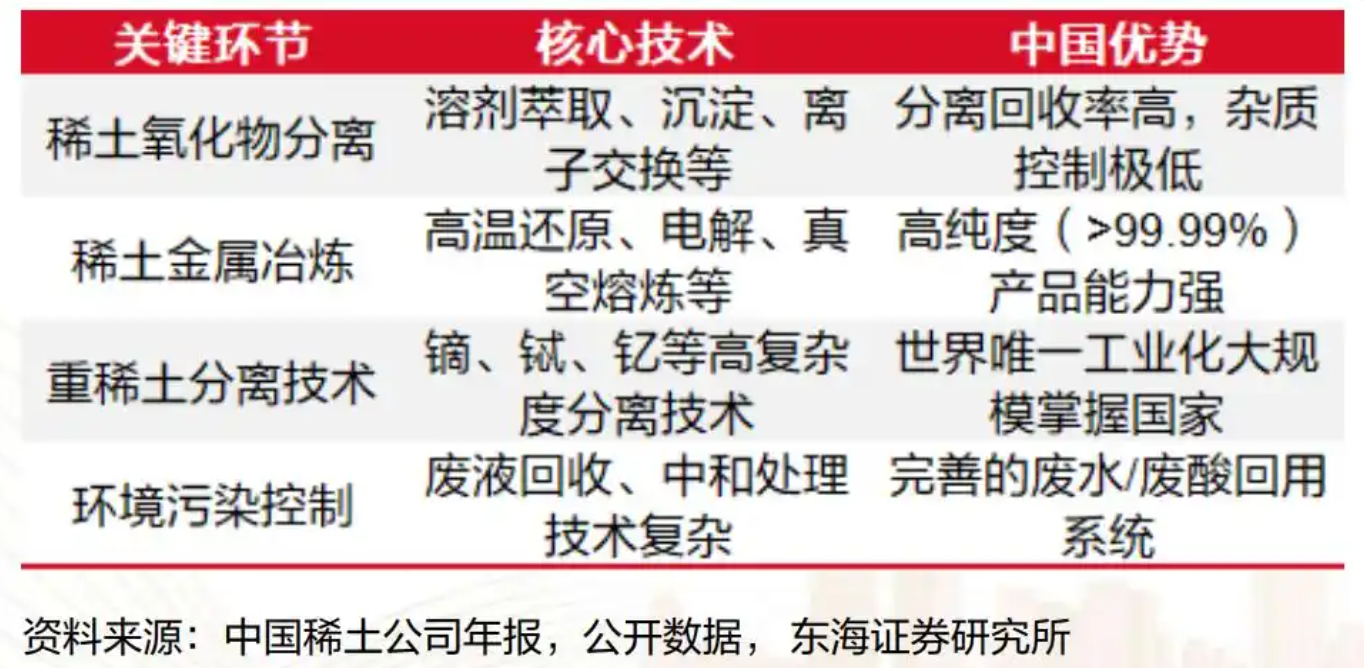
Core Viewpoint - The joint efforts of seven countries to reduce reliance on Chinese rare earth imports are seen as a political show rather than a viable strategy to disrupt China's dominance in the rare earth sector [1][26]. Group 1: Reasons for the Coalition - The urgency of the coalition stems from the anxiety of these countries, particularly after China's export restrictions led to supply shortages impacting critical industries like semiconductors and automotive manufacturing [3][5]. - The European Union relies on China for 98% of its critical rare earth needs, while the U.S. is dependent on China for 80%, highlighting a significant dilemma for these nations [3][5]. Group 2: Limitations of the Coalition's Strategy - The coalition's strategy to involve countries like Australia and India to restructure the global rare earth supply chain is fundamentally flawed, as these nations face significant challenges in scaling up production and processing capabilities [7][10]. - Australia's rare earth reserves are substantial, but its production costs are over 30% higher than China's, making it difficult to fully replace Chinese supplies [10][12]. - India's rare earth extraction technology is outdated, relying heavily on manual labor, which results in inefficiencies and high waste [12][14]. Group 3: China's Competitive Advantages - China holds 70% of the world's rare earth resources and dominates 90% of the processing capacity, making it nearly impossible for other countries to compete without significant investment and time [18][20]. - The complex processing required to convert rare earth ores into usable industrial materials is a core technology that China has monopolized, further solidifying its position in the market [20][22]. - Establishing an independent rare earth supply chain in other countries could take 8 to 12 years and require investments of hundreds of billions, with no guarantee of success [22][28]. Group 4: Historical Context and Future Outlook - Historical precedents show that previous attempts to limit China's rare earth exports led to price surges and forced countries back to the negotiation table [26][30]. - The global economic integration means that supply chains cannot be easily replaced, and China's decades of investment in the rare earth sector have created a robust competitive edge that is unlikely to be undermined by the coalition's efforts [28][30].


难怪特朗普这么急着访华,原来是美国遇到大麻烦,想让中国帮缓解一下燃眉之急
Sou Hu Cai Jing· 2026-02-10 21:37
Group 1: U.S.-China Relations and Trade - Trump's upcoming visit to China in April is not a typical state visit but rather a response to urgent domestic issues in the U.S. [1][3] - The U.S. agricultural sector is suffering due to the trade war, with significant declines in exports to China, including a 23.6% drop in oilseed imports and a 38.2% drop in meat products from January to November 2025 [4][5]. - The visit aims to negotiate increased agricultural exports from the U.S. to China, particularly soybeans and beef, to alleviate pressure on American farmers [4][8]. Group 2: Strategic Resources and Defense - The U.S. military's reliance on Chinese rare earth elements poses a significant risk, as China controls over 90% of the global rare earth refining capacity [5][6]. - The U.S. has initiated a $12 billion "strategic reserve" plan to secure critical minerals, but experts believe it will take 5 to 10 years and substantial investment to build an independent supply chain [6][8]. - The urgency for stable rare earth supplies is underscored by the potential impact on U.S. defense capabilities, particularly the production of advanced weaponry like the F-35 [5][6]. Group 3: International Relations and Financial Obligations - The U.S. is facing a financial crisis at the United Nations, with over $4.6 billion in unpaid dues, which threatens the functioning of the organization [6][7]. - The U.S. has not paid its regular budget contributions for the entirety of 2025, leading to significant international pressure to resolve the issue [7][8]. - Trump's visit is also aimed at seeking China's cooperation in addressing the U.N. funding crisis, highlighting the U.S.'s diminishing influence in global affairs [7][9].
稀土板块强势领涨,稀土ETF(159713)盘中涨幅一度超过3.6%!
Mei Ri Jing Ji Xin Wen· 2026-02-09 06:23
Group 1 - The A-share market showed overall gains on February 9, with the rare earth sector leading the rise, as the rare earth ETF (159713) reached an intraday increase of 3.61%, closing with a gain of 3.40% [1] - Notable stocks within the index included Shenghe Resources hitting the daily limit up, while Northern Rare Earth, China Rare Earth, and Yunlu Co. saw increases exceeding 5%, contributing to the overall index rise [1] - Recent scientific findings indicate that the depth of carbonatite magma intrusion is a key factor in the supernormal accumulation of rare earth elements, highlighting the strategic value of rare earths in new energy and high-tech fields [1] Group 2 - Research institutions have noted a tightening supply situation for rare earths, with praseodymium and neodymium oxide prices reaching new highs; supply constraints are supported by policy and supply-side factors [1] - On the demand side, downstream magnetic material companies have shifted from just-in-time purchasing to stockpiling, indicating a potential continuation of supply tightness and upward price trends in the near future [1] - For long-term investment in the rare earth industry chain, investors are advised to consider the rare earth ETF (159713), which closely tracks the CSI Rare Earth Industry Index, covering key areas such as resource extraction, smelting separation, and the manufacturing of high-performance permanent magnet materials [1]
去年被中国教训的局面,特朗普依然耿耿于怀,决定砸百亿美元应对
Sou Hu Cai Jing· 2026-02-08 07:16
Core Viewpoint - The article discusses Trump's announcement of a $12 billion strategic reserve project for critical minerals, aimed at reducing dependence on China, particularly in the rare earth elements sector [1]. Group 1: Strategic Reserve Initiative - Trump has initiated a $12 billion project to establish a strategic reserve for critical minerals, similar to the U.S. Strategic Petroleum Reserve, with $10 billion in loans from U.S. banks and $2 billion in private funding [1]. - The initiative is named the "Insurance Vault Plan," reflecting Trump's desire to avoid past difficulties faced due to China's restrictions on rare earth exports [1]. Group 2: Technological Shortcomings - The article highlights that the real issue for the U.S. and the West is not the availability of critical minerals but the lack of mature and industrialized rare earth extraction technologies [3]. - China has established a nearly unassailable advantage in the entire rare earth supply chain, making it difficult for the U.S. to compete even with large stockpiles of raw materials [5]. Group 3: Global Resource Distribution - Most easily extractable heavy rare earth resources are concentrated in China and Myanmar, with Myanmar serving as a significant supplementary source for China [5]. - The article suggests that both the U.S. and Japan are unlikely to reduce their dependence on Chinese rare earths in the short term, despite efforts to explore alternative sources [5]. Group 4: Monitoring and Prevention - There is a call for increased monitoring of countries that have signed the U.S. mineral pact, particularly those that may attempt to secretly stockpile Chinese rare earths through third-party channels [7]. - The article emphasizes the need for vigilance to prevent unauthorized accumulation of refined rare earth resources by the U.S. and its allies, as rare earths are considered a core strategic resource for China [7].
美又拉30国建“新群”,想抽掉中国稀土王牌,欧洲抢先献上投名状
Sou Hu Cai Jing· 2026-02-05 08:50
Core Viewpoint - The article discusses the United States' strategic efforts to build alliances against China's dominance in the rare earth industry, highlighting the complexities and challenges of this initiative. Group 1: U.S. Strategy and Alliances - The U.S. is forming a coalition of nearly 30 countries to counter China's dominance in the rare earth supply chain, which includes not just resource availability but also the entire extraction and refining process [1][3][5] - The U.S. has already established a mineral security partnership with 10 countries, managing assets over $30 trillion, and is working towards a supply chain that reduces reliance on China by 2026 [5][9] - A key minerals ministerial meeting is set to take place, involving representatives from 55 countries, aimed at solidifying the anti-China mineral alliance [7][9] Group 2: European Involvement - Europe is actively seeking to align with the U.S. by proposing a memorandum of understanding to counter China's influence in the rare earth sector [15][17] - The EU's strategy appears to be a dual approach of seeking U.S. support while simultaneously attempting to negotiate for concessions on tariffs and export restrictions [19][21] - Despite the EU's eagerness to cooperate, there are underlying tensions and a lack of trust in the U.S.-EU relationship, indicating that the alliance may be fragile [21][23] Group 3: Challenges and Limitations - The U.S. and its allies face significant challenges in replicating China's established rare earth refining capabilities, which have taken decades to develop [27][29] - The lack of coordination among the 30 allied countries, each with their own interests, raises doubts about the effectiveness of the coalition in achieving a cohesive supply chain [31][33] - The U.S. approach, characterized by coercive tactics and financial incentives, may lead to resentment among allies, undermining the long-term viability of the alliance [33][35] Group 4: China's Position - China's dominance in the rare earth market is attributed to its advanced refining technology and established supply chain, which cannot be easily replicated by the U.S. or its allies [25][27] - The article emphasizes that China's rare earth resources are not merely a tool for geopolitical leverage but are essential for global technological advancement [37]
高市早苗公告全世界,稀土取得历史性突破,话刚落音就被中国打假
Sou Hu Cai Jing· 2026-02-05 07:38
Core Viewpoint - Japan has announced a historic breakthrough in the rare earth sector, claiming to have discovered rare earth elements in deep-sea mud near Minami-Torishima, aiming to establish a self-sufficient rare earth industry chain to reduce dependence on China [1][3] Group 1: Japan's Rare Earth Discovery - The Japanese government plans to leverage the discovery to create a self-sufficient rare earth industry chain, explicitly aiming to reduce reliance on China [1][3] - High-level officials in Japan are eager to attract Western investment and technological support, especially in light of past trade tensions with China [3] - The technical challenges and high costs associated with deep-sea mining are significant, making it unlikely that Japan can independently develop this resource without external assistance [3][11] Group 2: Political Implications - The announcement serves a dual purpose: to rally support from right-wing factions in Japan and to project an image of independence from China amid rising tensions [5] - High-level officials are aware of the potential backlash from China, which has historically used rare earth exports as leverage in diplomatic disputes [5][9] Group 3: Challenges of Deep-Sea Mining - The deep-sea mining operation faces extreme conditions, including high water pressure and complex underwater environments, which pose risks to equipment reliability [11] - The costs associated with deep-sea mining and transportation of extracted materials back to Japan are prohibitively high, making it difficult to compete with China's rare earth resources [13] - Japan lacks a complete rare earth industry chain, which complicates the potential for commercial viability even if mining is successful [13]

关键矿产“金库计划”启动,稀土ETF嘉实(516150)聚焦稀土产业链投资机遇
Xin Lang Cai Jing· 2026-02-05 03:08
Group 1 - The core viewpoint of the news highlights the decline of the China Rare Earth Industry Index by 4.45% as of February 5, 2026, with leading stocks such as Jinfeng Technology and China Aluminum experiencing significant drops [1] - The U.S. plans to initiate a critical mineral reserve project, the "Treasury Plan," which reinforces the long-term premium logic of rare earths as "strategic metals" [1] - Research institutions believe that the strategic position of global rare earth resources is continuously improving, marking the entry of the rare earth industry into a new era of high-quality development [1] Group 2 - On the supply side, quota controls and regulatory policies are expected to strengthen the rigid logic of supply, while on the demand side, emerging fields such as electric vehicles, humanoid robots, and low-altitude economy are anticipated to drive long-term high growth in demand [1] - It is projected that starting in 2026, the global supply-demand gap for rare earths will continue to expand, with prices expected to remain stable or increase, leading to sustained improvement in the profitability of the industry chain [1] - CITIC Securities' research report recommends strategic allocation value in the rare earth industry chain due to these favorable conditions [1] Group 3 - The China Rare Earth Industry Index closely tracks the performance of listed companies involved in rare earth mining, processing, trading, and applications, reflecting the overall performance of the rare earth industry [2] - As of January 30, 2026, the top ten weighted stocks in the index include Northern Rare Earth, Jinfeng Technology, Xiamen Tungsten, and China Aluminum, collectively accounting for 61.43% of the index [2] Group 4 - The Rare Earth ETF by Jiashi (516150) serves as a convenient tool for investors to gain exposure to the domestic rare earth industry chain [3] - Investors can also utilize the Jiashi Rare Earth ETF Connect Fund (011036) to seize investment opportunities in the rare earth sector [4]
美国日本为稀土疯狂!日本称开采出含稀土泥浆,中方回应 A股稀土板块雄起
Jin Rong Jie· 2026-02-03 10:47
Core Insights - The U.S. and Japan are actively seeking to reduce their dependence on rare earth elements, with Japan conducting successful trials for rare earth mud extraction in the Pacific Ocean [1] - Japan currently relies on China for over 70% of its rare earth imports, prompting increased focus on domestic development following China's export restrictions [1] - The U.S. plans to initiate a critical mineral reserve program with an initial funding of $12 billion to decrease reliance on China for rare earth resources [1] - China maintains a dominant position in rare earth resources, extraction technology, and downstream applications, making it challenging for other countries to rebuild their rare earth supply chains [1] Industry Performance - The A-share rare earth sector showed strong performance, with the sector rising by 3.80%, led by companies like Longhua Technology, which increased by 11.46% [3] - Analysts highlight a supply-demand resonance in the rare earth market, with increasing supply concentration and growing demand from sectors like new energy and high-end manufacturing [3] - The strategic value of rare earth resources is becoming more pronounced globally, with many countries emphasizing the importance of critical mineral reserves [3] Company Highlights - Shenghe Resources is a significant player in the domestic rare earth industry, involved in mining, refining, and recycling, with projected earnings growth exceeding 339% by 2025 [5] - Northern Rare Earth is one of the largest rare earth production and processing bases in China, benefiting from resource advantages and stable product supply [5] - Jieneng Permanent Magnet is a high-tech enterprise specializing in rare earth permanent magnet materials, positioned to benefit from the growing demand in sectors like electric vehicles and wind power [5]




猛砸7000亿卢布,俄罗斯布局打造稀土产业,为何不找中国合作?
Sou Hu Cai Jing· 2026-01-21 02:45
Core Viewpoint - Russia is investing 700 billion rubles to establish a complete rare earth industry chain, from mining to refining and application, aiming for independence from both the US and China in this critical sector [1][3]. Group 1: Reasons for Developing Rare Earth Industry - Russia has abundant rare earth resources, particularly in Siberia, the Kola Peninsula, and the Far East, with significant deposits of valuable elements like neodymium and dysprosium [3]. - The establishment of a complete rare earth industry chain is seen as crucial for national security, especially in light of the ongoing US-China trade tensions, which have highlighted vulnerabilities in Russia's supply chains [3][5]. - Rare earth elements are essential not only for military applications but also for new energy materials, modern technology, semiconductors, and environmental protection, which could help diversify Russia's economy away from its heavy reliance on oil and gas exports [5]. Group 2: Strategic Goals - By restructuring its rare earth industry, Russia aims to enhance its position and influence in global governance and break free from US technological constraints [6]. - Establishing a complete rare earth industry chain could allow Russia to capture a share of the global market and potentially use it as leverage against the US [6]. Group 3: Challenges in Self-Sufficiency - Russia's desire for self-sufficiency in rare earth production is complicated by the need for advanced technology, which is currently dominated by China, making technology transfer unlikely [8]. - The development cycle and investment required for rare earth refining technology are substantial, and it remains uncertain whether Russia can achieve breakthroughs in core processes within the next decade [11]. - The harsh mining conditions in Siberia and the ecological fragility of the regions where these resources are located present additional challenges for Russia's ambitions in establishing a self-sufficient rare earth industry [11].