
空气质量预报

Search documents
2月下半月中国空气质量以良至轻度污染为主
Xin Lang Cai Jing· 2026-02-15 11:37
Core Viewpoint - The Ministry of Ecology and Environment of China forecasts that the air quality in most regions will be generally good to lightly polluted in the second half of February, with some areas potentially experiencing moderate or higher pollution levels [1] Group 1: Air Quality Forecast - The air quality forecast for the Beijing-Tianjin-Hebei region indicates that the southern part may experience moderate to heavy pollution due to adverse meteorological conditions and fireworks during the early part of the month, while the latter part will see improved conditions with good to lightly polluted air quality [1] - The Fenwei Plain is expected to face moderate or higher pollution levels due to fireworks and dust weather during the Spring Festival, but will also improve to good to lightly polluted air quality in the latter part of the month [1] - The northwest region is predicted to have generally good to lightly polluted air quality, with moderate or higher pollution possible during the concentrated fireworks period and some areas affected by dust weather [1]
北京2月下半月可能出现两次轻度污染
Xin Lang Cai Jing· 2026-02-15 08:33
Core Viewpoint - The Ministry of Ecology and Environment of China has released the air quality forecast for the second half of February 2026, indicating that most regions will experience generally good air quality, with some areas potentially facing moderate or higher pollution levels due to various factors including fireworks and meteorological conditions [1]. Summary by Region Beijing-Tianjin-Hebei and Surrounding Areas - In the second half of February, the region may experience moderate to heavy pollution due to adverse meteorological conditions and fireworks, particularly in the southern part [2] - From February 16 to 18, air quality is expected to be light to moderate pollution, with some cities possibly facing heavy pollution [2] - By February 19 to 20, conditions will improve, leading to generally good air quality [2] Beijing - Overall air quality is expected to be good, with light pollution possible on February 17 and late in the month [3] - The primary pollutants will be PM2.5 or PM10 [3] Yangtze River Delta - The region will experience generally good to light pollution levels, with localized moderate to heavy pollution expected on February 16-17 due to fireworks [3] - The primary pollutants will be PM2.5 or PM10 [3] Fenwei Plain - The area may face moderate or higher pollution levels due to fireworks and dust weather, especially in the early part of the month [4] - By February 18-19, air quality is expected to improve to good to light pollution [4] Northeast Region - The region may experience moderate to heavy pollution due to warming and fireworks, with air quality improving to good levels later in the month [5] - The primary pollutants will be PM2.5 or PM10 [5] South China - The air quality is expected to be generally good, with localized light to moderate pollution due to fireworks [6] - The primary pollutants will be O3 or PM2.5 [7] Southwest Region - The area will see generally good air quality, but localized moderate to heavy pollution may occur due to fireworks on February 17 [8] - The primary pollutants will be PM2.5 or PM10 [8] Northwest Region - The region will generally experience good to light pollution levels, with potential for moderate pollution due to fireworks and dust weather [9] - The primary pollutants will be PM10 or PM2.5 [9] Xinjiang Region - Air quality in northern cities is expected to be good, with some areas potentially facing light pollution due to dust weather [9] - The primary pollutants will be PM10 or PM2.5 [9]
生态环境部发布2月下半月全国空气质量预报会商结果
Xin Lang Cai Jing· 2026-02-15 08:33
Core Viewpoint - The air quality forecast for the second half of February 2026 indicates that most regions in China will experience generally good to light pollution conditions, with some areas potentially facing moderate or higher pollution levels due to various factors including fireworks and weather conditions [1][2][3][4][5][6][7]. Summary by Region Beijing-Tianjin-Hebei and Surrounding Areas - The air quality is expected to be primarily good to light pollution, with moderate pollution likely in the southern region due to fireworks and unfavorable meteorological conditions [1]. - Specific dates indicate varying conditions, with light to moderate pollution on February 16-18, improving to good quality by February 19-20, and returning to light pollution towards the end of the month [1]. Yangtze River Delta - The air quality will generally be good to light pollution, with potential for moderate pollution on February 16-17 due to fireworks [2]. - The region will see improvements in air quality from February 20-21, with overall good conditions persisting until the end of the month [2]. Fenwei Plain - Initial moderate pollution is expected due to fireworks and dust, transitioning to generally good to light pollution conditions later in the month [3]. - Specific pollution levels will fluctuate, with moderate pollution on February 16-17 and improving conditions thereafter [3]. Northeast Region - The forecast indicates potential for moderate to heavy pollution early in the month, with improvements expected due to cold air processes [4]. - The air quality will fluctuate, with light to moderate pollution on February 16-17, improving to good conditions by February 22-24 [4]. South China - The air quality is expected to be predominantly good, with localized areas experiencing light to moderate pollution due to fireworks [5]. - Conditions will remain generally favorable throughout the month, with some fluctuations in pollution levels [5]. Southwest Region - The region will experience generally good air quality, with potential for moderate pollution on February 17 due to fireworks [6]. - The forecast indicates improvements in air quality following the initial days of the month [6]. Northwest Region - The air quality is expected to be primarily good to light pollution, with potential for moderate pollution during fireworks events [7]. - Specific dates indicate fluctuations, with light to moderate pollution on February 16-17 and improving conditions thereafter [7]. Xinjiang Region - The air quality forecast indicates generally good conditions, with some areas experiencing light to moderate pollution due to dust [7]. - Specific dates highlight potential for moderate pollution in certain areas during the month [7].
生态环境部:2月上半月全国大部扩散条件一般 空气质量以优良至轻度污染为主
Yang Shi Wang· 2026-01-31 08:02
Core Viewpoint - The air quality forecast for the first half of February 2026 indicates that most regions in China will experience generally good to light pollution conditions, with some areas potentially facing moderate or higher pollution levels due to various weather influences, including dust storms and cold air movements [1]. Group 1: National Overview - The overall air quality across most of the country is expected to be good to light pollution, with specific regions like Northeast, North China, and East China facing moderate pollution risks [1]. - Dust storm impacts may lead to moderate pollution in certain areas of the Northwest [1]. Group 2: Regional Forecasts - **Beijing-Tianjin-Hebei and Surrounding Areas**: The northern part will have good air quality, while the central and southern parts may experience moderate pollution on certain days due to wind patterns [2]. - **Beijing**: Air quality will fluctuate from good to light pollution, with potential for light pollution during specific periods [3]. - **Yangtze River Delta**: Overall air quality will be good to light pollution, with some areas experiencing moderate to heavy pollution due to unfavorable dispersion conditions [4]. - **Fenwei Plain**: Air quality will generally be good to light pollution, with localized moderate pollution expected [5]. - **Northeast Region**: Initial conditions may lead to light to moderate pollution, but later periods will see improved air quality [6]. - **South China**: Most areas will have good air quality, with localized light to moderate pollution possible [7]. - **Southwest Region**: Air quality will primarily be good, with some areas experiencing light to moderate pollution [8]. - **Northwest Region**: Generally good to light pollution, with localized moderate pollution and potential heavy pollution due to dust storms [8].
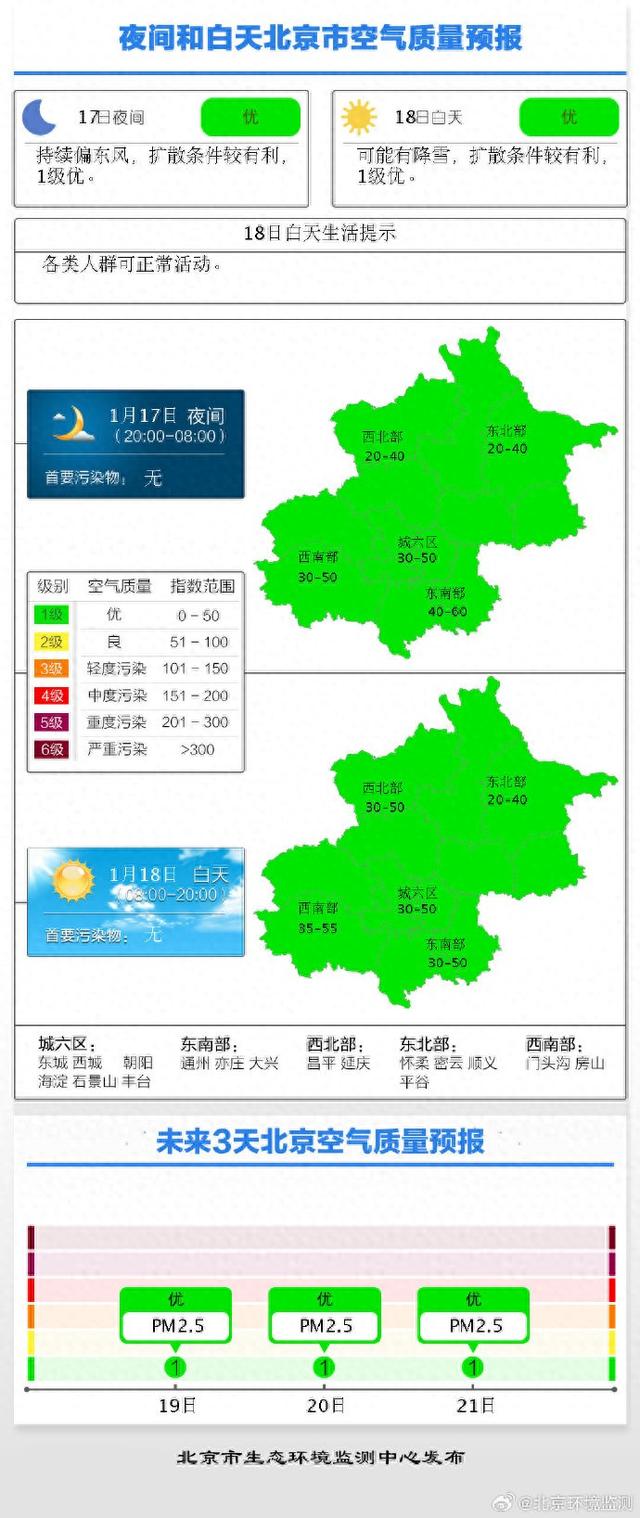
北京17日夜间、18日白天,预计空气质量1级优
Xin Lang Cai Jing· 2026-01-17 09:29
Group 1 - The air quality index is expected to be between 25-45, indicating a level of 1, which is classified as excellent for the night of the 17th and during the day on the 18th [1] - Favorable dispersion conditions are anticipated, with the possibility of snowfall on the 18th [1] - The air quality index is projected to remain at level 1 for the following days, specifically on the 19th, 20th, and 21st [1]

12月上半月全国空气质量以优良至轻度污染为主
Ren Min Wang· 2025-12-08 02:27
Core Viewpoint - The overall air quality in China during the first half of December is expected to be predominantly good to lightly polluted, influenced by multiple cold air masses, with specific regions experiencing moderate pollution levels due to various weather conditions [1]. Group 1: Regional Air Quality Forecasts - In the Beijing-Tianjin-Hebei region, air quality is mainly good, with localized light pollution expected, particularly in the southern central areas during certain periods [2]. - Beijing's air quality is forecasted to be good initially, with two anticipated pollution events later in the period, leading to light to moderate pollution [3]. - The Yangtze River Delta region is expected to experience generally good air quality, with some areas facing light to moderate pollution, especially in the northern and central parts [4]. - The Fenwei Plain is predicted to have good to lightly polluted air quality, with potential for moderate pollution during cold air intervals [5]. - The Northeast region is expected to maintain good air quality overall, with localized light pollution possible [6]. - In South China, air quality is forecasted to be predominantly good, with some areas potentially experiencing light to moderate pollution due to cold air and precipitation [7]. - The Southwest region is expected to have good air quality overall, with localized light to moderate pollution during specific periods [8]. - The Northwest region is predicted to have generally good air quality, with localized light pollution possible, particularly in eastern areas [8]. Group 2: Specific Weather Influences - The air quality in the Beijing-Tianjin-Hebei region is influenced by high-pressure systems and varying wind patterns, leading to fluctuations in pollution levels [2]. - In the Yangtze River Delta, weak pressure systems are affecting air quality, with periods of good air quality interspersed with light to moderate pollution [4]. - The Northeast region's air quality is primarily influenced by frequent cold air activities, leading to generally favorable conditions [5]. - In South China, the combination of cold air and precipitation is contributing to better air dispersion conditions [6]. - The Southwest region's air quality is affected by temperature variations and static weather patterns, leading to localized pollution [7].
生态环境部:11月下半月全国空气质量整体以优良至轻度污染为主
Yang Shi Wang· 2025-11-15 05:21
Core Viewpoint - The overall air quality in China during the second half of November 2025 is expected to be predominantly good to lightly polluted, influenced by multiple cold air masses, with specific regions experiencing moderate pollution levels due to local conditions such as dust storms and temperature variations [1]. Summary by Region Beijing-Tianjin-Hebei and Surrounding Areas - The air quality is expected to range from good to lightly polluted, with specific dates showing variations due to cold air influences and changing weather patterns [2]. - From November 16-17, the air quality is predicted to be good, while from November 25-27, conditions may worsen to lightly polluted due to a weakening pressure system [2]. Beijing - The air quality is anticipated to be predominantly good, with potential pollution events during cold air intermissions [3]. - Notable dates include November 22-23, where conditions may lead to light to moderate pollution due to increased humidity [3]. Yangtze River Delta - The air quality is expected to be lightly polluted in the northern part, with short-term moderate pollution possible, while the southern part remains predominantly good [4]. - Specific dates indicate varying conditions, with November 16 showing poor dispersion leading to light to moderate pollution in the northern region [4]. Fenwei Plain - The air quality is generally good, with potential for localized light pollution during cold air intermissions [5]. - The period from November 22-24 may see light pollution due to dust transmission from upstream sources [5]. Northeast Region - The air quality is expected to be predominantly good, with light to moderate pollution possible during warmer periods [6]. - Cold air activity is expected to maintain good dispersion conditions, particularly from November 16-21 [6]. South China - The air quality is expected to be predominantly good, with localized light to moderate pollution possible due to ozone and particulate matter [7]. - Specific dates indicate variations, with November 16 showing generally good conditions but localized pollution in certain areas [7]. Southwest Region - The air quality is expected to be good overall, with localized light pollution in the Chengdu-Chongqing area during certain periods [8]. - The influence of cold air and precipitation is expected to improve air quality towards the end of the month [8]. Northwest Region - The air quality is expected to be generally good, with potential light pollution due to dust storms on specific dates [8]. - The period from November 21-24 may see moderate pollution levels due to significant dust weather processes [8]. Xinjiang Region - The air quality is expected to be predominantly good, with localized light to moderate pollution in southern cities due to dust storms [8]. - Specific dates indicate potential for heavy pollution in certain areas during dust events [8].
9月上半月,全国大部空气质量以优良为主
Zhong Guo Xin Wen Wang· 2025-09-02 03:13
Core Viewpoint - The overall air quality in China during the first half of September 2023 is predominantly good, influenced by precipitation and cold air, with localized ozone pollution expected in some areas [1][2][3][4][5][6] Summary by Region Beijing-Tianjin-Hebei and Surrounding Areas - The air quality is mainly good, with slight pollution in some southern cities during specific periods due to temperature fluctuations and varying air flow [1][2] Yangtze River Delta - The air quality is generally good to lightly polluted, with localized areas experiencing light pollution due to high-pressure systems and precipitation [2] Fenwei Plain - The air quality remains predominantly good, with slight pollution in eastern areas, influenced by precipitation and temperature increases [3] Northeast Region - The air quality is mostly good, with potential light pollution in certain areas due to cold air and precipitation [4] South China - The air quality is primarily good, with some areas experiencing light pollution, particularly in central and northern regions [5] Southwest Region - The air quality is mainly good, with some cities experiencing light pollution due to temperature increases, while overall conditions are favorable [5] Northwest Region - The air quality is generally good, with localized light pollution and potential moderate pollution in southern Xinjiang due to dust storms [6]
300次实验磨一剑!南京空气质量预报添利器
Nan Jing Ri Bao· 2025-07-21 02:26
Core Insights - The "Nanjing Air Quality Numerical Model WRF-CMAQ System" has been successfully validated, significantly enhancing air quality forecasting capabilities in Nanjing [1][2] - The system employs a dual model linkage innovation, with a grid resolution refined from 27 kilometers to 1 kilometer, allowing for detailed pollution tracking at the street level [1][2] Group 1: System Features - The system features a four-layer grid design that provides comprehensive coverage of Nanjing, with the innermost grid acting as an "environmental microscope" to detect pollution changes [1] - The accuracy of forecasts has improved by over 30% compared to traditional methods, with a 24-hour Air Quality Index (AQI) forecast accuracy of 94.4% [2] Group 2: Technological Innovations - The development team conducted over 300 experiments to optimize meteorological parameters and reduce wind speed errors, enhancing precipitation forecast accuracy [2] - A dual emission inventory system was established, incorporating machine learning for weekly calibration, which has improved the accuracy of PM2.5 simulations and vehicle nitrogen oxide emissions calculations [2] Group 3: Impact and Applications - Since its implementation, the system has produced over 200 high-quality forecasts and generated more than 20 mid- to long-term pollution source tracing reports, becoming essential for regional air quality management [2] - The system represents a shift in Nanjing's air quality monitoring from human-led to intelligent-driven approaches, facilitating proactive pollution prevention strategies [2]
生态环境部:6月下半月京津冀及周边地区中南部和汾渭平原可能出现轻至中度污染
news flash· 2025-06-16 14:28
Core Viewpoint - The article discusses the air quality forecast for the second half of June, indicating that while most regions will have good air quality, the Beijing-Tianjin-Hebei region and the Fenwei Plain may experience light to moderate pollution due to high temperatures and dust storms [1]. Group 1 - The National Environmental Monitoring Station, in collaboration with various meteorological and environmental agencies, conducted a nationwide air quality forecast for the latter half of June [1]. - Overall, the atmospheric diffusion and wet removal conditions across the country are expected to be favorable, leading to predominantly good air quality in most areas [1]. - However, high temperatures may lead to light to moderate pollution in the central and southern parts of the Beijing-Tianjin-Hebei region and the Fenwei Plain [1]. Group 2 - Dust storm conditions may cause moderate or higher levels of pollution in parts of eastern and southern Xinjiang during certain periods [1].