空管技术创新

Search documents
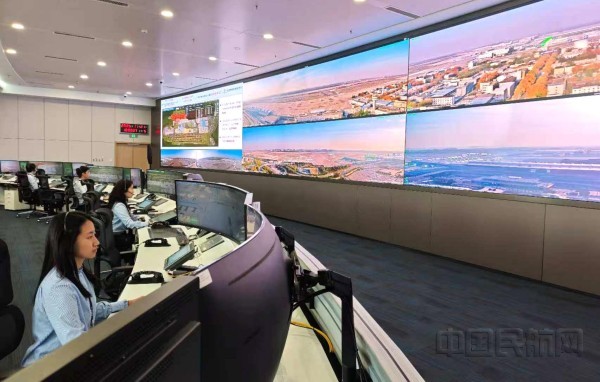
西安咸阳机场远程塔台正式进入运行验证
Zhong Guo Min Hang Wang· 2026-01-01 02:20
Core Viewpoint - The construction and operational validation of the remote tower at Xi'an Xianyang Airport marks a significant technological upgrade in the aviation sector, enhancing the airport's capabilities as a composite international aviation hub in Northwest China [1][7]. Group 1: Project Overview - The remote tower project officially commenced construction in March 2024 and successfully passed expert review for operational validation on September 25, 2025 [2]. - The modern control center spans 385 square meters and includes 20 control positions, equipped with advanced communication systems and information technology, positioning it among the best in the country [2]. Group 2: Technological Innovations - The remote tower features a "high-definition optical perception system" that integrates multiple high-definition cameras and advanced image processing technologies, providing a comprehensive real-time view of critical airport areas [3]. - This system significantly enhances operational efficiency, especially under adverse weather conditions, allowing for clear tracking of aircraft movements even in visibility as low as 200 meters [3]. Group 3: Information Management Platform - The integrated information management platform allows controllers to access real-time data on airport activities, aircraft status, and weather changes, creating a comprehensive operational overview [4]. - Features such as the "aircraft pushback sequencing system" and "ground conflict warning function" provide intelligent support for decision-making, optimizing ground operations and enhancing safety [4]. Group 4: Operational Transition and Safety Measures - The transition from traditional control methods to remote tower operations shifts the role of controllers from passive observation to proactive prediction, improving safety and efficiency [6]. - A structured validation plan is in place, involving a phased approach to testing, ensuring reliable operation and a smooth transition between remote and traditional tower systems [6]. Group 5: Impact on the Aviation Industry - The implementation of the remote tower is expected to alleviate pressure on traditional control towers, increasing operational capacity during peak times and enhancing passenger travel experiences [7]. - Xi'an Xianyang Airport aims to leverage this technological advancement to contribute to the high-quality development of China's civil aviation sector [7].

航科院完成拉萨贡嘎机场GLS程序设计与验证保障
Zhong Guo Min Hang Wang· 2025-12-01 12:18
Core Viewpoint - The successful flight test of the Airbus A319neo at Lhasa Gonggar International Airport marks a significant advancement in the application of GBAS navigation technology in high-altitude airports, integrating RNP AR procedures with GLS precision approach technology for the first time globally [1][2]. Group 1: Flight Test Achievements - The flight test was conducted on November 21, 2025, and represents the first verification of GBAS navigation technology at a high-altitude airport in China [1]. - This test achieved the first-ever dual precision approach capability at Lhasa Airport, enhancing operational safety and flight efficiency in complex high-altitude environments [1][2]. Group 2: Technical Innovations - The test utilized domestically developed ground navigation equipment that has received airworthiness certification, showcasing China's complete intellectual property rights in the integration of RNP AR and GLS technologies [2]. - The GLS program effectively combines the flexibility of RNP AR paths with the high precision and vertical guidance capabilities of GLS, overcoming limitations of traditional navigation methods in challenging terrains and adverse weather conditions [2]. Group 3: Future Developments - Following the successful test, the Civil Aviation Science and Technology Institute plans to collaborate with multiple technical teams to focus on the deep application and innovative integration of GLS technology, accelerating the transformation and promotion of technological achievements [3].