GLS

Search documents
Mercedes-Benz USA CEO: Auto market environment is 'a little tougher than we anticipated' this year
Youtube· 2026-03-31 17:24
Core Insights - Mercedes-Benz plans to invest over $7 billion in its US operations to achieve 400,000 annual car sales by the end of the decade [1] - The company aims to increase sales by approximately 30% by the end of this decade, focusing on its core models such as GLC, GLE, and GLS [2] - The company has only increased prices by 1.3% since tariffs were implemented, which is significantly lower than inflation, to maintain competitiveness [5] Sales Strategy - The company is working closely with dealer partners to simplify operations and enhance customer experience [3] - Despite challenges from tariffs affecting margins, the company prioritizes volume growth over immediate profit recovery [6] - There is a focus on ensuring competitive positions for products and decluttering processes for dealers to improve customer service [8] Market Conditions - The market environment has become tougher than anticipated, with some signs of consumer hesitancy and confusion [7][9] - Consumer confidence remains relatively robust, although rising gas prices could impact purchasing decisions if sustained at higher levels [10][11] - The company offers efficient engine options, including combustion engines with 48V technology, plug-in hybrids, and new electric vehicles to mitigate the impact of gas prices on consumer choices [11]


航科院完成拉萨贡嘎机场GLS程序设计与验证保障
Zhong Guo Min Hang Wang· 2025-12-01 12:18
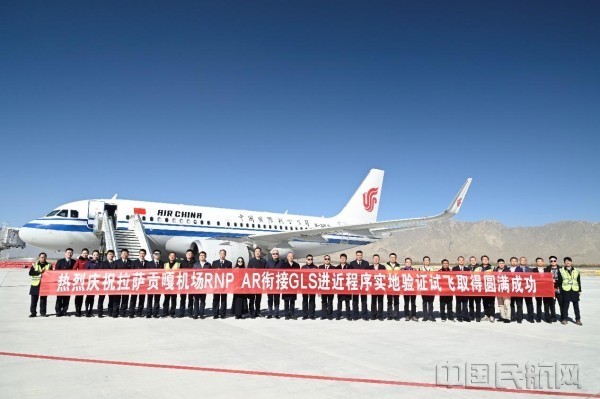
Core Viewpoint - The successful flight test of the Airbus A319neo at Lhasa Gonggar International Airport marks a significant advancement in the application of GBAS navigation technology in high-altitude airports, integrating RNP AR procedures with GLS precision approach technology for the first time globally [1][2]. Group 1: Flight Test Achievements - The flight test was conducted on November 21, 2025, and represents the first verification of GBAS navigation technology at a high-altitude airport in China [1]. - This test achieved the first-ever dual precision approach capability at Lhasa Airport, enhancing operational safety and flight efficiency in complex high-altitude environments [1][2]. Group 2: Technical Innovations - The test utilized domestically developed ground navigation equipment that has received airworthiness certification, showcasing China's complete intellectual property rights in the integration of RNP AR and GLS technologies [2]. - The GLS program effectively combines the flexibility of RNP AR paths with the high precision and vertical guidance capabilities of GLS, overcoming limitations of traditional navigation methods in challenging terrains and adverse weather conditions [2]. Group 3: Future Developments - Following the successful test, the Civil Aviation Science and Technology Institute plans to collaborate with multiple technical teams to focus on the deep application and innovative integration of GLS technology, accelerating the transformation and promotion of technological achievements [3].

贸易协议争议不断,成本转嫁抛向美国,欧洲车企集体盘点关税重创
Huan Qiu Shi Bao· 2025-07-31 22:49
Core Viewpoint - The European luxury car industry is facing significant profit declines due to U.S. tariffs, with major companies like Mercedes-Benz, Porsche, and Audi reporting steep drops in earnings and sales [1][2][4]. Group 1: Financial Impact - BMW reported a sales revenue of €67.7 billion for the first half of the year, an 8% decrease year-on-year, with a net profit of €4 billion, down 29% [2]. - Mercedes-Benz's profits halved from approximately €6.1 billion to about €2.7 billion in the first half of the year, with a 9% decline in global sales [2]. - Porsche's net profit plummeted 71% to €718 million in the first half of 2025, with a nearly 91% drop in automotive business operating profit in Q2 [4]. - Audi's profits fell 37.5% to €1.3 billion in the first half of 2025, with U.S. tariffs causing approximately €600 million in losses [4]. Group 2: Tariff Effects - The U.S. tariffs have created significant uncertainty for companies, with Mercedes-Benz stating that the tariffs have impacted sales and profitability, reducing its profit margin from a potential 6.6% to 5.1% [2]. - The new trade agreement between the U.S. and EU, while reducing tariffs from 27.5% to 15%, still imposes a higher rate than previously, leading to ongoing financial strain for European manufacturers [5]. - The automotive industry is considering passing tariff costs onto U.S. consumers, with companies like Porsche and Aston Martin already raising prices [1][5][7]. Group 3: Market Dynamics - The North American market is crucial for European automakers, with over 20% of European car exports directed to the U.S. [6]. - Companies like Audi and Porsche, which do not have U.S. production facilities, are particularly vulnerable to tariff impacts [6]. - The competitive landscape is shifting as Chinese electric vehicle brands gain market share, exacerbating challenges for German manufacturers [8][9].