
空置房物业费打折

Search documents
多个小区物业费下调,10城空置房可以少缴物业费
3 6 Ke· 2025-05-13 01:50
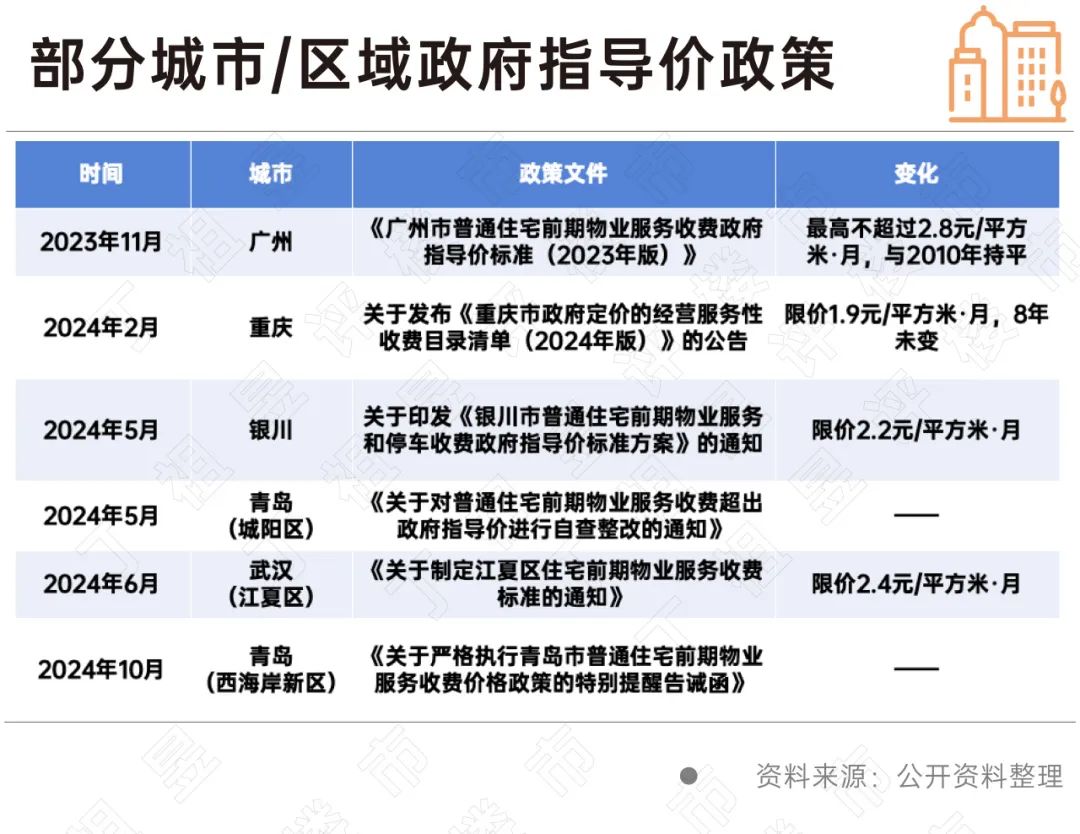
Core Viewpoint - The recent trend of property fee reductions across multiple cities in China has gained significant attention, driven by government guidelines and rising homeowner dissatisfaction with service value [1][2][12]. Group 1: Property Fee Reductions - Over 40 residential communities in Wuhan have announced property fee reductions since 2024, with decreases typically ranging from 10% to 35% [1]. - Specific examples include a villa in Chongqing reducing fees from 4.5 yuan/sqm/month to 2.09 yuan/sqm/month, and a high-end community in Wuhan lowering fees from 7.6 yuan/sqm/month to 3.8 yuan/sqm/month [2]. - The overall percentage of projects reducing fees remains low, with less than 1% of nearly 10,000 projects in four major cities experiencing significant reductions [5]. Group 2: Government Regulations - New regulations in cities like Guangzhou and Chongqing have set property service fee caps, with Guangzhou maintaining a maximum of 2.8 yuan/sqm/month since 2010 [3][4]. - In 2024, Chongqing announced a maximum fee of 1.9 yuan/sqm/month, effective from June 1, 2024 [3]. - Cities such as Yinchuan and Qingdao have implemented self-inspection and compliance measures for property companies exceeding government guidelines [3][4]. Group 3: Discounts for Vacant Properties - Several cities have introduced discounts for vacant properties, with Jiangsu's Zhenjiang allowing a 70% fee payment for homes unoccupied for over six months starting February 2025 [5][6]. - Changsha has implemented a tiered discount system for unoccupied homes, reducing fees to 70% for the first 24 months and 90% thereafter [5][6]. - The trend of offering discounts for vacant properties aims to improve payment willingness among homeowners while ensuring property rights are protected [6]. Group 4: Industry Challenges and Future Outlook - The property management industry is facing declining collection rates, with average collection rates dropping from 92% in 2021 to 80% in 2024 [6][9]. - The ongoing debate over property fees reflects broader issues in the marketization of public services amid rising operational costs and increasing homeowner expectations [12][13]. - The industry is at a critical juncture, requiring property companies to transition from cost controllers to value providers to enhance service quality and homeowner satisfaction [13][14].

空置房物业费打折引热议 业内人士认为物业公司或迎来精细化发展契机 推荐阅读 视觉推荐
Zhong Guo Jing Ji Wang· 2025-03-11 22:42
Core Viewpoint - The introduction of discounted property management fees for vacant homes reflects a response to the new dynamics in the real estate market and the demands of homeowners, aiming to alleviate financial burdens and improve relations between property owners and management companies [2][3][4]. Group 1: Policy Implementation - Multiple cities, including Changsha, Zhenjiang, and Qingdao, have initiated policies to reduce property management fees for vacant homes, with discounts ranging from 60% to 70% based on the duration of vacancy [2][3]. - Changsha's policy offers a tiered discount structure, where fees are reduced to 70% after 24 months of vacancy and to 90% thereafter [2]. - Zhenjiang allows a 70% fee for homes vacant for over six months, with negotiations for those vacant over 24 months [2]. Group 2: Market Response - Over ten cities have adopted similar discount policies, with a significant number located in Jiangsu province, indicating a growing trend in addressing the issue of vacant homes [3]. - The largest discount reported is in Lanzhou, where vacant homes for over six months can have fees reduced to 50% [3]. - Experts suggest that these policies not only ease the financial pressure on homeowners but also help to balance the long-standing conflicts between property management and owners [3][4]. Group 3: Industry Challenges and Opportunities - Property management companies face challenges due to reduced income from discounted fees, which may lead to cuts in service quality [4][5]. - Some companies view the situation as an opportunity to enhance service quality and diversify offerings, such as expanding into home services and community group purchases [5]. - The competitive landscape in the property management sector is intensifying, prompting companies to adapt their pricing strategies and improve service delivery to retain clients [5]. Group 4: Definition and Standardization Issues - There is currently no unified national definition of "vacant homes," leading to confusion and potential discrepancies in policy implementation [6]. - Different cities use varying criteria to define vacancy, such as the absence of utility usage or written confirmation from property owners [6]. - Legal experts emphasize the need for a standardized approach to avoid inconsistencies and ensure fair application of the discount policies across different regions [6].