空间环境模拟

Search documents
告别“靠天吃饭”,我国已用上模拟极端宇宙环境的“地面空间站”
Qi Lu Wan Bao· 2025-10-03 14:31
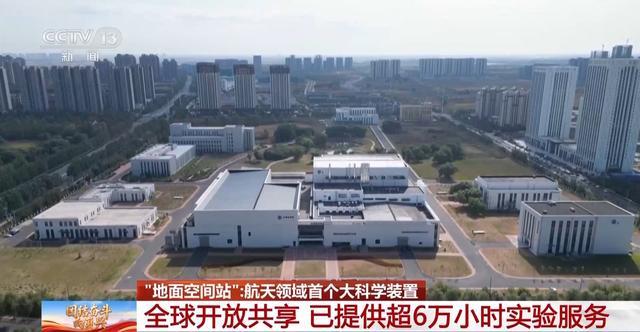
Core Viewpoint - The "Ground Space Station," known as the Space Environment Ground Simulation Facility, is a significant scientific installation in China's aerospace sector, located in Harbin, Heilongjiang, and is set to pass national acceptance in 2024 after 19 years of construction [2][4]. Group 1: Technical Achievements - The facility achieves international advanced levels in overall technical indicators, with some key technologies being globally leading [4]. - It has provided over 60,000 hours of experimental services to domestic and international research teams, serving as a global open research sharing platform [4]. - The facility can simulate nine types of space environmental factors, including vacuum, radiation, and weak magnetic fields, which are crucial for studying the effects on materials, devices, systems, and living organisms [4][5]. Group 2: Research Capabilities - The facility allows scientists to replicate extreme cosmic environments on Earth, enabling comprehensive research on the impact of solar activities on Earth's space environment [13]. - It features a large vacuum simulation chamber that can recreate the plasma environment of Earth's magnetic field, providing insights into solar storms and their potential threats to space safety [11][13]. - A high-speed dust accelerator can simulate impacts from space dust, which poses risks to spacecraft, allowing researchers to develop resilient materials for satellites and space stations [15]. Group 3: Historical Context and Development - The facility is built upon the legacy of earlier space environment simulators, such as the KM6, which was crucial for China's manned spaceflight and lunar exploration programs [21][25]. - The project faced significant challenges, including technological blockades and material shortages, leading to a commitment to develop capabilities domestically [25][27]. - The construction involved extensive teamwork and dedication, with experts working tirelessly to ensure the success of the facility, which has become a cornerstone for China's aerospace advancements [31][33].

告别“靠天吃饭” 我国已用上模拟极端宇宙环境的“地面空间站”
Huan Qiu Wang Zi Xun· 2025-10-03 12:19
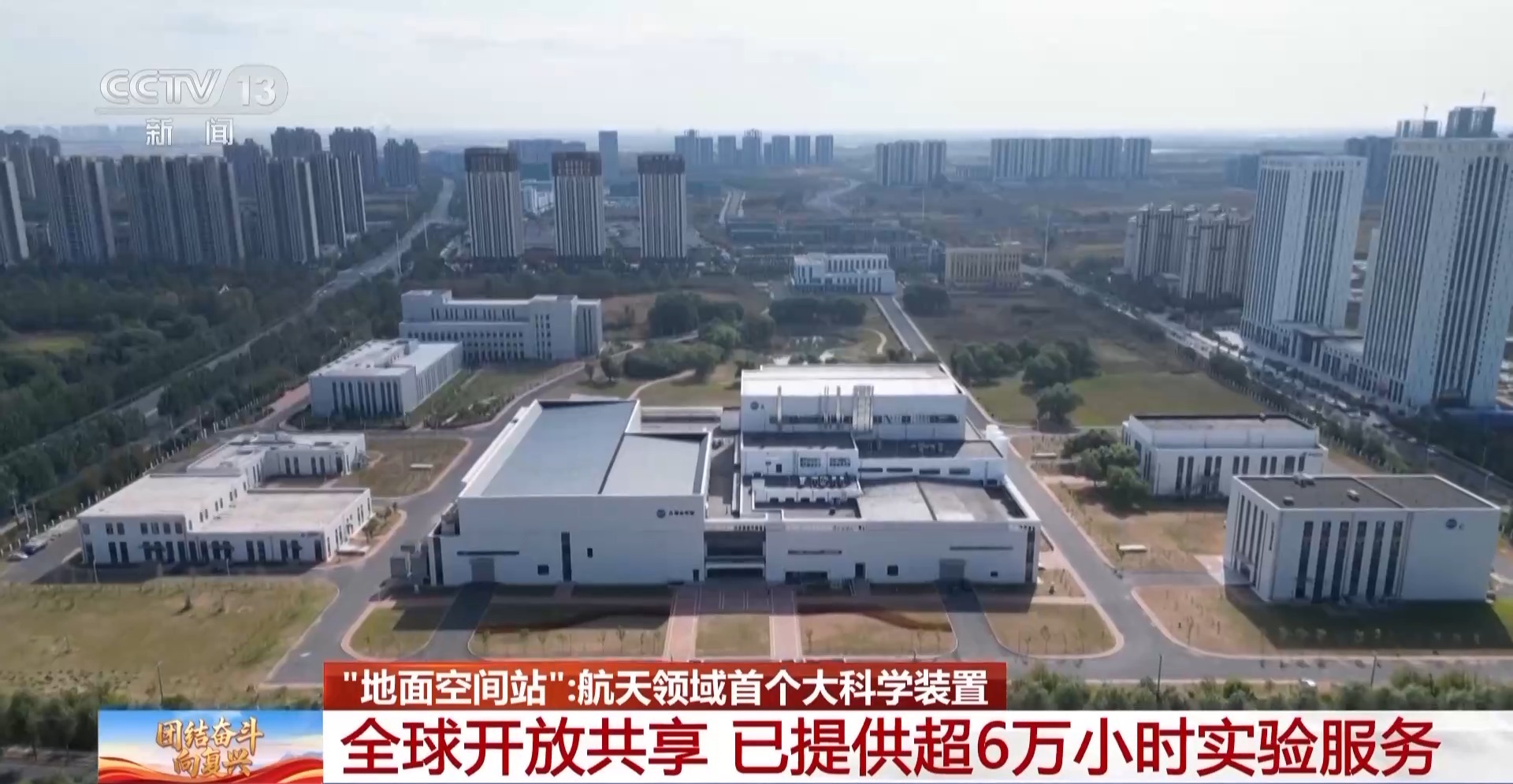
Core Viewpoint - The "Ground Space Station," a significant scientific facility in China's aerospace sector, is set to be operational in 2024, providing a comprehensive platform for simulating various space environments and supporting critical research for space missions [3][4][15]. Group 1: Facility Overview - The "Ground Space Station" covers an area nearly equivalent to 50 football fields and is the first large scientific facility in China's aerospace field, constructed over 19 years [3]. - It has achieved international advanced technical standards, with some key technologies being globally leading [3]. - The facility has provided over 60,000 hours of experimental services to domestic and international research teams [3]. Group 2: Research Capabilities - The facility can simulate nine types of space environmental factors, including vacuum, radiation, and weak magnetic fields, to study their effects on materials, devices, systems, and living organisms [3]. - Researchers are exploring the impact of near-zero magnetic fields on biological activities using various samples, achieving a magnetic field environment 500,000 times weaker than outer space [4][6]. - The facility includes a large vacuum simulation chamber that can recreate the plasma environment of Earth's magnetosphere, allowing scientists to study solar storm impacts [8][10]. Group 3: Technological Innovations - The facility has overcome 15 key core technologies, including zero magnetic field analysis and multi-environment factor simulation [13]. - A high-speed dust accelerator can propel space dust at speeds of 70 kilometers per second, simulating impacts to enhance the durability of spacecraft [12]. - The facility has supported major national aerospace projects, including the Chinese space station and lunar exploration missions, facilitating the development of over 2,000 domestic aerospace components [15]. Group 4: Historical Context - The "Ground Space Station" builds on the legacy of earlier projects like the KM6, which was crucial for China's manned spaceflight and lunar exploration efforts [18][20]. - The project faced significant challenges, including technological blockades and material shortages, leading to a commitment to develop domestic capabilities [20][22]. - The dedication of the research team has been pivotal in achieving significant milestones in China's aerospace development [24][27].