算法定义芯片

Search documents
解析理想汽车“软硬协同设计定律”:如何用数学语言打通芯片与算法的任督二脉?
Ge Long Hui· 2026-03-04 05:12
Core Insights - The article discusses a fundamental paradox in the automotive industry regarding the relationship between computing power and actual performance, questioning whether higher computing power truly translates to better efficiency [1][2][10] - It highlights the introduction of the "Soft-Hardware Collaborative Design Law" by Li Auto, which represents a significant technological breakthrough and a paradigm shift in AI foundational logic [1][4] Group 1: Computing Power Paradox - The automotive industry's past decade has been characterized by a worship of computing power, with metrics like TOPS becoming more fashionable than horsepower [2] - Li Auto's early experiences with top-tier vehicle chips revealed that the actual performance often falls short of expectations, even with high-end hardware [3][4] - Major tech companies, including NVIDIA and Apple, face similar challenges due to a traditional development model that separates hardware and software, leading to wasted computing power and inefficiencies [4] Group 2: Collaborative Design Framework - Li Auto's MindVLA team, in collaboration with the National Innovation Decision Intelligence Research Institute, developed a mathematical framework to optimize the collaboration between chips and algorithms [4][5] - This framework combines loss function expansion and Roofline performance modeling, allowing for a quantifiable and predictable approach to soft-hardware collaboration [5] - Key findings from this research indicate that optimal chip architecture is highly dependent on specific hardware parameters, emphasizing the necessity for algorithms to define chip design [5][6] Group 3: Practical Applications and Industry Impact - The launch of the new Li Auto L9, equipped with the Mach 100 chip, showcases a significant increase in effective computing power, achieving three to six times the effective performance of competitors [7][8] - Li Auto's commitment to R&D is evident, with projected investments reaching 12 billion yuan by 2025, and a cumulative R&D expenditure exceeding 46.8 billion yuan over eight years [8] - The company has published nearly 50 papers in relevant fields, contributing to a growing body of knowledge and open-source projects that foster a healthy technological ecosystem in the Chinese smart driving industry [8][9] Group 4: Open Source and Industry Collaboration - Li Auto's open-source initiative, including the Star Ring OS, aims to reduce redundant R&D costs across the automotive industry, potentially saving 10 to 20 billion yuan annually [9] - This collaborative approach reflects a strategic shift towards shared innovation, recognizing that no single company can monopolize all advancements in the complex smart vehicle sector [9] - The narrative of global AI competition is being reshaped as Chinese companies begin to contribute foundational methodologies and infrastructure, positioning themselves as co-creators of industry standards [9][10] Group 5: Conclusion and Future Implications - The article concludes that while computing power is essential, the true determinant of performance lies in the collaboration between hardware and software [10][11] - The Soft-Hardware Collaborative Design Law not only addresses current challenges in smart driving but also lays a theoretical foundation for future AI applications, such as embodied intelligence and spatial robotics [11] - The transition from follower to definitional leader in the industry signifies a profound shift in how Chinese tech companies approach innovation, showcasing their capability to contribute significantly to global AI discourse [11]

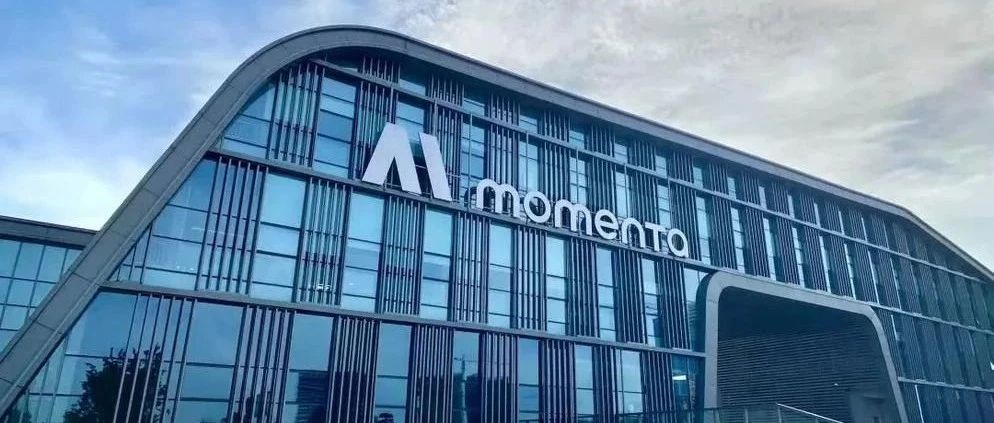
Momenta 自研辅助驾驶芯片点亮!开启装车测试!
是说芯语· 2025-08-13 05:29
Core Viewpoint - Momenta has developed its own driver assistance chip, marking a significant step in the competitive landscape of global driver assistance chips, showcasing its vertical integration capability of "algorithm + chip" [1][11] Group 1: Project Initiation - In 2020, Momenta identified a critical bottleneck with existing Nvidia Xavier chips, which had a system cost exceeding $8,000 and could only support L2+ functions [3] - The company established its chip division in Q3 2021, launching the "Zhixing Chip Plan" aimed at creating a dedicated chip that aligns with its self-developed algorithms and keeps costs under $3,000 [3] Group 2: Research and Development - The main challenge was converting 6 million kilometers of real-world testing data into design parameters for the chip architecture [4] - The team opted for a heterogeneous computing architecture of "CPU + NPU + GPU" after discovering inefficiencies in traditional GPU architectures during simulations [4] Group 3: Chip Production and Testing - The first round of chip production was completed in February 2024, yielding 500 engineering samples, with the first sample successfully lit up in March [5] - Initial road tests showed that the chip managed to process data from 12 cameras, 5 millimeter-wave radars, and 1 LiDAR with an average power consumption of under 35W, approximately 20% lower than Nvidia's Orin chip [5] Group 4: Technology and Performance - The chip is manufactured using TSMC's 7nm FinFET process, with an area of about 180mm² and over 15 billion transistors [6] - It features an NPU performance of 256 TOPS (INT8) and a memory bandwidth of 200GB/s, supporting LPDDR5X memory specifications [6] Group 5: Team Composition - The team is led by Dr. Cao Xudong, who has a PhD in Computer Science from Tsinghua University and has extensive experience in computer vision and machine learning [7] - The core team includes members from Nvidia and Qualcomm, with a unique "algorithm-defined chip" development model [8] Group 6: Market Position - The global automotive-grade driver assistance chip market is currently dominated by Nvidia (45% market share) and Qualcomm (25% market share) [9] - If Momenta's chip is priced around $1,500, it could significantly undercut Nvidia's Orin chip priced at approximately $2,500, with potential annual shipments exceeding 500,000 units post-2026 [9] Group 7: Industry Implications - Momenta's approach validates the feasibility of "algorithm companies developing their own chips," potentially shortening the optimization cycle between algorithms and hardware by about 50% [11]