
精神文化需求

Search documents
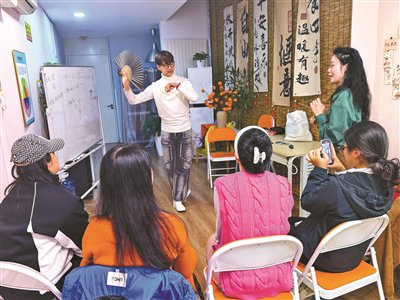
年轻人上夜校 为悦己“充电”
Xin Lang Cai Jing· 2026-02-01 20:19
Core Insights - The rise of night schools in Beijing reflects a cultural shift among young people, who view these institutions as a way to enhance personal skills and social connections rather than just for professional development [6][12][18] - Night schools are increasingly popular among the Z generation, offering a variety of non-utilitarian courses that cater to personal interests and hobbies [12][18] Market Trends - The concept of night schools has evolved from traditional knowledge-based learning to a focus on interest-driven courses, attracting a younger demographic [12][18] - Night schools are characterized by low entry barriers and high engagement, with courses designed to start from a beginner level, making them accessible to a wide audience [13][12] Course Offerings - Courses range from practical skills like AI and voice training to creative pursuits such as makeup and music, appealing to diverse interests [10][12][15] - The pricing strategy of night schools, such as offering 10 classes for 500 yuan, is aimed at making learning affordable and attractive to young people [12][15] Community and Social Impact - Night schools serve as a social platform for young adults, allowing them to connect over shared interests, which differs from traditional educational settings [9][18] - The environment in night schools fosters a sense of belonging and community among participants, enhancing their overall learning experience [9][12] Institutional Development - Various organizations, including local government and cultural institutions, are actively promoting night schools, leading to a proliferation of courses across different districts in Beijing [14][15][17] - Initiatives like the "京学" night school education service community aim to standardize and enhance the quality of night school offerings across the city [17][19] Challenges and Future Outlook - Despite the growth, there are concerns regarding the sustainability and quality of night school programs, with some institutions struggling to establish stable business models [19] - Experts suggest that while night schools may not become a mainstream entrepreneurial model, they will continue to serve as platforms for personal development and community engagement [19]

银发经济新趋势白皮书发布:精神文化需求加速升温,产业升级迎来关键窗口
Cai Fu Zai Xian· 2025-11-29 07:59
Core Insights - The white paper titled "New Trends in the Silver Economy: The Spiritual and Cultural Needs of the Middle-aged and Elderly and Industry Development" highlights the expanding spiritual and cultural demands of the "new middle-aged and elderly" demographic in China, driven by recent policies aimed at enhancing the well-being of older adults [1][4] Group 1: Demand and Supply Dynamics - There is a growing demand for spiritual and cultural services among the elderly, yet the supply remains structurally insufficient, with a lack of quality offerings and innovative cultural products [2] - Over half of the respondents rated local spiritual and cultural services as "average," indicating a need for improvement in service quality [2] Group 2: Industry Trends and Innovations - Industry players are actively pursuing content innovation and technological integration in response to rising demand, with organizations like Lihua Education exploring various practices in the cultural service sector [3] - Future innovations in spiritual and cultural services will focus on balancing technology friendliness, content adaptability, and emotional experience [3] Group 3: Future Outlook - The silver economy is expected to continue expanding, with spiritual and cultural consumption becoming a significant growth driver, emphasizing the importance of enhancing life quality and social participation among the elderly [4] - Lihua Education plans to focus on innovation in spiritual cultural services, technology empowerment for the elderly, and the creation of smart elderly care scenarios to improve supply quality [4]